
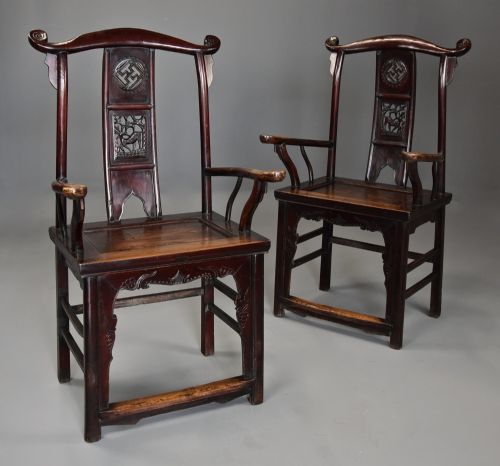


Oriental Wooden Side Chairs
Oriental wooden side chairs bring distinctive forms and historic character into a room, offering practical seating shaped by diverse regional traditions.
Oriental Wooden Side Chairs
When you search for oriental wooden side chairs, you encounter a selection spanning the nineteenth century, including pieces from Victorian times through to the nineteen-twenties. These seats appear in forms such as side chairs, hall chairs, accent chairs, and armchairs, reflecting various functional roles in domestic interiors.
The objects originate from distinct cultural traditions, encompassing styles from the Qing Dynasty and Qing Dynasty Style to Traditional Chinese, Indian Ethnic, and Anglo-Burmese Colonial designs. This variety demonstrates how diverse craftsmanship adapted local timbers and seating requirements over decades.
You meet pairs and sets alongside individual examples, giving flexibility for placement in a hallway, reception room, or bedroom. The construction relies primarily on solid timbers shaped into traditional profiles like yoke-backs and lamp hanger configurations.
Materials and construction
Makers utilised hardwoods, rosewood, elm, and elm wood to build sturdy frames capable of enduring regular use. These timbers provided the structural strength necessary for traditional joinery without relying on modern fasteners.
Surface treatments included applied lacquer, painted wood, and original red lacquer, which protected the underlying timber while introducing deep colour and sheen. Additionally, cane seating appeared on specific Victorian examples to create woven support within the wooden framework.
Materials across these listings include elm, rosewood, cane, lacquer, and painted wood.
Evaluating quality and condition
Quality rests upon the integrity of the wooden joinery and the survival of original surface finishes, such as early lacquer or painted details. Examples retaining their initial patination and uncompromised structural frames stand apart from pieces subjected to heavy modern intervention.
The refinement of the carving and the balance of traditional proportions dictate the visual success of each chair. Finer specimens display careful attention to architectural elements like crestrails and splats, maintaining the aesthetic intent of their period.
The Oriental Wooden Side Chairs Glossary
- Yoke-back
- A traditional chair design featuring a crestrail shaped to resemble a Chinese ox yoke. This profile curves upward at the ends for arm or head support.
- Cane
- Woven material made from the split outer portion of rattan palms, utilised for resilient seat panels. It provides lightweight flexibility within a rigid wooden frame.
- Lacquer
- A durable finish derived from tree sap, applied in successive coats and polished to a smooth sheen. It offers both decoration and moisture protection to the timber beneath.
- Hardwood
- Dense timber derived from broad-leaved deciduous trees, chosen for longevity and strength in furniture frames. Rosewood and elm serve as typical examples within these Asian and colonial pieces.
- Patina
- The surface sheen and tonal depth acquired by wood and lacquer through age and handling. This quality develops naturally over decades of use.
Oriental Wooden Side Chairs: Frequently Asked Questions
What periods do these chairs represent?
The pieces span the nineteenth century up to the nineteen-twenties, incorporating Victorian items and Qing Dynasty traditions.
This timeframe encompasses diverse regional workshops working across China, India, and Burma.
How do I care for lacquered wood?
Keep wooden and lacquered surfaces away from direct sunlight and excessive moisture to protect the finish.
Dust gently with a soft cloth and avoid chemical polishes that might damage historic patination.
Are these chairs suitable for daily seating?
Most examples function well for occasional use in hallways, bedrooms, or reception spaces.
Check the stability of the joinery and cane panels before assigning them to heavy everyday seating.
What styles are included?
Styles range from traditional Chinese yoke-back and lamp hanger forms to Indian ethnic and Anglo-Burmese colonial designs.
This variety reflects distinct cultural aesthetics and regional woodworking methods.