
Carved Wooden Splat Chairs
These carved wooden splat chairs bring structural upright form and rich timber grain into any room.
Carved Wooden Splat Chairs
Carved wooden splat chairs span forms such as dining chairs, armchairs, side chairs, desk chairs, and rocking chairs. When searching this phrase, buyers encounter pieces originating from the 18th century, Georgian era, 19th century, Victorian period, and Edwardian times.
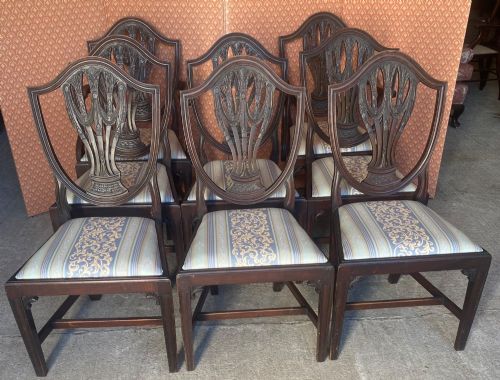
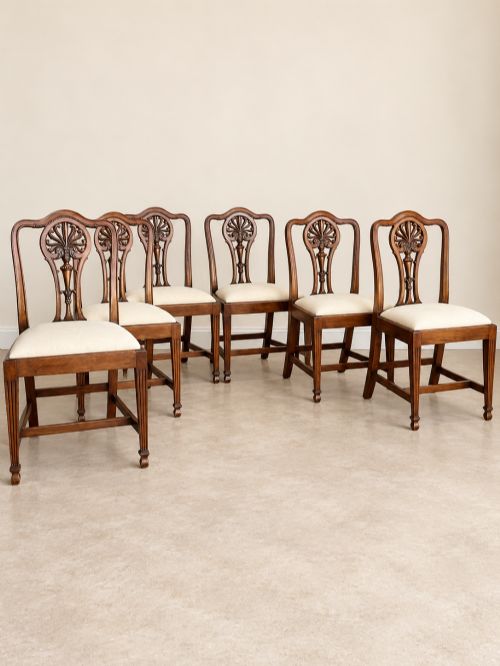
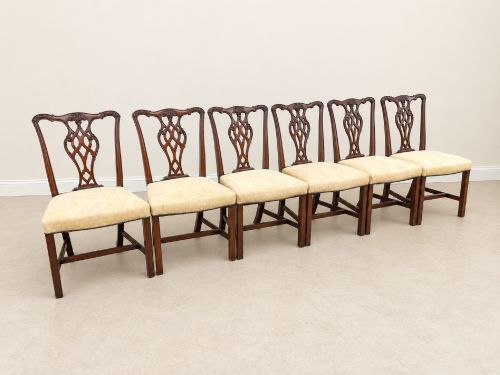
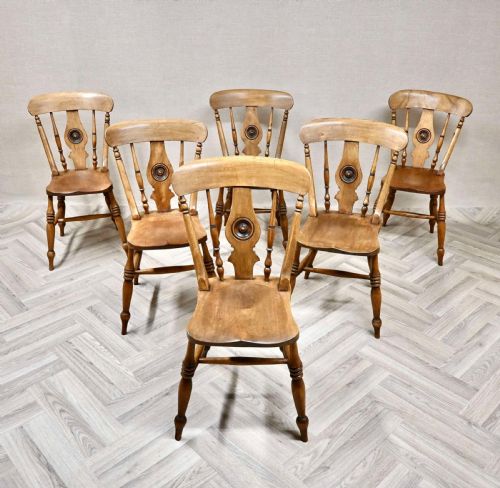
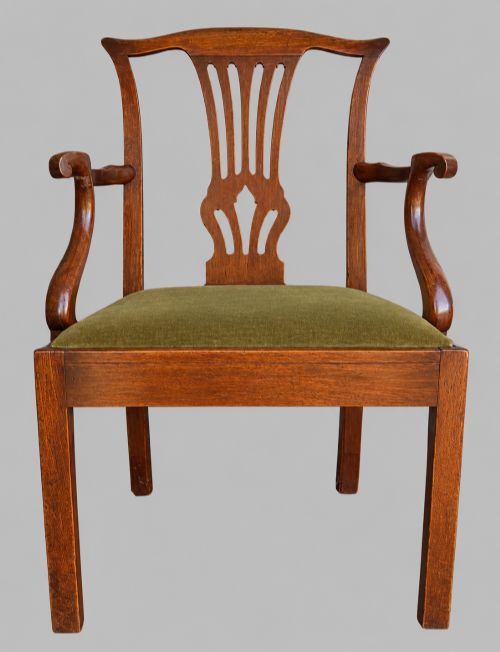
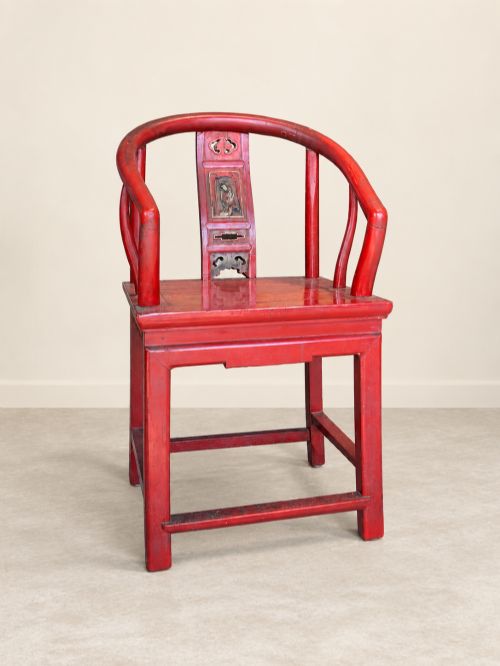
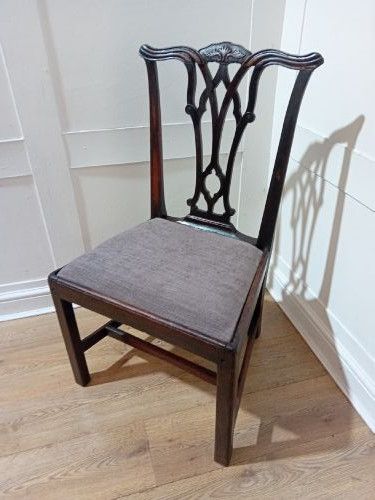
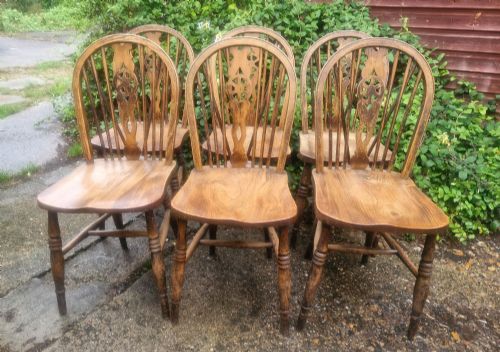
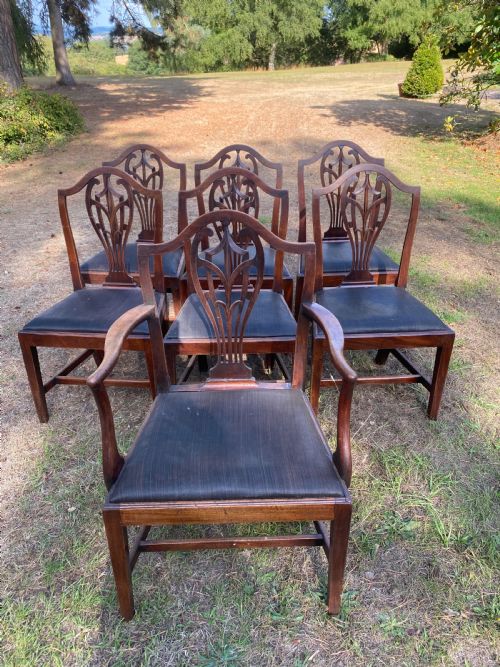
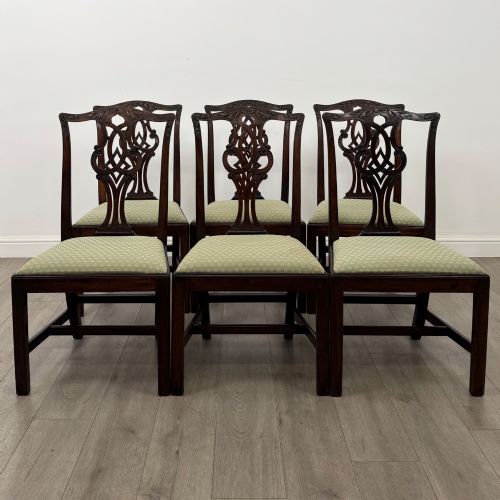
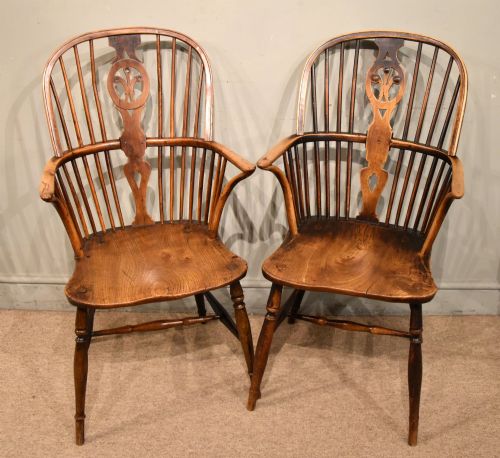
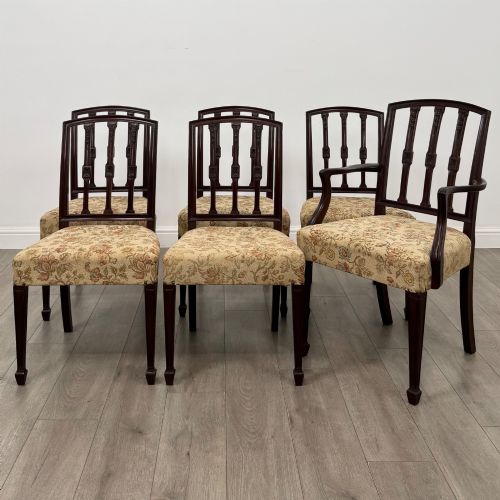
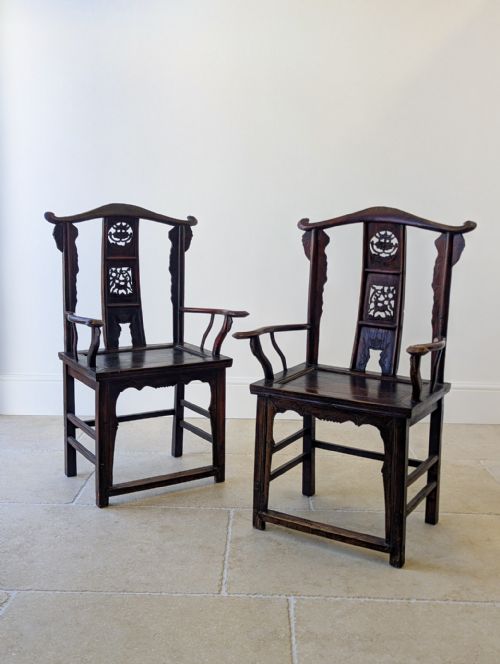
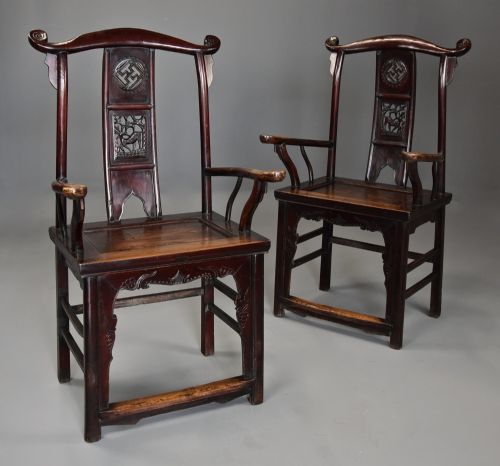
The versions met most frequently on this page include mahogany dining sets and individual elm or fruitwood Windsor armchairs. Alongside these English seating forms appear Chinese hardwood yoke-back armchairs and horseshoe benches from the Qing dynasty and later periods.
Makers and workshops utilised various timbers to construct these seats, ranging from formal mahogany and walnut to regional country woods including ash, beech, yew, elm, and laburnum. Seating sets often survive in groups of four, six, or eight pieces.
Materials and Technique
Cabinet makers and rural joiners worked primarily with solid hardwoods, selecting mahogany and walnut for formal urban pieces and resilient timbers like elm, ash, and fruitwood for country Windsors. Individual components were shaped using lathes, hand saws, and chisels before being joined with traditional pegged or mortice and tenon construction.
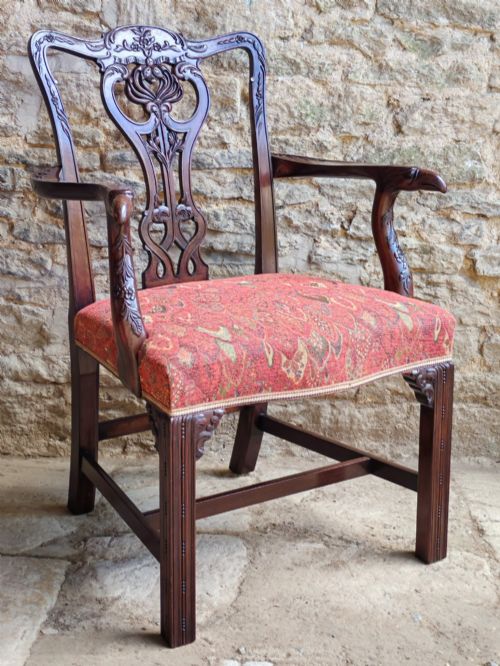
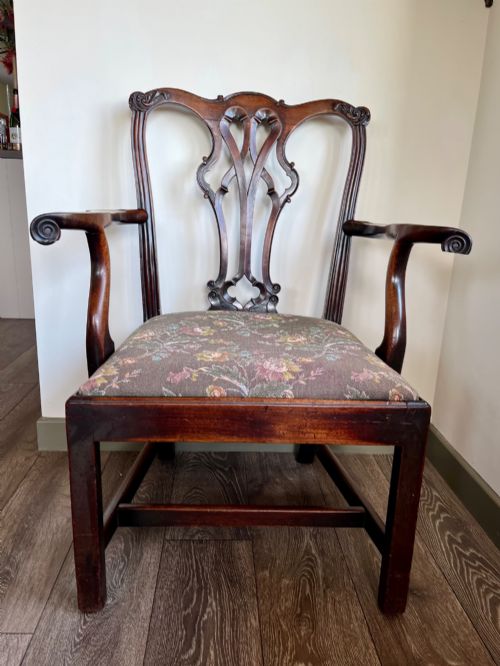
Central back splats received detailed carved ornamentation, ranging from pierced Chippendale designs to simpler wheel backs and ladder patterns. Some examples incorporate applied red lacquer, painted finishes, or drop-in seats covered in upholstery fabric and textiles.
The listings on this page span the 18th, 19th, and 20th centuries, featuring materials from mahogany and walnut to elm, ash, and laburnum.
Evaluating Construction and Timber
Quality rests upon the crispness of the carved splat and the selection of figured timber grain. Pieces exhibiting deep natural patina and robust, uncompromised joinery distinguish themselves from later revivals and heavily restored examples.
The balance between delicate decorative carving and structural integrity defines the upper tier of these chairs. Original surface finishes and matching sets maintain higher distinction than assembled groups or heavily sanded timbers.
The Carved Wooden Splat Chairs Glossary
- Splat
- The vertical central strip of wood in the back of a chair, often shaped and carved. It provides both structural support to the backrest and a canvas for decorative styles.
- Carver
- A term for an armchair, typically designed to match a set of smaller dining side chairs. These often sat at the head of a dining table.
- Windsor
- A traditional country chair constructed with a solid wooden seat into which the legs, back spindles, and bow are separately fitted. Elm, ash, and yew feature heavily in their construction.
- Yoke-back
- A distinctive style of chair back featuring a curved top rail resembling an ox yoke. This form occurs frequently in traditional Chinese seating.
- Patina
- The surface sheen and soft texture developed by aged timber through decades of handling and polishing. Good patina indicates an authentic unstripped finish.
Carved Wooden Splat Chairs: Frequently Asked Questions
How do I date a wooden splat chair?
Dating relies on identifying the timber species, construction methods, and stylistic cues present in the splat and legs. Georgian and 18th-century pieces often display hand-cut joinery and dense mahogany, whereas later revivals from the Victorian and Edwardian eras show machine assistance or different secondary woods.
Examining the wear patterns around the feet and the composition of the finish helps confirm the period. Comparing the carved details against documented regional workshop practices narrows the date further.
Are Windsor chairs comfortable for daily use?
Windsor chairs offer ergonomic support through their sculpted solid wooden seats and bowed spindle backs. Their sturdy construction makes them durable enough for daily seating in kitchens or studies.
While lacking soft upholstery, the contoured elm or fruitwood seats distribute weight evenly. Adding a loose textile pad can increase cushioning without altering the historic frame.
How should I care for antique mahogany and walnut?
Maintain timber surfaces by dusting regularly with a soft, dry cloth and avoiding direct sunlight. Apply a traditional beeswax sparingly to nourish the wood and preserve the natural patina.
Keep chairs away from extreme temperature fluctuations and central heating vents to prevent the wood from splitting. Checking the stability of the leg joints periodically ensures the longevity of the glue and pegs.