



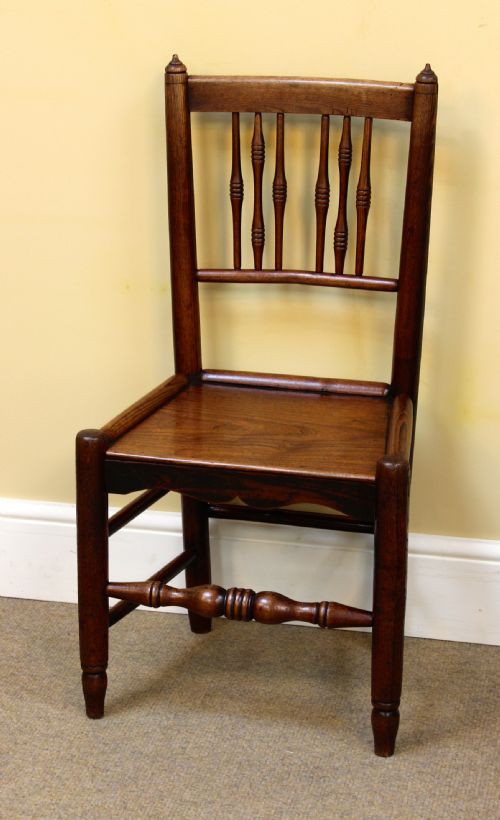


Dark Elm Side Chairs
Dark elm side chairs bring sturdy domestic utility and rich grain into a room, spanning rustic English country forms and traditional Chinese seating.
Dark Elm Side Chairs
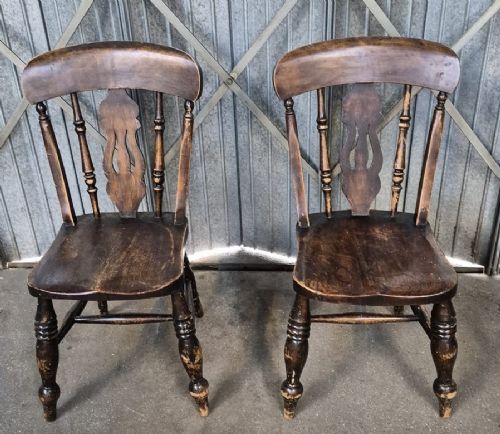
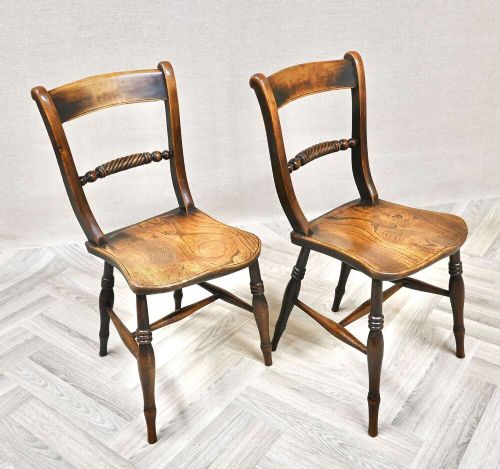
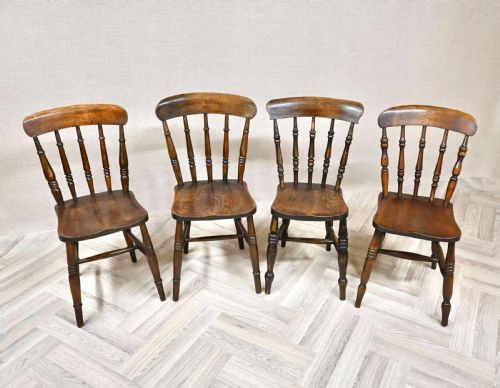
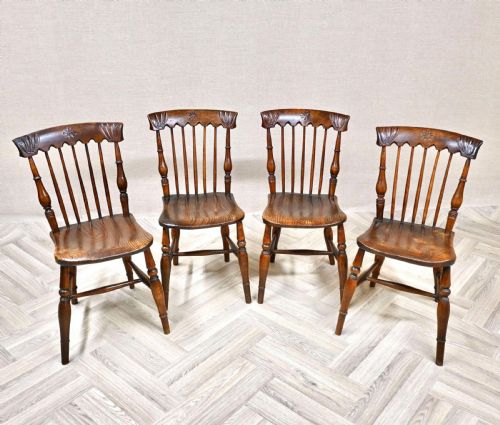
Dark elm side chairs encompass robust domestic seating from multiple centuries, with English country vernacular pieces and Chinese regional forms appearing across the listings. Buyers encounter farmhouse kitchen chairs alongside spindleback, ladderback, and yoke-back designs intended for daily use around a dining table or hearth.
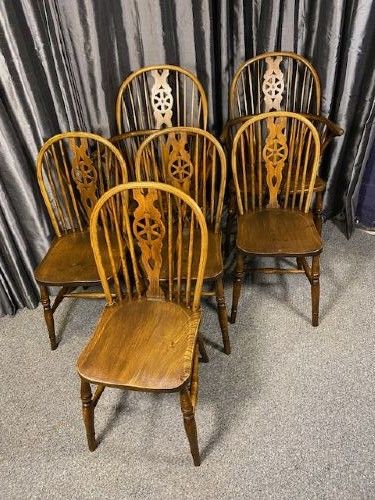
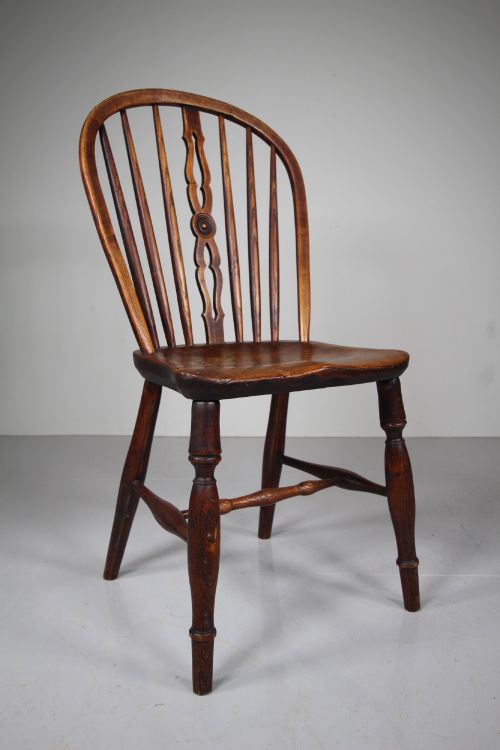
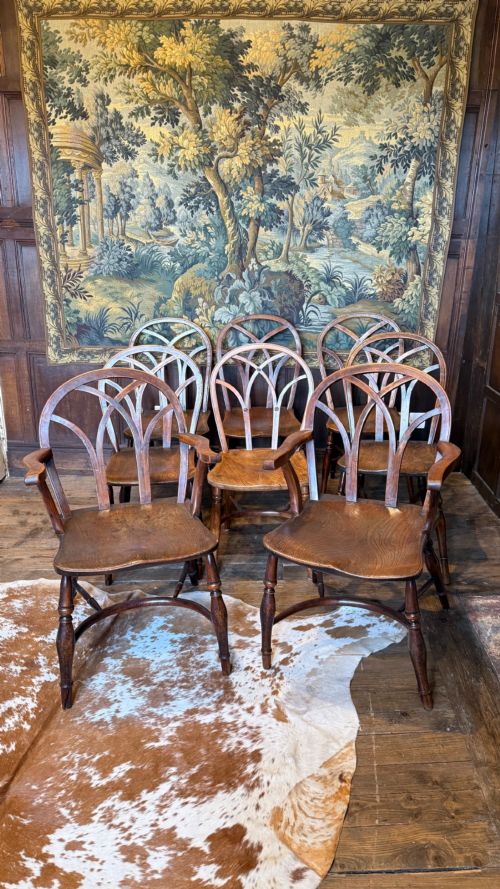
The nineteenth century provides the bulk of the domestic vernacular examples, particularly Victorian kitchen and Windsor chairs framed in elm with complementary woods. Eighteenth-century pieces also feature, offering simpler geometric lines or early regional variants such as wheelbacks and fiddlebacks.
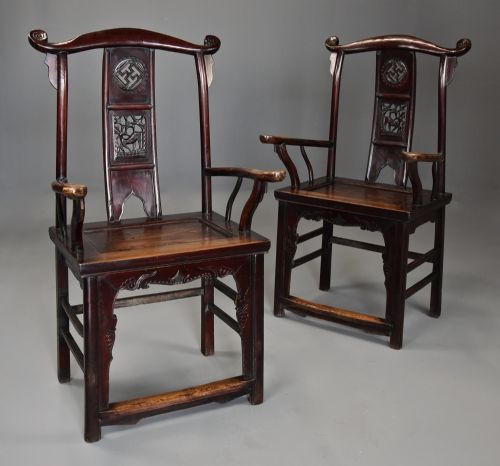
Alongside British farmhouse seating, the category includes nineteenth-century Chinese elm items like lamp-hanger chairs and lacquered armchairs. These diverse origins share a reliance on heavy timber and dark patination achieved through decades of domestic handling and polish.
What varies in quality
Quality rests primarily on the depth of the timber's patination and the integrity of the original construction without excessive replacement parts. Examples retaining their matching sets, original rush seats, or intact surface treatments command greater regard than heavily restored or mismatched assemblies.
The sophistication of the turning on spindles and legs distinguishes superior craftsmanship from basic utilitarian production. Subtly shaped seats and well-balanced proportions demonstrate the joiner's skill within regional country traditions.
Dark Elm Side Chairs Retail Price Guide 2026
Typical asking prices for dark elm side chairs among the pieces listed under this phrase on Sellingantiques today, from the lower quarter to the upper quarter. They describe what is for sale here now, not the wider market.
Several chairs arrive with double stretchers installed below, designed specifically to withstand the enthusiastic foot-resting of generations of farmers.
The Dark Elm Side Chairs Glossary
- Windsor chair
- A chair built with a solid wooden seat into which the legs and back spindles are direct-tenoned. These robust seats form a staple of country vernacular furniture.
- Spindleback
- A chair back constructed from a series of slender, turned wooden uprights. They provide lightweight yet rigid support.
- Rush seat
- A seating surface woven from dried marsh rushes twisted into cords. This traditional method appears frequently on eighteenth and nineteenth-century dining chairs.
- Patina
- The deep surface sheen and colour acquired by wood over decades of handling, polish, and exposure to light. It serves as a primary indicator of age and authenticity.
- Stretcher
- A horizontal wooden brace connecting the legs of a chair to increase structural stability. Double stretchers offer additional reinforcement in heavy-use kitchen environments.
Dark Elm Side Chairs: Frequently Asked Questions
Are these chairs comfortable for daily dining?
Solid elm seats contoured to the body provide surprising support for everyday meals without requiring loose cushions.
Their sturdy timber construction handles continuous family use while maintaining structural rigidity over decades.
How do I identify a Victorian elm chair?
Victorian examples often display turned spindles, lathbacks, or wheelback carvings reflecting nineteenth-century domestic preferences.
They commonly appear in sets for farmhouse dining rooms, paired with ash or beech components.
What maintenance do dark elm chairs need?
Apply a traditional beeswax polish occasionally to nourish the timber and preserve the dark surface sheen.
Keep them away from direct heat sources to prevent the solid wood seats from splitting over time.
Can I mix different styles around a table?
Matched sets exist, but pairing distinct vernacular types like ladderbacks and spindlebacks creates an authentic country interior.
Shared dark wood tones and similar timber grain unify disparate chairs gathered around a single dining table.