




Chinese Hall Chairs
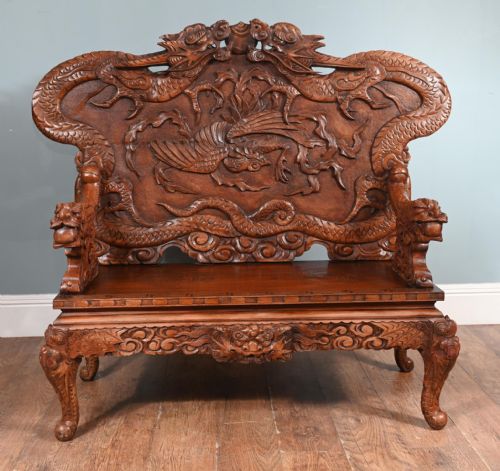
Chinese hall chairs are substantial wooden seats combining traditional export craftsmanship with formal reception forms, offering a striking anchor for an entrance hall.
Chinese Hall Chairs
When you search for chinese hall chairs, you encounter seating designed for formal reception rooms, spanning single chairs, pairs, and long benches or settles.
The pieces on this page originate predominantly from the nineteenth century and the early twentieth century, reflecting Qing Dynasty traditions and Chinese export production.
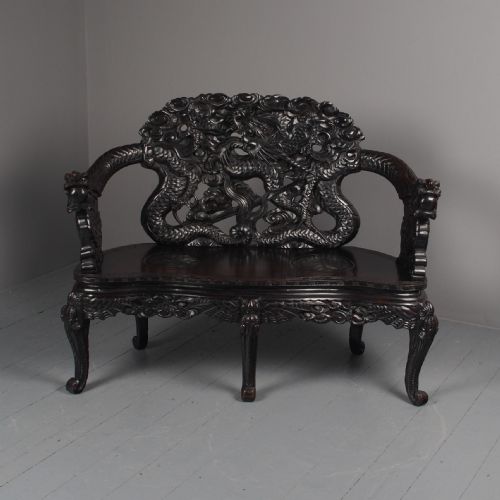
Forms vary from side chairs and yoke-back models to horseshoe benches and complete seating sets, constructed to make a formal statement in a hallway.
Materials and construction
Carving defines these pieces, utilising dense timbers such as rosewood, elm, teak, blonde wood, and polished hardwood to achieve deep relief and structural strength.
Surface treatments range from natural wood finishes to cinnabar lacquer and painted details, occasionally incorporating bone inlay or marble inserts for decorative contrast.
Certain horseshoe benches appear ready to host an imperial procession in your hallway.
Distinguishing quality
Depth and crispness of the wood carving separate standard items from superior examples, particularly where dragons and traditional motifs are rendered with precision.
The integrity of the timber, the weight of the hardwood, and the preservation of original lacquered or polished surfaces dictate the standing of a piece within the range.
The Chinese Hall Chairs Glossary
- Qing Dynasty
- The final imperial dynasty of China, spanning the seventeenth to the early twentieth century. Many pieces in this tradition date from its later decades.
- Settle
- A wooden bench featuring a high back and solid arms, often designed to block draughts in an entranceway. These pieces provide substantial seating capacity.
- Cinnabar lacquer
- A traditional red coating built up in numerous layers on a wooden base before being carved. This technique creates a rich, tactile surface.
- Yoke-back chair
- A traditional chair style featuring a top crestrail that curves upward like an ox yoke. This form provides ergonomic support and distinctive silhouette.
- Hardwood
- Dense timber such as rosewood or elm used in traditional cabinetmaking. It allows for intricate joinery and fine surface carving without splitting.
Chinese Hall Chairs: Frequently Asked Questions
Where should I place a Chinese hall chair?
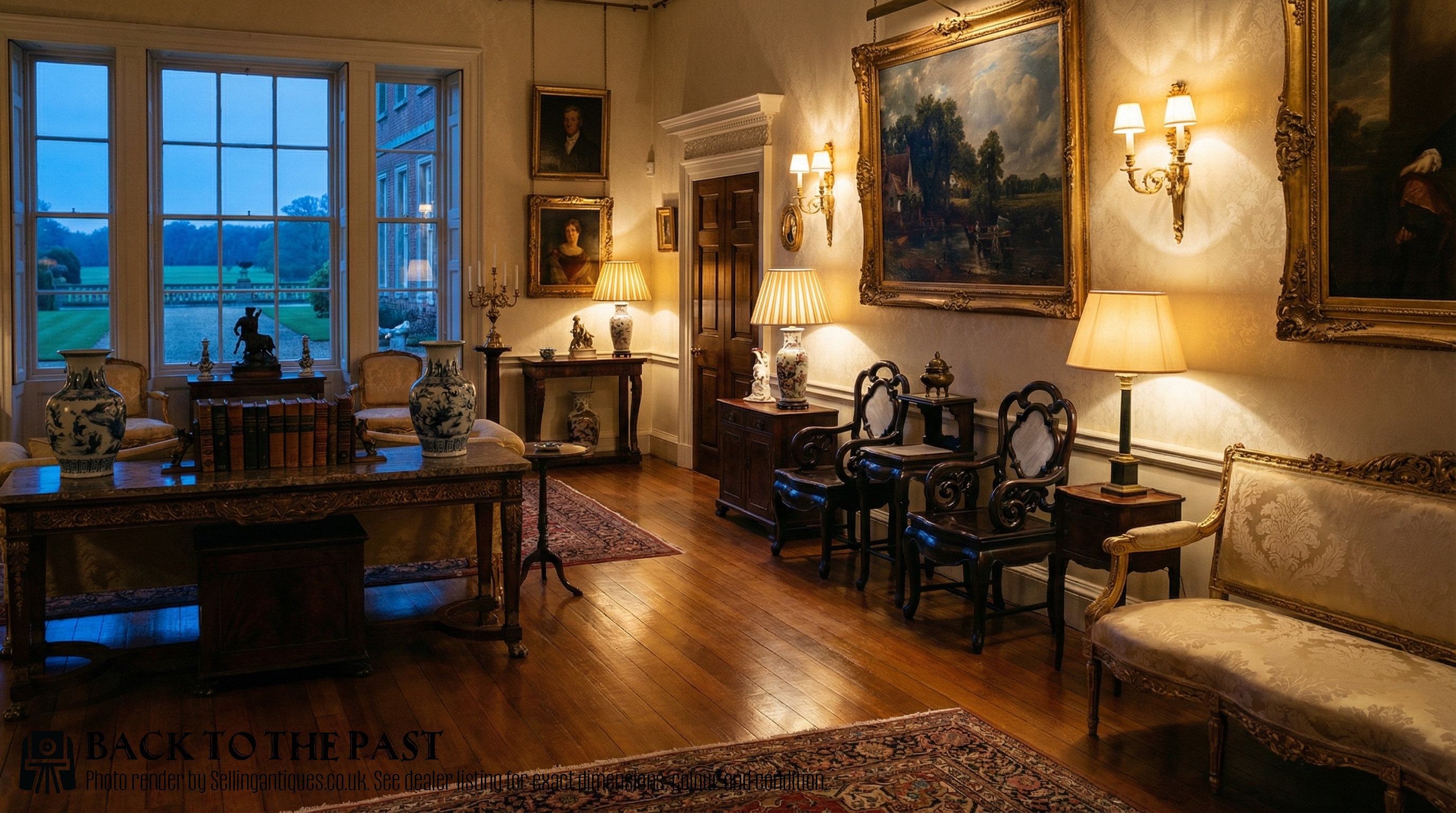
These chairs suit entrance halls, landings, and reception rooms where their formal design and carved details can be appreciated without heavy daily wear.
Pairs look effective positioned symmetrically against a wall beneath a mirror or artwork, while single armchairs function well as statement pieces.
How do I care for antique hardwood seating?
Maintain the timber by dusting with a soft cloth and avoiding placement near direct heat sources or strong sunlight, which can dry out the wood.
Apply a microcrystalline wax sparingly if the surface appears dry, following the grain of the wood carefully.
Are these chairs comfortable for daily use?
Most historic examples were designed for formal posture rather than lounging, featuring upright wooden backs and carved seats.
Adding a loose silk or linen squab cushion can improve comfort if you intend to use them regularly for seating.
How do I distinguish nineteenth century pieces?
Look for signs of traditional joinery, natural patination on the timber, and the character of the hand-carved dragon or floral motifs.
Nineteenth-century pieces often display deeper colour variation in the wood and minor hand-working irregularities that modern reproductions lack.