
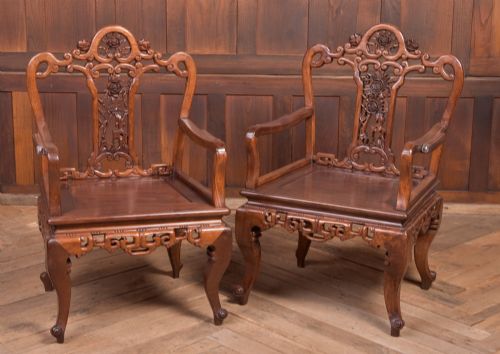

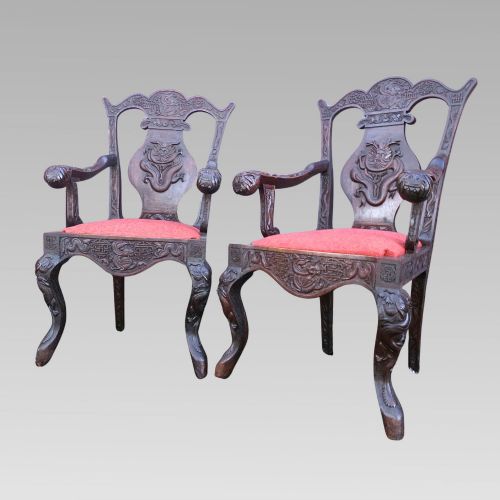


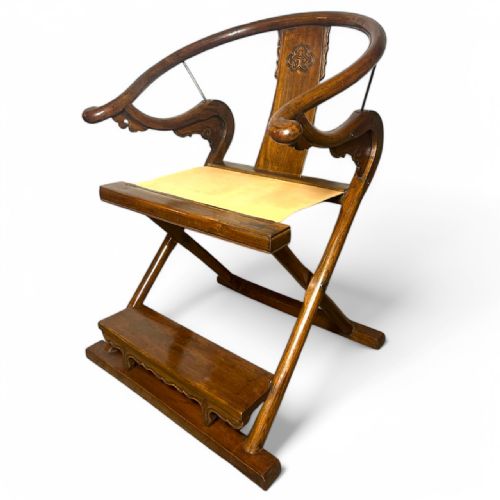


Carved Chinese Throne Chair
A carved chinese throne chair is a substantial seat carrying intricate traditional motifs, bringing commanding presence and historical depth to any room.
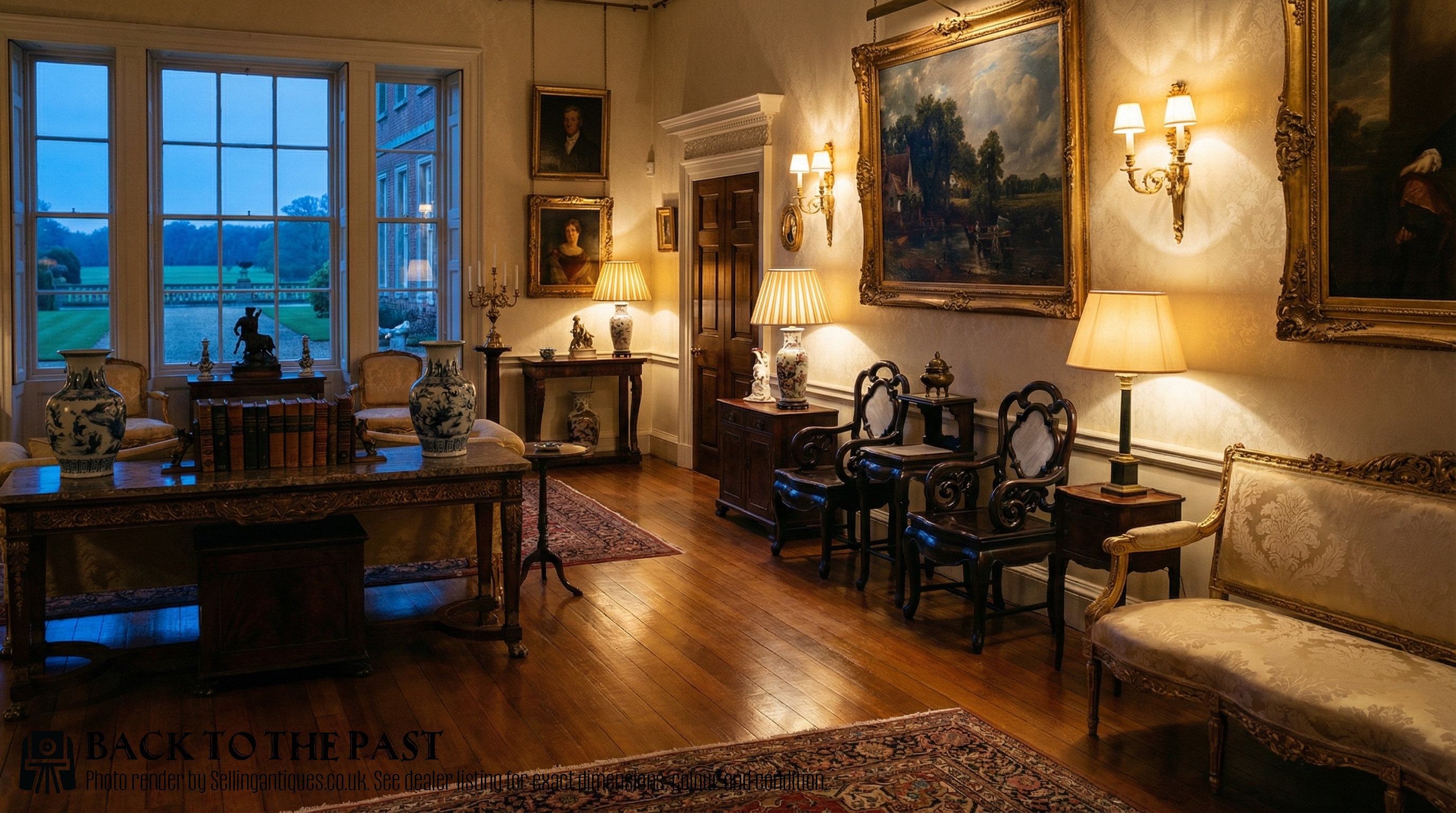
Carved Chinese Throne Chair
A carved chinese throne chair is a substantial seating form designed to command a room with deep historical lineage and intricate decorative carving.
Most examples found here date from the nineteenth century and the early twentieth century, bearing the heavy influence of the Qing dynasty and traditional Chinese craftsmanship.
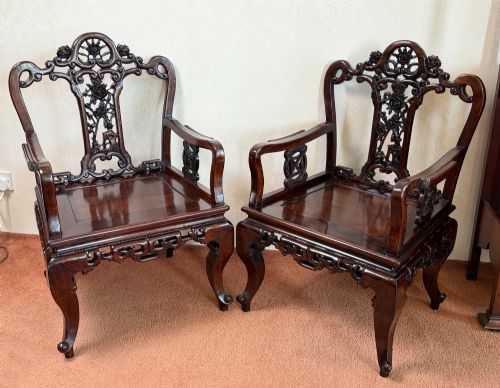
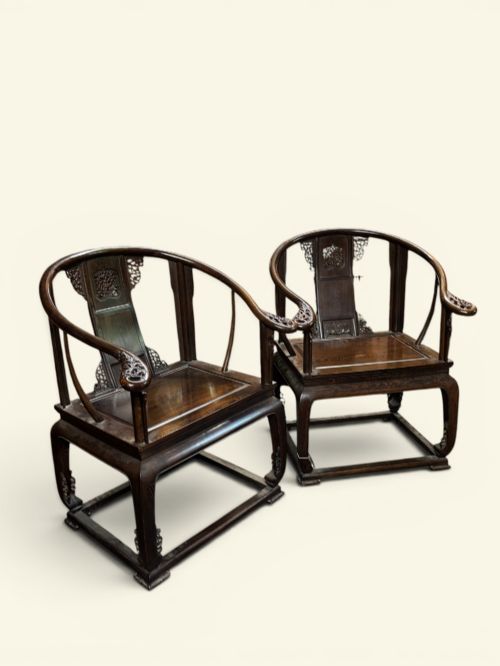
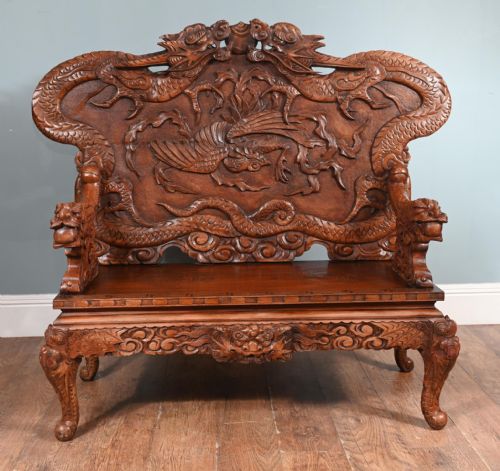
Buyers will encounter armchairs, horseshoe-back variants, benches, settles, and occasional matching sets that incorporate carved seats and detailed back splats.
What varies in quality
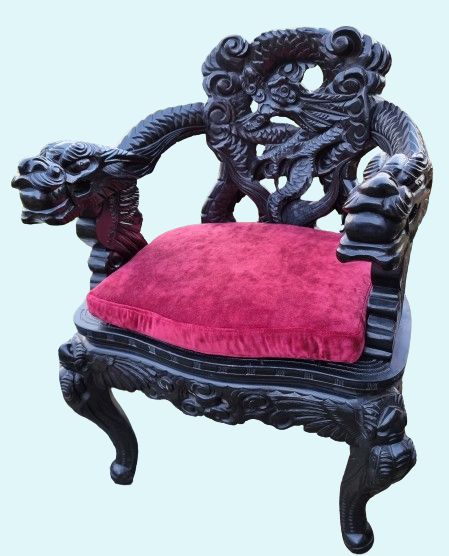
The distinction between standard examples and superior pieces rests on the depth and crispness of the dragon carvings and the selection of the timber.
Subtleties in the joinery and the balanced integration of materials like marble or velvet upholstery determine the overall harmony and authority of the chair.
Several dragon benches seem poised to leap across the floorboards and guard the household from troublesome spirits.
The Carved Chinese Throne Chair Glossary
- Hongmu
- A dense, highly prized red hardwood utilised in traditional Chinese furniture construction. It accepts fine detail work and develops a rich patina over time.
- Cinnabar lacquer
- A traditional finishing technique involving multiple layers of coloured resin carved in relief. This surface treatment requires considerable time and skill to produce.
- Horseshoe-back
- A distinctive chair design featuring a continuous curved crestrail that sweeps down to form the armrests. It offers both ergonomic support and a graceful silhouette.
- Splat
- The vertical wooden strip down the centre of a chair back. On these pieces, it frequently carries the principal carved decoration.
- Qing Dynasty
- The imperial dynasty ruling China until the early twentieth century, defining the aesthetic of many surviving throne chairs and hall furniture.
Carved Chinese Throne Chair: Frequently Asked Questions
How were throne chairs used?
These imposing seats were originally positioned in reception halls or official spaces to denote status and authority during gatherings.
Today, buyers place them as statement pieces in entrance halls, living rooms, or studies where their sculptural presence can be fully appreciated.
How do I date a Chinese throne chair?
Dating relies on examining the timber density, the style of the carving, and construction techniques characteristic of the nineteenth century or the transition into the twentieth century.
Comparing the specific dragon motifs and structural joinery against known Qing dynasty pieces provides further chronological guidance.
Are these chairs comfortable for daily use?
Many examples feature upright wooden seats and rigid backs designed for formal posture rather than lounging.
Owners often add custom cushions or place them primarily for visual impact rather than prolonged seating.
What is the difference between rosewood and hongmu?
Rosewood is a broad category of dense, figured timber valued for furniture, while hongmu specifically denotes a group of dense, dark tropical hardwoods prized in classical Chinese workshops.
Both materials yield heavy, durable frames that hold intricate carved detail exceptionally well.