



Antique Chinese Official Chairs
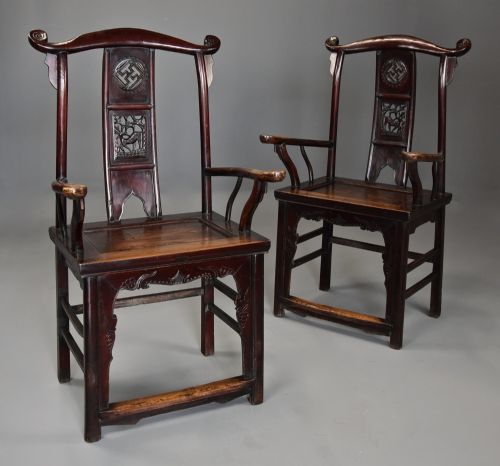
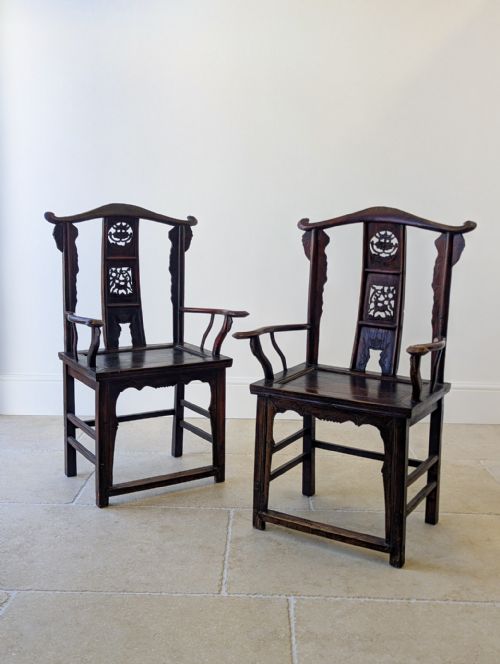
These antique Chinese official chairs bring substantial presence into a room, formed mostly of elm and hardwood with classic yoke-back designs.
Antique Chinese Official Chairs
Most examples you meet on this page are yoke-back armchairs and scholars chairs made from elm and various hardwoods. Pairs appear frequently alongside single pieces and occasional benches.
Origins stretch across the nineteenth century, with specific dates pointing to the 1870s, 1880s, and 1890s, alongside some pieces from around 1920. These chairs served formal functions in domestic and official settings.
How they were made
Construction relies heavily on elm and other dense hardwoods, shaped into traditional joinery frames without relying on metal fasteners. Craftsmen also utilised softwood for secondary components.
Surfaces frequently show applied finishes including red lacquer, painted wood, and accents of gold leaf. Original lacquer layers remain intact on several examples, preserving the tactile quality of the wood beneath.
Antique Chinese Official Chairs Retail Price Guide 2026
Typical asking prices for chinese official chairs among the pieces listed under this phrase on Sellingantiques today, from the lower quarter to the upper quarter. They describe what is for sale here now, not the wider market.
Listings span the nineteenth century to nineteen-twenty, featuring elm, hardwood, and softwood, finished with red lacquer and gold leaf.
What varies in quality
Quality rests significantly on the preservation of the original surface finishes, such as red lacquer and painted details, alongside the natural patina developed over the centuries. Elm frames that retain crisp lines and good colour command greater attention.
The degree of carving and the balance of proportions distinguish standard seating from superior throne chairs and scholars chairs. Pairs with matching wood grain and uniform wear present a more cohesive visual weight than assembled matches.
The Antique Chinese Official Chairs Glossary
- Yoke-back armchair
- A traditional Chinese chair style featuring a top crestrail that curves outward resembling an ox yoke. This design supports an upright posture and provides comfortable arm placement.
- Qing Dynasty
- The final imperial dynasty of China, spanning from sixteen-forty-four to nineteen-twelve. Many pieces on this market originate from the late decades of this era.
- Elm
- A durable hardwood native to China, prized for its distinct grain pattern and structural resilience. Cabinetmakers utilised it extensively for seating due to its resistance to splitting.
- Patina
- The deep, lustrous sheen developed on wood and lacquer surfaces through decades of handling and polishing. It serves as an indicator of age and careful use.
Antique Chinese Official Chairs: Frequently Asked Questions
Where did official chairs sit in a home?
These chairs were traditionally placed in the reception halls and reception rooms of elite households. They functioned as formal seating for officials, family heads, and honoured guests.
Positioned symmetrically against walls or around central tables, they established an atmosphere of order and status within traditional Chinese architecture.
How do I care for lacquered wood?
Lacquered surfaces require stable indoor humidity levels and protection from direct sunlight to prevent drying and flaking. Dust them gently with a soft, dry microfibre cloth.
Avoid commercial polishes, water, and chemical cleaners that can degrade the delicate historical layers of red lacquer and gold leaf.
Are these chairs comfortable for daily use?
Scholars and officials utilised these chairs for upright sitting rather than lounging, reflecting the formal etiquette of the period. Their rigid high backs and wooden seats encourage an erect posture.
Many modern buyers use them as statement accent chairs in hallways or studies rather than primary lounging seats.
What is a scholars chair?
A scholars chair is a specific form of traditional Chinese seating designed for literate elites, officials, and artists. They often feature curved crestrails and structured armrests that support focused study and painting.
These pieces emphasise restrained elegance and superior joinery over heavy ornamentation.