




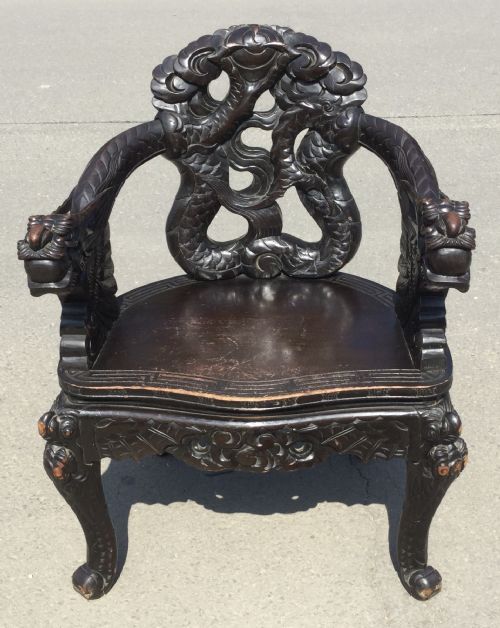

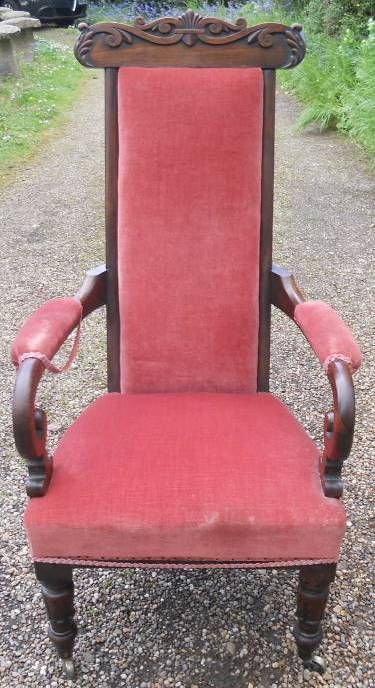


Carved Rosewood Throne Chair
A carved rosewood throne chair is a substantial seat built for display and authority, combining dense timber with deep carving.
Carved Rosewood Throne Chair
When you search for a carved rosewood throne chair, you enter a field dominated by nineteenth-century examples from China and British India. These seats serve as commanding architectural furniture, designed to project status through scale and ornamentation.
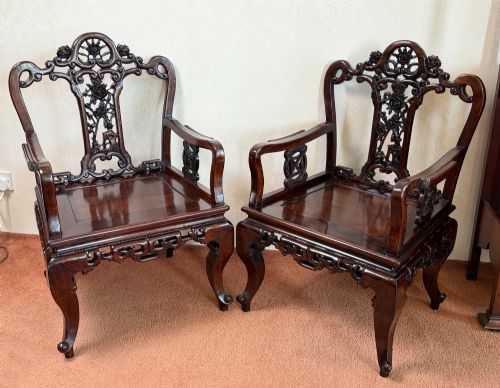
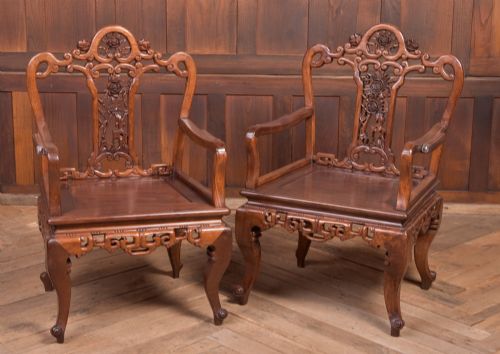
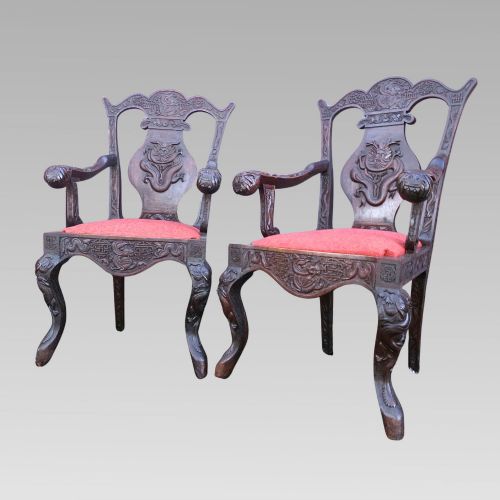
The most common form you will meet on this page is the nineteenth-century Chinese throne chair or armchair, often attributed to the Qing Dynasty or Chinese Export production. These pieces frequently employ dense tropical hardwoods alongside rosewood and hongmu.
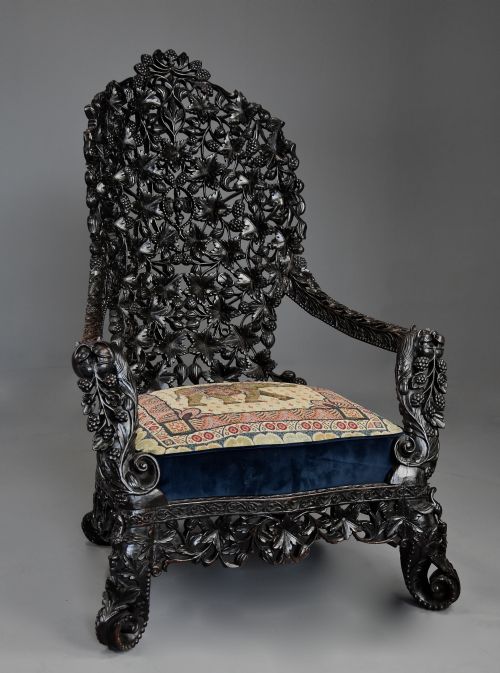
You will also encounter Anglo-Indian colonial armchairs and hall seats from the mid nineteenth century. These variants blend British seating forms with intricate local carving traditions executed in blackwood and hardwood.
How they were made
The construction relies on dense, heavy timbers such as rosewood, hongmu, and blackwood that demand specialised joinery. Makers carved these recalcitrant materials by hand to achieve high-relief motifs like dragons and foliage.
Upholstered elements, where present, utilise velvet and tapestry fixed to the frame. Certain regional variations incorporate bone inlay or marble panels directly into the wooden structure to contrast with the dark grain.
Carved Rosewood Throne Chair Retail Price Guide 2026
Typical asking prices for carved rosewood throne chair among the pieces listed under this phrase on Sellingantiques today, from the lower quarter to the upper quarter. They describe what is for sale here now, not the wider market.
Current listings span the nineteenth century, featuring materials such as rosewood, hongmu, blackwood, marble, velvet, and bone inlay across Chinese and Anglo-Indian styles.
What varies in quality
Quality rests upon the depth and crispness of the carving across the crest rail and arms. Superior examples exhibit high-relief work with distinct anatomical and botanical details rather than shallow, mechanical incisions.
The choice of material dictates the structural integrity and visual weight of the object. Solid rosewood and hongmu carry a natural density that elevates the piece beyond standard regional hardwoods.
The Carved Rosewood Throne Chair Glossary
- Rosewood
- A heavy, dense tropical timber prized for its dark grain and durability in carved furniture. It forms the primary structural material for many nineteenth-century throne chairs.
- Hongmu
- A traditional Chinese term denoting dense red-hardwoods used in fine cabinetry. Pieces made from this material often display deep reddish-brown tones.
- Anglo-Indian
- A style describing nineteenth-century furniture made in India under British colonial influence. It combines European seating proportions with intensive local carving.
- Blackwood
- A heavy dark timber utilised in nineteenth-century Indian and Chinese workshops. Its uniform dark colour provides a smooth ground for intricate relief carving.
Carved Rosewood Throne Chair: Frequently Asked Questions
Where were throne chairs placed?
These chairs stood in principal reception rooms, halls, or formal parlours as dominant focal points. Their heavy scale suited large domestic spaces rather than casual seating areas.
In official or mercantile settings, pairs flanked a central table to receive guests and mark authority.
How do I clean rosewood?
Dust the carved surfaces regularly with a soft, dry brush to prevent dirt from settling in deep recesses. Avoid water or liquid polishes that can damage the antique finish.
Feed the timber occasionally with traditional wax to maintain the natural sheen of the hardwood.
Are these chairs comfortable?
Throne chairs prioritize architectural presence and upright posture over soft cushioning. Most rely on rigid wooden seats, though some variants include upholstered pads in velvet or tapestry.
They function best as statement pieces rather than lounging armchairs.
How do I date these chairs?
Examine the tool marks, timber density, and stylistic conventions associated with nineteenth-century workshops. Qing Dynasty pieces often display distinct regional carving traits tied to specific export periods.
Compare the joinery methods and decorative motifs against documented examples from the same era.