



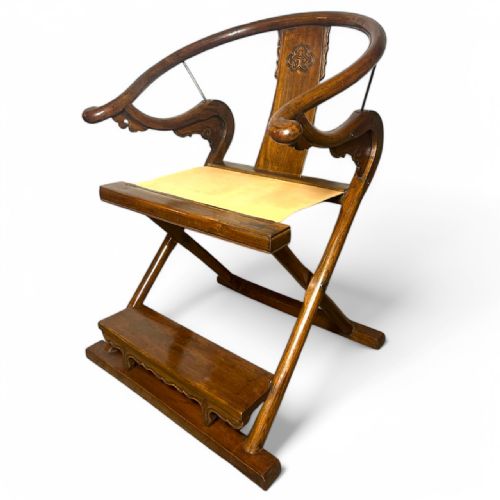


Asian Hardwood Chairs
Asian hardwood chairs bring sculptural form and rich timber grain into a room, offering functional seating rooted in centuries of craftsmanship.
Asian Hardwood Chairs
Asian hardwood chairs encompass a diverse range of seating forms including armchairs, horseshoe-back chairs, throne chairs, folding designs, benches, and settlers. You will frequently encounter nineteenth-century examples alongside pieces dating from the eighteenth century up to the early twentieth century.
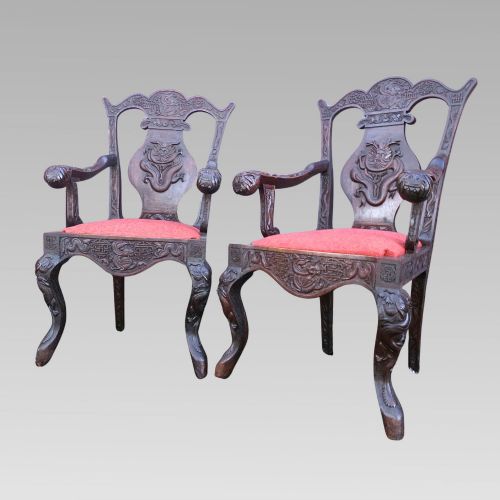
The aesthetic vocabulary spans traditional Chinese forms, Qing Dynasty styles, and Chinese export pieces, often categorized under broader headings like oriental or Anglo-Indian. These range from single armchairs and pairs to complete dining sets and hall furniture configurations.
Makers utilised varied regional timber selections to construct specialised seating such as day beds, corner chairs, and horseshoe-back throne chairs. The resulting inventory reflects both formal court furniture and domestic seating traditions.
Materials and Construction
Craftsmen utilised dense timbers such as rosewood, hongmu, elm, teak, and blonde wood, often supplemented by brass inlay or cinnabar lacquer finishes. These materials provided the structural integrity required for intricate carving and joinery without metal fasteners.
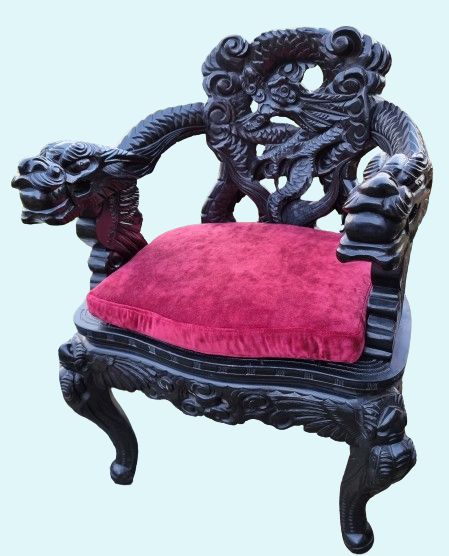
Surface decoration frequently involves deep relief carving depicting dragons and traditional motifs, executed directly into the hardwood or built up through layers of lacquer. Structural members like horseshoe backs and wishbone frames demonstrate advanced bending and joining techniques.
Stargazers chairs and day beds offer a nineteenth-century solution for reclining comfortably while contemplating the heavens.
Quality Variations
Quality depends heavily on the crispness of the wood carving and the selection of timber grain, with dense rosewood and hongmu specimens demonstrating superior weight and resonance. Refined proportions in complex forms like folding horseshoe-back chairs also indicate higher workshop standards.
The integrity of traditional joinery and the preservation of original lacquer or brass inlay significantly affect the standing of a piece. Finer examples retain their original structural rigidity and surface patination without heavy modern intervention.
The Asian Hardwood Chairs Glossary
- Hongmu
- A dense, dark tropical hardwood prized in Chinese furniture making for its strength and rich grain. It translates literally to red wood.
- Horseshoe-Back
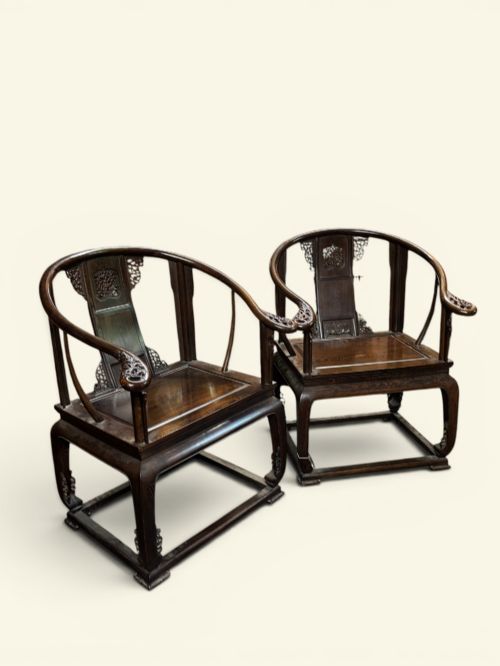
- A chair design featuring a continuous curved crestrail that sweeps down to form the armrests. This ergonomic shape provides comfortable support.
- Cinnabar Lacquer
- A technique involving multiple layers of vermilion-pigmented tree sap applied to a base and carved. It creates deep, tactile surface relief.
- Settle
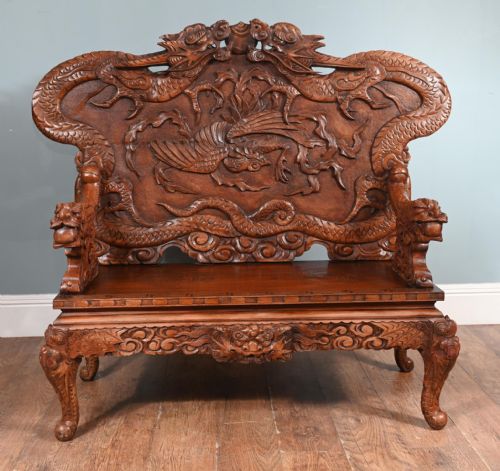
- A wooden bench with a high back and solid arms, designed to block drafts in domestic interiors. Many feature carved panels and storage bases.
- Qing Dynasty
- The last imperial dynasty of China, lasting from sixteen-forty-four to nineteen-twelve. Furniture from this era often displays elaborate dragon carvings.
Asian Hardwood Chairs: Frequently Asked Questions
What is hongmu timber?
Hongmu is a general category for heavy, dense tropical hardwoods used in traditional Chinese furniture making. It encompasses several species known for deep colour and fine grain.
Pieces made from hongmu feel notably heavy and hold intricate carved details exceptionally well. Over time, the timber develops a deep natural patina.
How were folding chairs used?
Folding chairs served as portable seating for travelling officials, military commanders, and elite households in historical China. Their complex hinged frames allowed them to be packed away when not in use.
Surviving examples combine collapsible wooden mechanisms with horseshoe-shaped backs. They represent some of the most sophisticated portable joinery from the nineteenth century.
Where should I place a hall bench?
Hall benches and settles function well in entryways, corridors, or large living spaces as both seating and sculptural focal points. Their high backs and carved panels provide a strong architectural presence against a wall.
Ensure the piece has adequate clearance from high-traffic walkways to protect delicate carvings and lacquer finishes. Pairing them with minimalist decor allows the timber grain to stand out.