




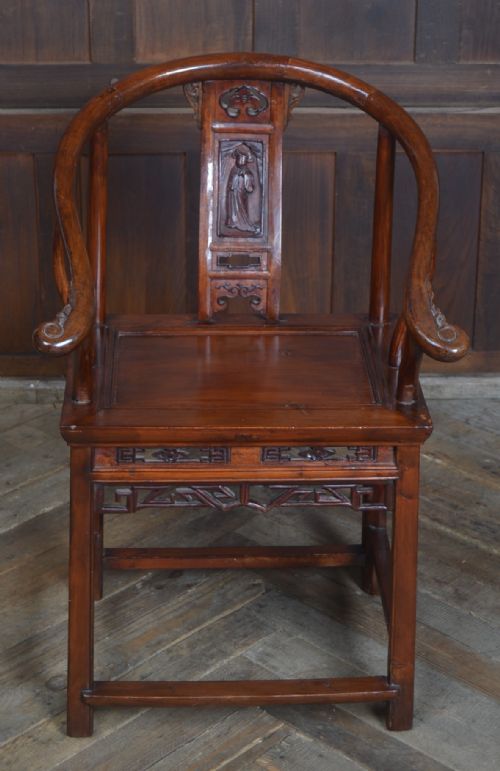

Oriental Horseshoe Back Chair
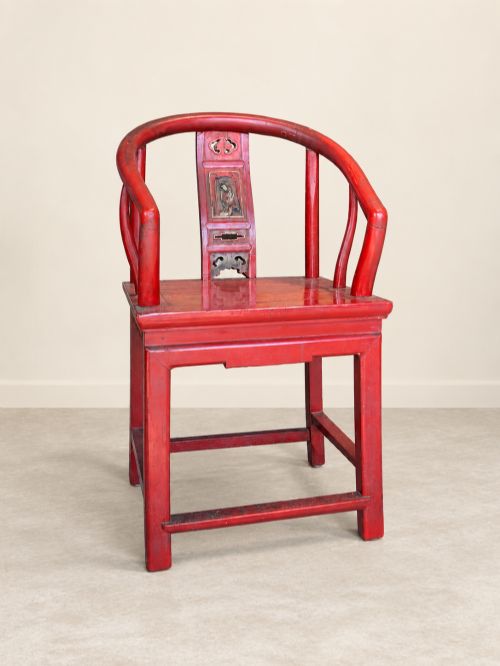
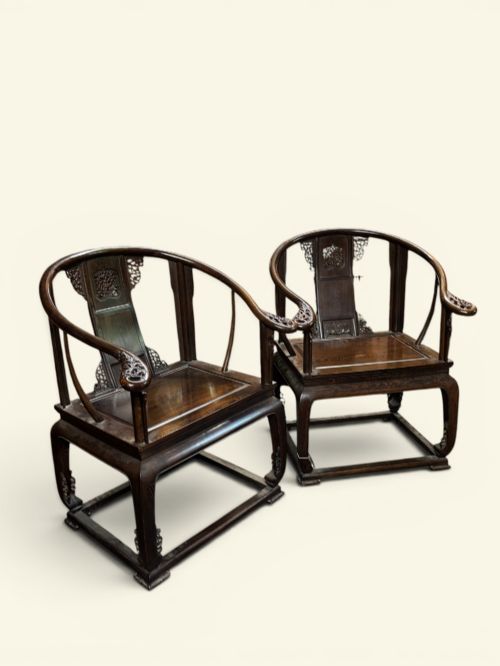
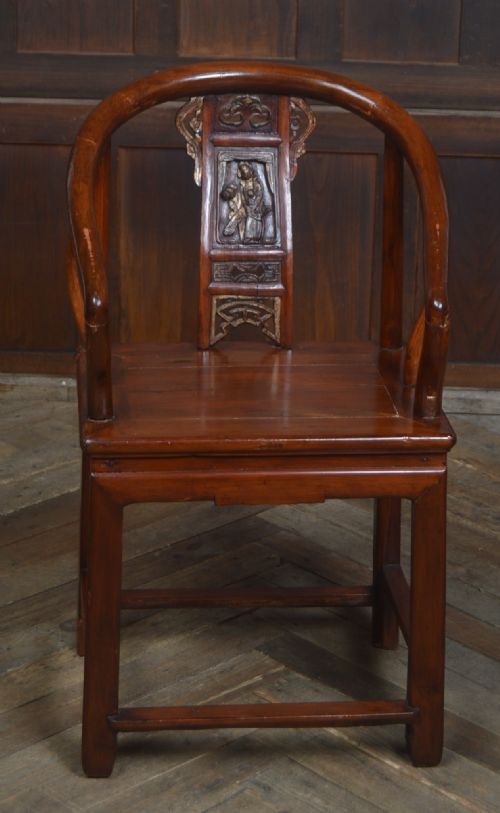
These oriental horseshoe back chair examples combine sweeping timber curves with practical seating, offering a striking silhouette collectors prize.
Oriental Horseshoe Back Chair
An oriental horseshoe back chair draws the eye with a distinctive curved crest rail that flows uninterrupted into the armrests. Buyers searching this phrase encounter distinctive armchairs originating from various historical eras including the eighteenth century and the nineteenth century.
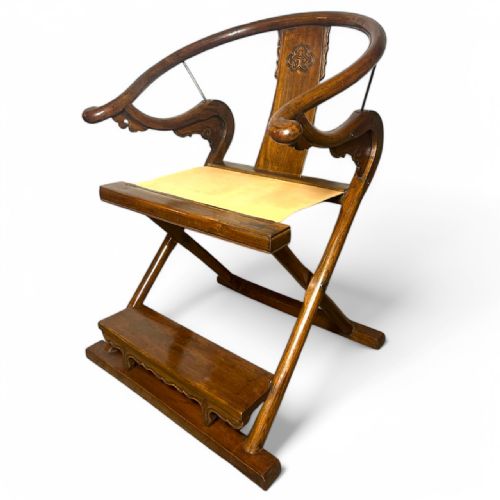
The selections recorded here span traditional Chinese aesthetics, Qing dynasty influences, and Chinese Ming style interpretations. Many examples present folding frames or sturdy armchairs constructed from solid timber.
Most entries originate from the nineteenth century alongside pieces dated around nineteen hundred or into the Edwardian period. Collectors find pairs as well as individual armchairs displaying brass inlay, lacquered finishes, or pickled elm.
How they were made
Cabinetmakers utilised dense timbers such as elm and dark hardwood to achieve the continuous curved back typical of an oriental horseshoe back chair. These woods provided the structural strength required for steam-bent or segmented horseshoe rails.
Surface finishes include traditional lacquer, painted decorations, and brass inlays applied by hand. Certain examples incorporate cane work or leather panels to complete the seating surface.
Listings feature elm, hardwood, lacquer, and brass alongside bamboo and leather elements.
What varies in quality
The standard of an oriental horseshoe back chair rests upon the execution of the joinery where the curved crest rail meets the supporting posts. Superior examples maintain firm structural integrity while displaying precise alignment in decorative brass work or carved components.
The preservation of original lacquer or surface treatments significantly influences the character of each piece. Finer specimens retain intact finishes that reflect the intended aesthetic of the workshop.
The Oriental Horseshoe Back Chair Glossary
- Horseshoe-back
- A chair design featuring a semicircular crest rail curving around to form the armrests. This shape derives from traditional seating forms developed in China.
- Qing Dynasty
- The final imperial dynasty of China, spanning from the seventeenth to the early twentieth century. Pieces from this era often exhibit refined carving and polished timber surfaces.
- Ming Style
- An aesthetic originating from the Ming dynasty known for clean lines and structural honesty. Later reproductions frequently adopt these minimalist proportions.
- Chinoiserie
- European interpretations of Chinese artistic traditions popular in decorative arts and furniture. This style appears in painted or lacquered surfaces.
- Pickled finish
- A treatment applied to timber to lighten the natural tone while revealing the grain structure. This process emphasises the texture of woods such as elm.
Oriental Horseshoe Back Chair: Frequently Asked Questions
How were these chairs used historically?
An oriental horseshoe back chair served as prestigious seating within traditional interiors, often positioned in reception rooms or studies. The curved design allowed individuals to sit comfortably while wearing formal garments with wide sleeves.
Over time, these chairs transitioned from purely functional items into decorative focal points within elite households. Their distinctive profile made them symbols of status and refined taste.
How do I care for a lacquered chair?
Preserving lacquered surfaces requires maintaining stable indoor humidity levels away from direct sunlight or excessive heat. Gentle dusting with a soft, dry cloth prevents the accumulation of abrasive particles without harming the finish.
Avoid applying modern chemical polishes or water directly to the wood or lacquer. Professional conservation advice should be sought for any structural repairs or surface maintenance.
Are these chairs comfortable for daily seating?
The ergonomic curve of the back rail provides natural support for the upper body and arms during seated tasks. While designed without plush upholstery, the geometry distributes weight evenly across the wooden seat.
Many owners use these chairs as accent seating in living spaces or hallways rather than primary lounge furniture. Their striking visual presence often complements minimalist or eclectic contemporary interiors.
How do I identify a folding version?
Folding variants incorporate a hinged mechanism within the central support frame, allowing the entire structure to collapse for transport or storage. This portable design was historically favoured by nomadic or travelling officials.
Examining the pivot points and metal pins reveals the mechanical ingenuity behind the folding action. These models require careful handling to ensure the ancient hinges remain undamaged.