







Chinese Carved Splat Chair
These Chinese carved splat chair examples bring traditional craftsmanship and striking form into a room.
Chinese Carved Splat Chair
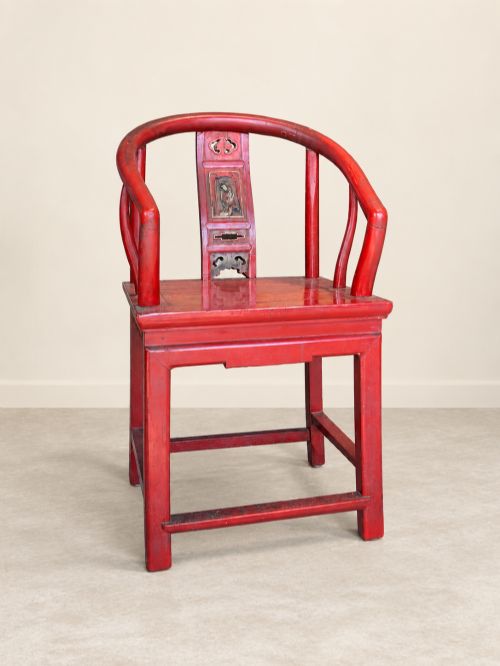
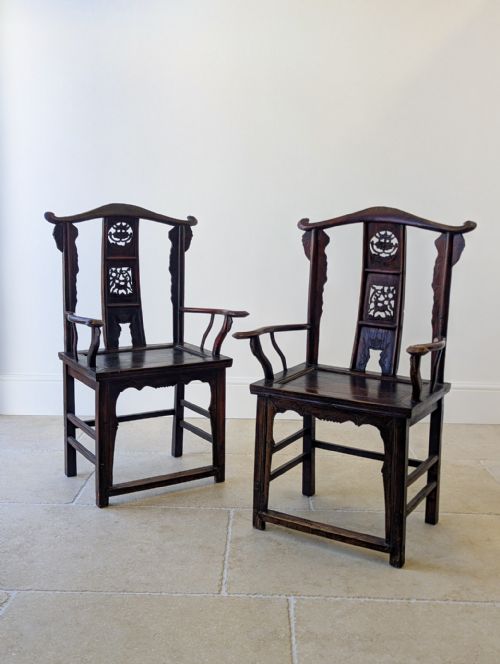
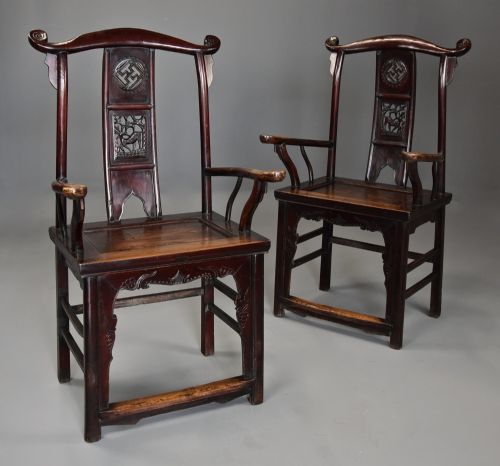
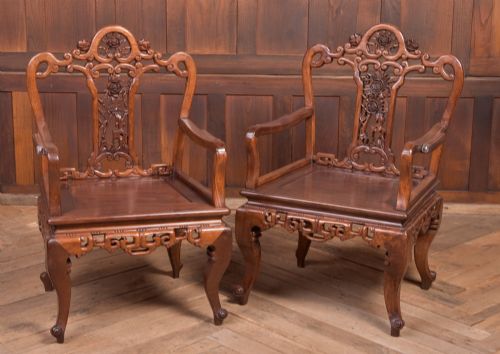
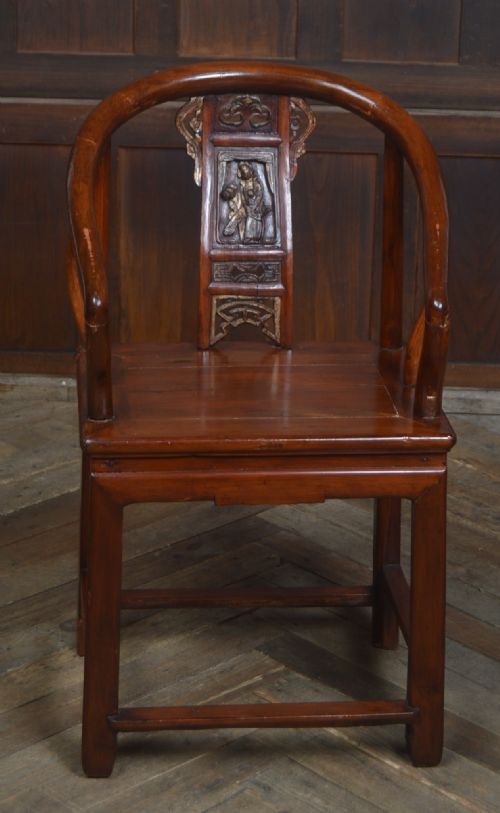
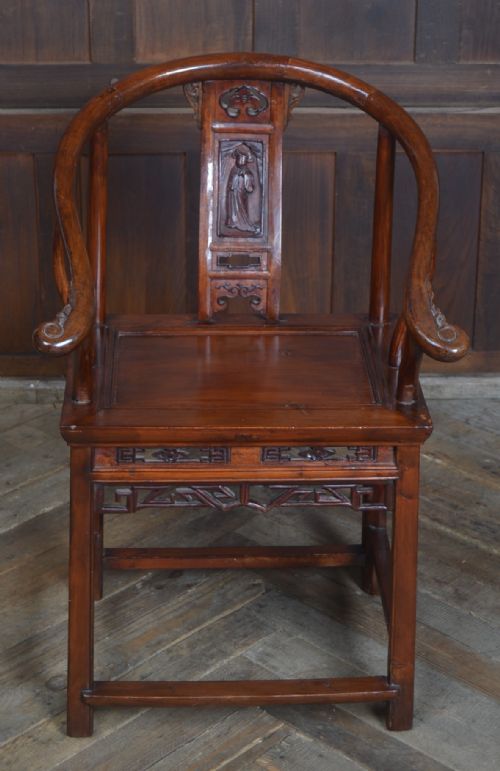
A Chinese carved splat chair combines functional seating with detailed woodwork, featuring a central vertical splat set into the backrest. These pieces emerge primarily from the nineteenth century, alongside later twentieth-century interpretations, drawing upon traditional Chinese designs.
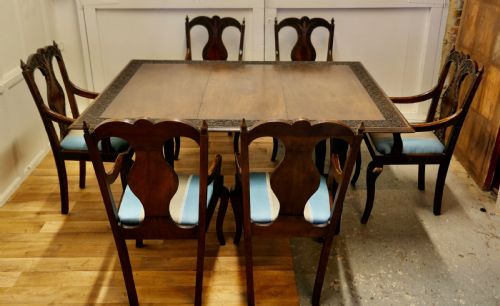
Buyers encounter various forms on this page, ranging from single side chairs and armchairs to paired sets, benches, and larger dining collections. Materials span from elm and rosewood to mahogany, lacquer, and polished hardwood.
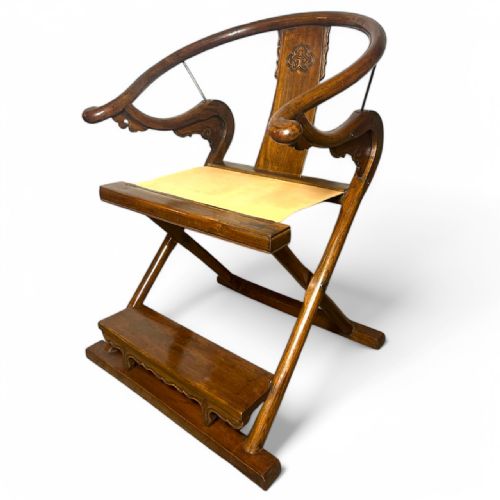
Styles represented include Qing Dynasty and Chinese Chippendale influences, alongside Victorian and Edwardian era adaptations. The selection includes yoke-back armchairs, horseshoe-back throne chairs, and concubine chairs.
Materials and Construction
Joinery forms the backbone of these pieces, utilising traditional framing techniques to join timbers such as elm, hardwood, and mahogany without excessive metal fastening. Carved wooden splats are shaped and fitted directly into the back frame.
Surface finishes range from polished natural grain in blonde wood and rosewood to applied red lacquer and painted details. Some examples incorporate woven cane seating alongside solid wooden elbow seats.
Available seating forms include horseshoe-back throne chairs, yoke-back scholar chairs, and concubine chairs.
Evaluating the Pieces
Quality rests in the crispness of the carved splat and the depth of the wood's natural patina, particularly on elm and hardwood examples. Sharply defined carving and well-preserved original lacquer distinguish finer pieces.
The integrity of the frame and the balance of the joinery determine durability, especially in yoke-back and horseshoe designs. Consistency across pairs and matched sets further defines the upper tier of these offerings.
The Chinese Carved Splat Chair Glossary
- Splat
- The vertical central strip of wood in the backrest of a chair, often carved with symbolic motifs. It provides both structural support and decorative focus.
- Yoke-back
- A chair back design featuring a curved top rail resembling a traditional oxen yoke. This style often appears on scholar chairs and armchairs.
- Horseshoe-back
- A continuous semicircular arm and back rail that sweeps downward in a single curved line. This form is typical of traditional throne chairs and folding seats.
- Lacquer
- A durable resin finish applied in multiple layers to wood, frequently seen in red on nineteenth-century examples. It provides a glossy protective coating and rich colour.
- Patina
- The surface sheen and texture developed through age, handling, and use over decades. A good patina indicates genuine period wear on hardwoods like elm and rosewood.
Chinese Carved Splat Chair: Frequently Asked Questions
How were these chairs used?
These chairs served various functions in traditional settings, from formal seating in reception halls to personal use by scholars and officials. Armchairs and throne chairs typically occupied prominent positions in a room.
Smaller side chairs and dining sets accommodated daily gatherings and meals. Benches and settling seats provided communal seating along walls or in entrance halls.
How do I care for lacquered wood?
Lacquered surfaces require gentle dusting with a soft, dry cloth to prevent scratching the finish. Avoid direct sunlight and excessive humidity to protect the integrity of the lacquer.
Keep wooden frames away from direct heat sources to prevent timber from drying out or splitting. Natural waxes may be used sparingly if appropriate for the specific finish.
How do I distinguish nineteenth-century pieces?
Nineteenth-century pieces often display traditional construction methods using dense timbers like elm, rosewood, and hardwood. Original surface treatments such as red lacquer or polished grain show authentic age and wear.
Stylistic markers include Qing Dynasty influences and traditional joinery without modern fasteners. Variations in hand-carved splats reflect individual workshop practices of the period.