



Pair of Oriental Chairs
A proper pair of oriental chairs brings distinct form and cultural history into a room, offering matched seating rooted in centuries of craft.
Pair of Oriental Chairs
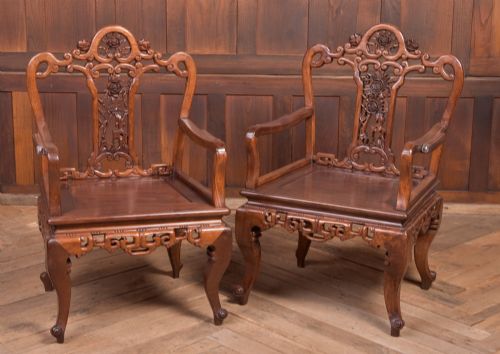
When you search for a pair of oriental chairs, you encounter matched seating spanning nineteenth-century production, Victorian interpretations, and early twentieth-century examples. The selection includes armchairs, side chairs, hall chairs, and larger seating arrangements originating from diverse workshops.
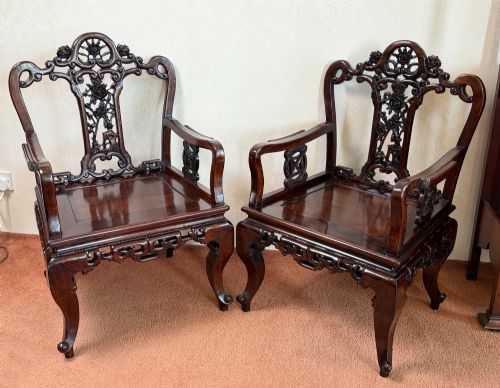
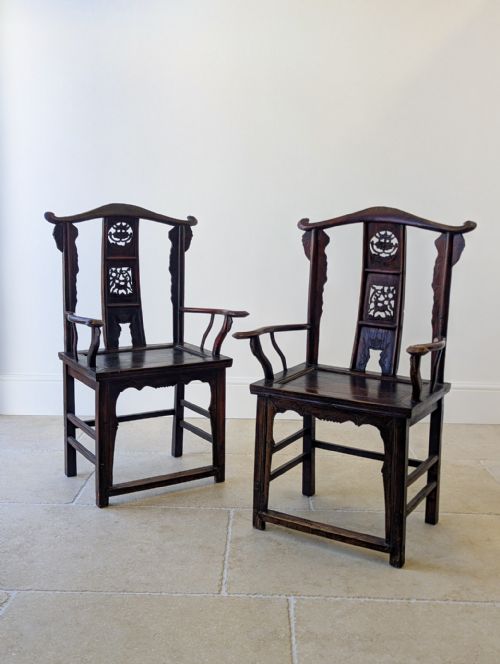
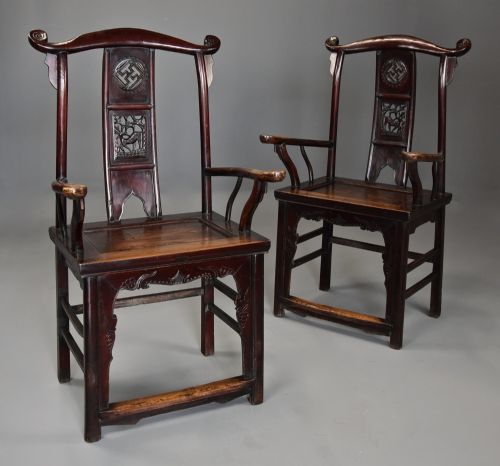
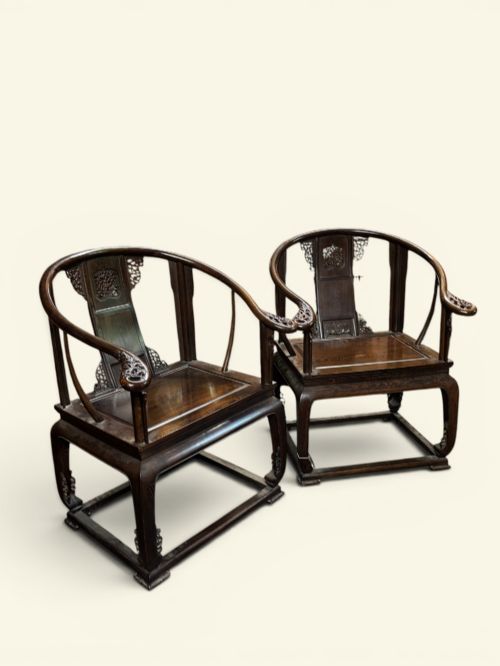
The most common forms found in this range are Chinese types, notably yoke-back chairs, horseshoe-back designs, and scholars' chairs. These pieces reflect traditional aesthetic structures developed across the Qing Dynasty and subsequent export periods.
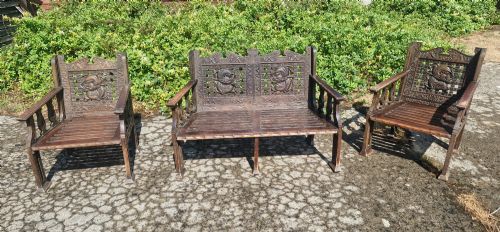
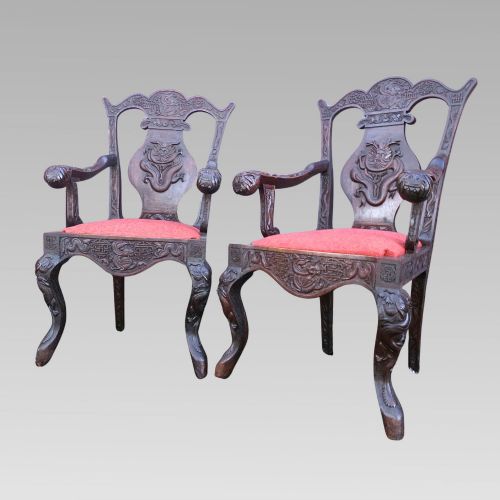
Beyond standard forms, regional variations appear, including Anglo-Indian elbow chairs and Burmese conservatory suites. Each style utilises traditional joinery adapted to domestic interiors and formal reception spaces.
Materials and construction methods
Construction relies heavily on dense timbers such as hardwood, elm, rosewood, teak, and hongmu, selected for structural stability. Joinery techniques allow complex frames like horseshoe arms to be constructed without extensive metal fasteners.
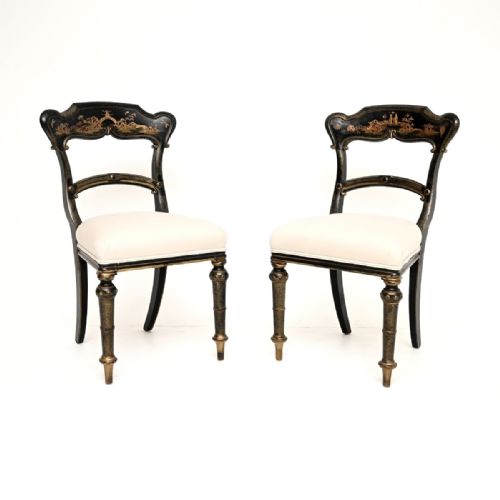
Surface finishes include applied lacquer, painted details, and occasional brass inlay. Some items retain original red or black lacquer coatings, while others display patinated natural wood surfaces.
Seating areas incorporate woven canework, fabric upholstery, or solid wooden panels inset into the main frame. These materials combine to support daily use while maintaining traditional aesthetic proportions.
Some horseshoe chairs double as portable thrones, designed so scholars could ponder the universe without tipping over.
Factors determining quality
Quality separates through the integrity of the timber selection and the precision of the carved decoration. Deep, crisp carving on hardwood frames indicates skilled workshop execution.
Condition of surface treatments, such as original lacquer and preserved wood patina, influences the overall integrity of the piece. Surviving original finishes demonstrate better historical preservation than later refinishing.
Symmetry between the two chairs in a pair ensures visual balance. Matched proportions and consistent wear patterns across both items denote a genuine original pairing.
The Pair of Oriental Chairs Glossary
- Yoke-back
- A chair style featuring a top crestrail that curves upwards resembling an ox yoke. This design provides comfortable head and shoulder support.
- Horseshoe-back
- A continuous curved arm and backrail forming a semi-circular embrace. It requires advanced woodworking joinery to shape the timber accurately.
- Hongmu
- A translation meaning red wood used to describe dense tropical hardwoods. It provides heavy weight and a dark reddish hue.
- Japanned
- European imitation of East Asian lacquerwork. It involves layered varnishes and painted decoration on wooden furniture.
Pair of Oriental Chairs: Frequently Asked Questions
How do I identify a genuine pair?
Check the timber grain, construction methods, and wear patterns on both items to confirm they originated together from the same workshop.
Matching dimensions and consistent ageing across the pair help verify their authenticity as a matched set.
Where were these chairs placed originally?
Traditional Chinese chairs often occupied reception halls, studies, or scholar's rooms for formal seating.
Export versions and Victorian interpretations were adapted for European drawing rooms and conservatories.
How should I care for lacquered wood?
Keep wooden and lacquered surfaces away from direct sunlight and maintain stable indoor humidity levels.
Dust gently with a dry cloth and avoid harsh chemical cleaners that can damage fragile finishes.
What periods do these chairs date from?
The listings span the nineteenth century, including Qing Dynasty pieces, alongside Victorian and early twentieth-century examples.
Specific dates range from the eighteen-fifties through to nineteen-twenty across various global export styles.