

Carved Floral Back Chair
A carved floral back chair brings organic ornamentation and dependable timber construction into daily use.
Carved Floral Back Chair
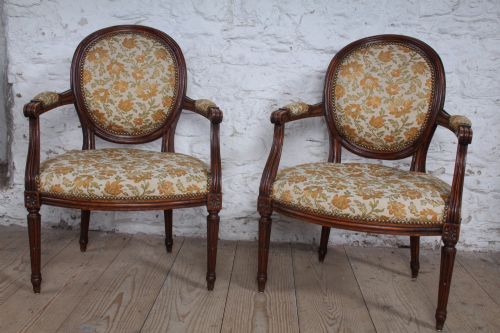
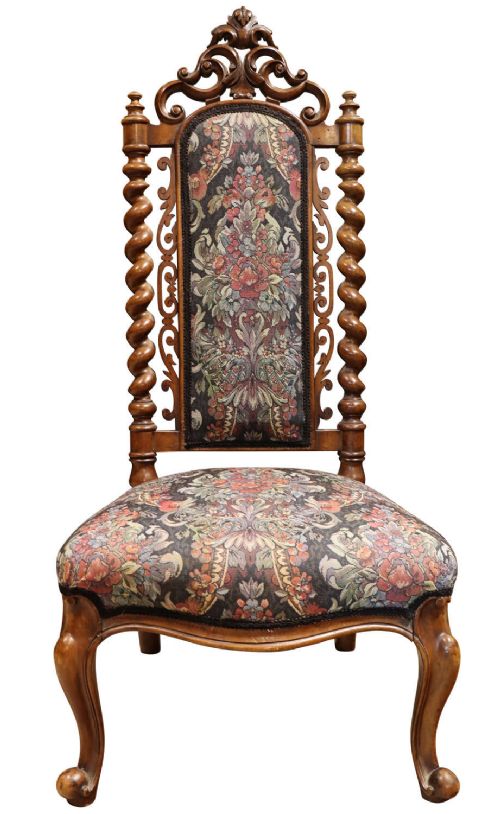
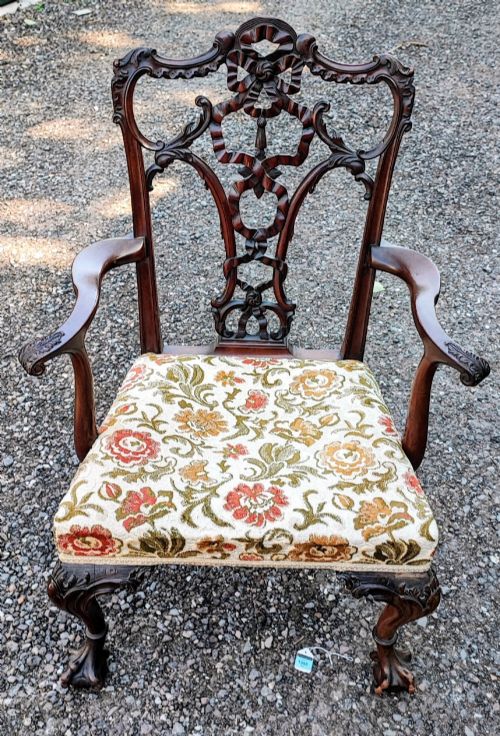
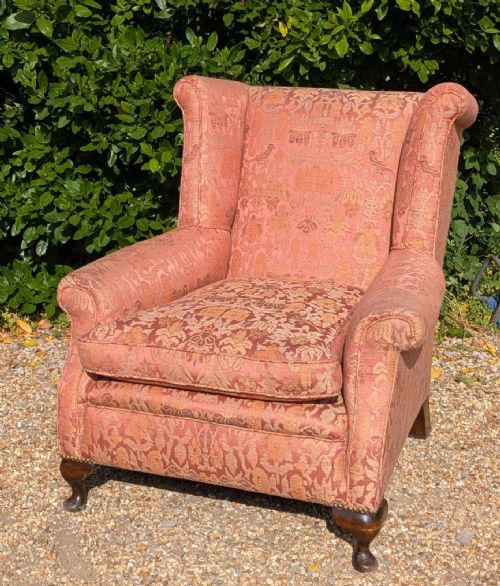
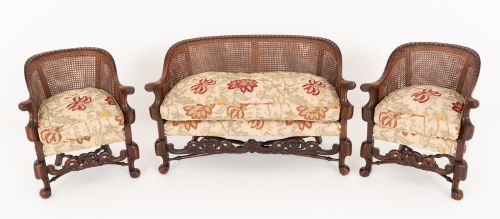
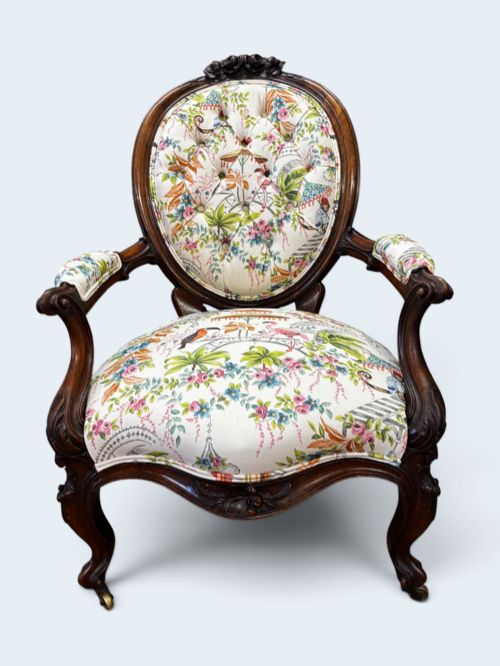
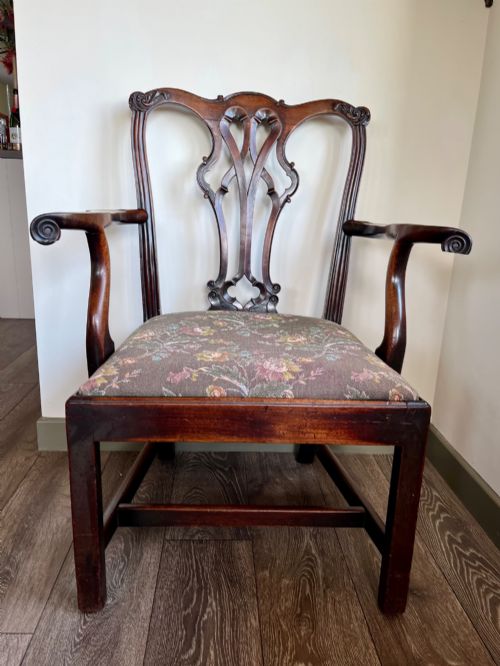
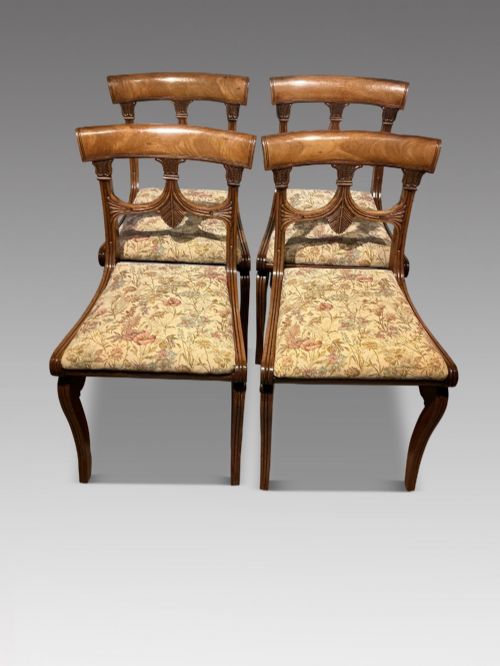
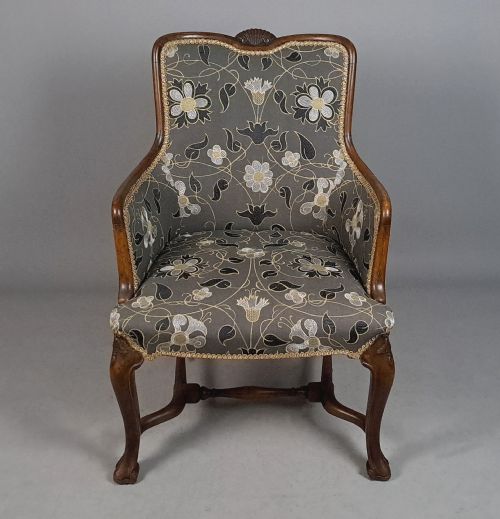
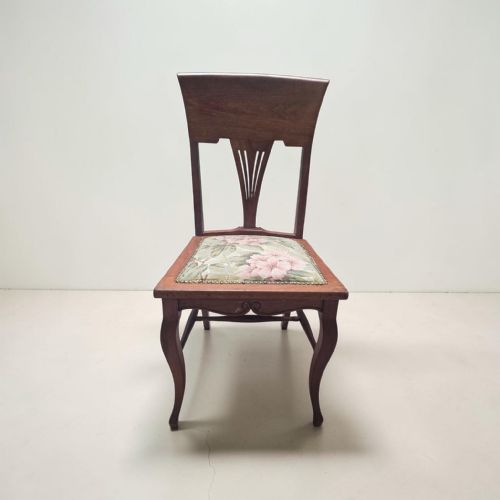
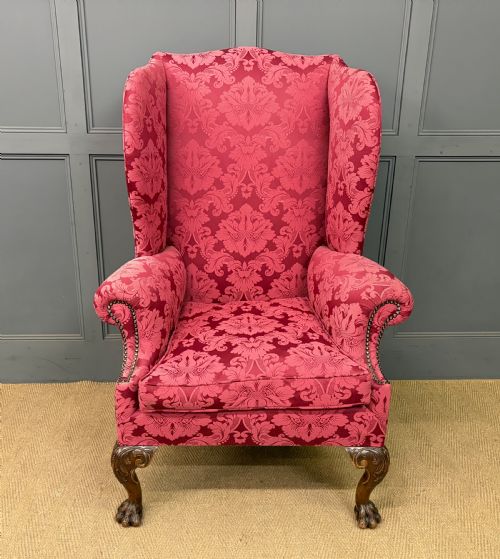
A carved floral back chair spans dining chairs, armchairs, and hall chairs originating from the eighteenth, nineteenth, and early twentieth centuries. These pieces appear in styles ranging from Regency and Victorian to Chippendale and Art Nouveau.
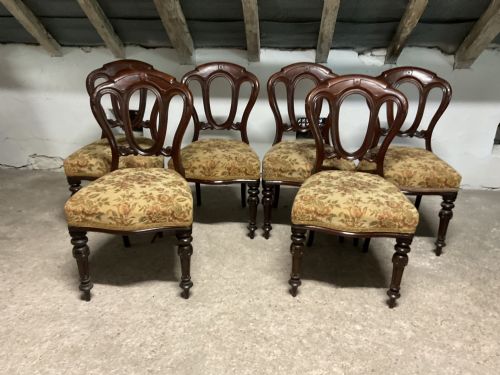
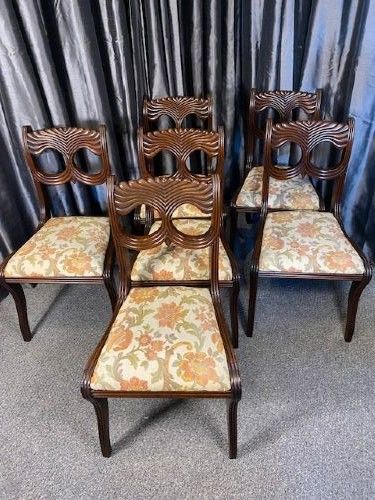
The version most commonly met on this page is the Victorian walnut or mahogany dining chair, often bearing floral woodwork along the top rail or splat.
Makers utilised dense hardwoods to support intricate foliage motifs, pairing structural integrity with decorative carving.
The standard of craftsmanship
The depth and clarity of the timber carving set superior examples apart from plainer production.
Finer seating displays crisp hand-chiseled foliage rather than soft or cast embellishments.
The choice of primary timber, such as figured walnut or dense mahogany, dictates the structural resilience and finish.
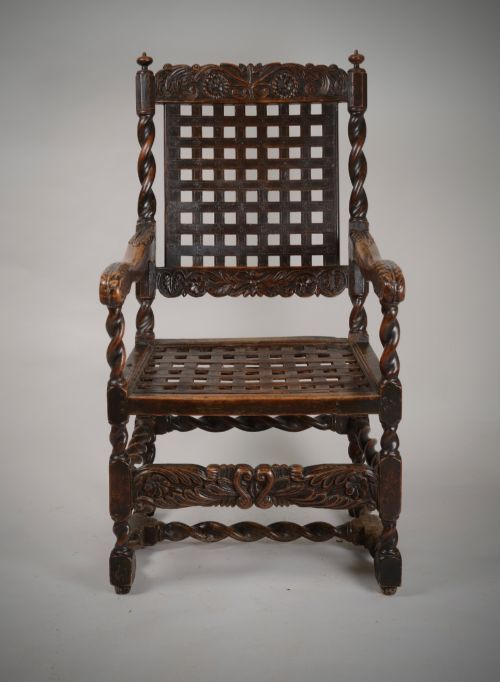
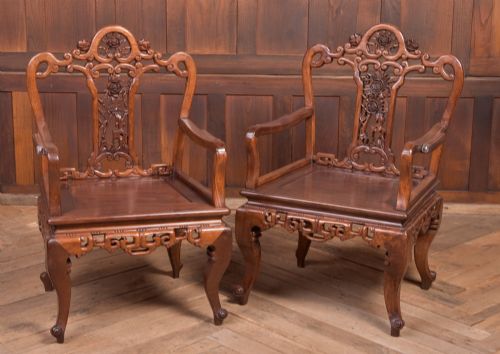
Green man carved oak throne chairs stare back from the room with leafy woodland expressions.
Waring and Gillow·R Whytock of Edinburgh
The Carved Floral Back Chair Glossary
- Splati
- The vertical central strip of wood in the back of a chair. This component frequently bears the carved floral ornamentation.
- Cabriole leg
- A furniture leg that curves outward and then tapers inward, mimicking an animal shape. It appears frequently on eighteenth and nineteenth-century seating.
- Balloon back
- A rounded chair back shaped like a balloon, popular during the Victorian period. It provides a curved surface suited for floral crests.
- Tapestry
- A heavy hand-woven or needlepoint textile used for upholstery. These panels display floral or pictorial scenes.
Carved Floral Back Chair: Frequently Asked Questions
How do I care for a carved wooden chair?
Dust the timber regularly with a soft cloth to protect the carved details from dirt accumulation. Apply occasional wax polish to nourish the hardwood.
Keep the seating away from direct heat sources and sunlight to prevent the timber from splitting or the upholstery from fading.
Can I use these chairs for daily dining?
Many nineteenth-century dining chairs were built for regular use and remain structurally capable of supporting daily sitting. Check the joinery under the seat to ensure the frame stays rigid.
Heavier dining variants handle daily wear better than delicate occasional or nursing chairs.
How do I distinguish Victorian from earlier styles?
Victorian seating often displays heavier proportions and darker finishes, utilising mahogany or walnut with machine-assisted and hand-finished carving. Earlier Georgian or Regency pieces lean toward lighter lines and precise cabinetwork.
Examining the underside and joint construction helps reveal the manufacturing period.