


Pair Oriental Armchairs
Pair oriental armchairs bring structural presence to a room, offering matched seating carved from dense timbers across the Qing dynasty and Victorian periods.
Pair Oriental Armchairs
When you search for pair oriental armchairs, you encounter matched seating spanning the nineteenth century up to 1920, with notable examples originating from Qing dynasty workshops, Anglo-Indian commissions, and English Chinoiserie interpretations.
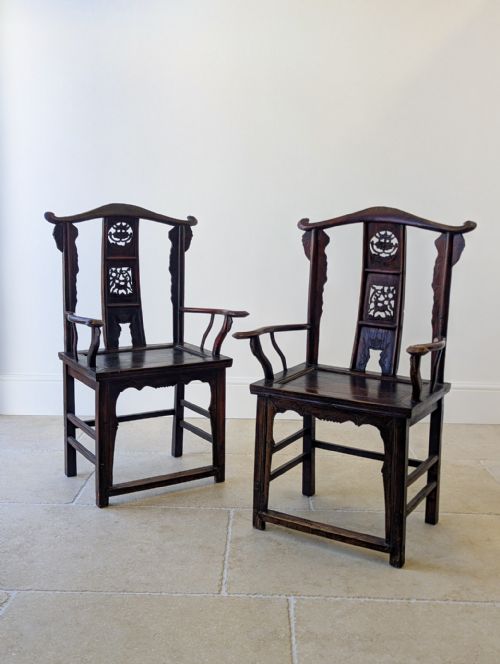
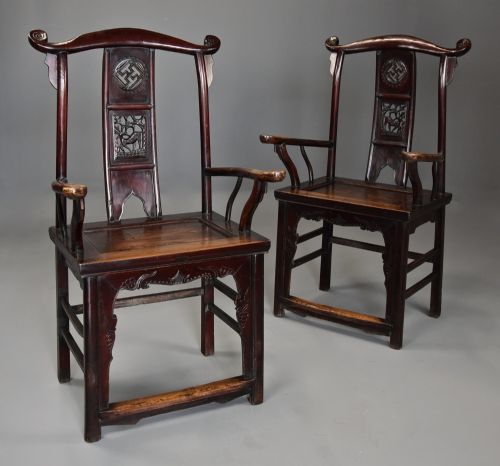
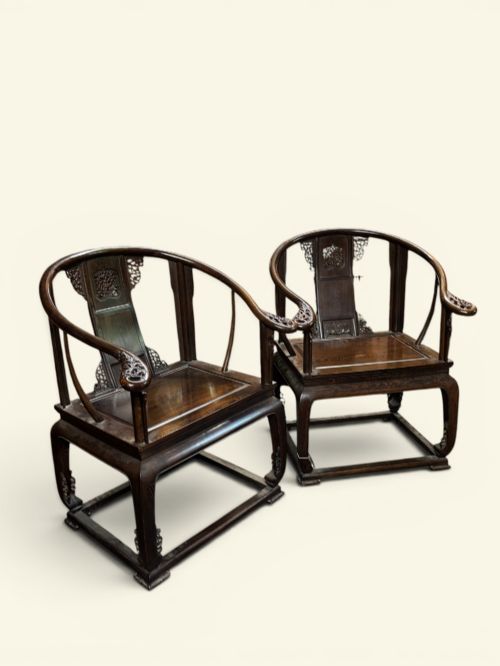
The most common version met on this page is the Chinese hardwood armchair, appearing in distinct regional forms such as yokeback scholars' chairs, horseshoe-back designs, and imposing throne chairs.
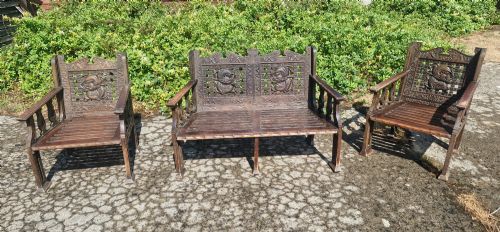
Makers utilised various traditional seating configurations, including folding frames, corner chairs, and three-piece conservatory suites accompanied by side tables.
Materials and Technique
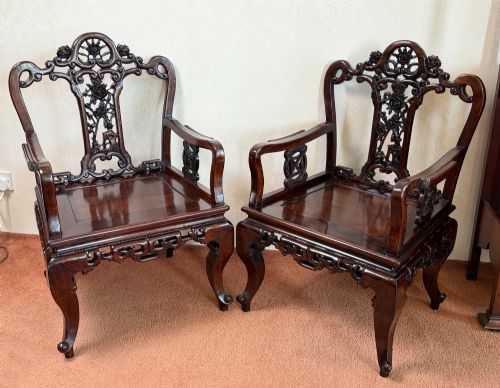
Cabinetmakers constructed these frames using heavy timbers like hongmu, rosewood, teak, and elm, often applying rich red lacquer or retaining a natural polished patina.
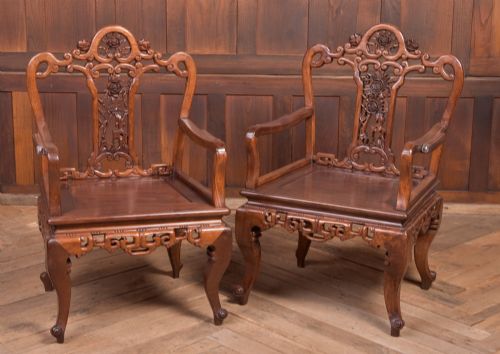
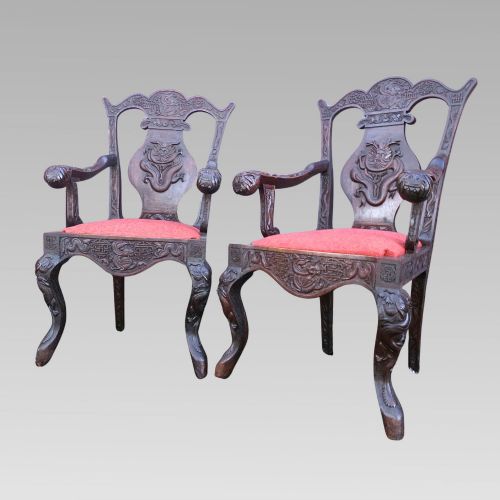
Many examples incorporate intricate surface detailing through deep carving, brass inlays, and woven canework seats that provide both tension and texture.
Structural joinery relies on traditional interlocking methods rather than metal fixings, allowing dense hardwoods to support upright scholar profiles and sweeping horseshoe curves.
The inventory records Chinese Qing Dynasty, Anglo-Indian, and Chinoiserie styles in various seating forms.
Craftsmanship and Material Depth
The distinction between standard seating and superior examples rests on the crispness of the wood carving and the density of the chosen timber, such as heavy hongmu versus domestic elm.
Original surface finishes, including intact red lacquer and well-preserved canework panels, elevate an armchair above pieces that have undergone extensive structural restoration.
The Pair Oriental Armchairs Glossary
- Yokeback
- A chair design featuring a crestrail that curves upwards at the ends resembling a traditional ox yoke. This form supports an upright posture favored by scholars.
- Hongmu
- A dense, heavy tropical hardwood used in fine Chinese furniture. The material is prized for its deep natural colour and ability to hold crisp carved details.
- Horseshoe-back
- A continuous, steam-bent crest rail that sweeps down to form the armrests. This ergonomic shape provides enclosing support for the sitter.
- Japanned
- European decorative lacquerwork imitating Asian designs. Artisans applied successive coats of varnish and built up raised metallic motifs.
- Canework
- Woven cane material utilised for chair seats and back panels. It offers flexible support and a lighter texture against heavy timber frames.
Pair Oriental Armchairs: Frequently Asked Questions
How were pair oriental armchairs used?
These chairs served primary seating roles in formal reception rooms, studies, and scholarly spaces. Matched pairs were positioned symmetrically to project status and balance within an interior.
In later periods, similar seating migrated into British country house conservatories and drawing rooms, blending exotic forms with domestic leisure spaces.
How do I live with pair oriental armchairs?
Place the armchairs where their timber grain and carved details can be appreciated without direct sunlight altering the lacquer or polished finish. Their strong silhouettes work well as accent seating in contemporary or traditional rooms.
Maintain the wood and cane surfaces by dusting with a dry cloth and avoiding excessive moisture. The sturdy construction of these hardwoods suits daily placement in living areas.
What is the difference between elm and hongmu chairs?
Elm provides a resilient, lighter timber that accepts treatments such as red lacquer or pickled finishes. It frequently appears in country house or scholar variants.
Hongmu is an exceptionally dense, dark tropical hardwood that remains heavy in hand and supports intricate, deep-relief carving without requiring paint or lacquer.