
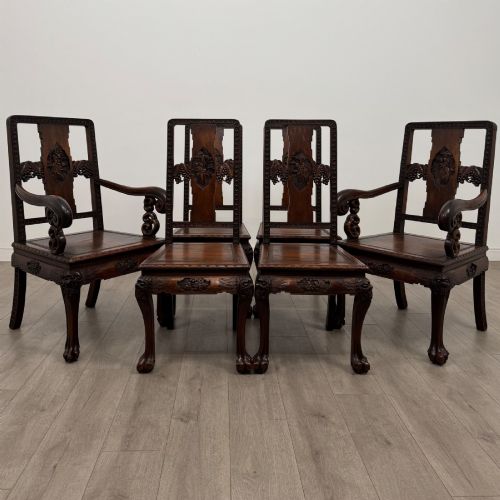
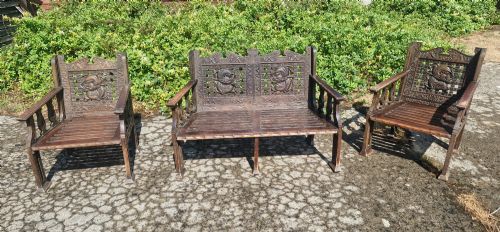
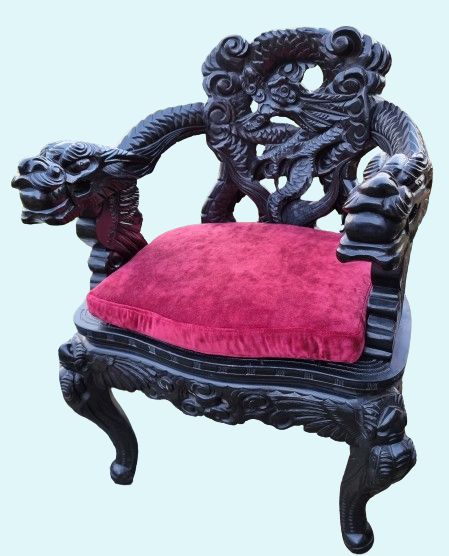
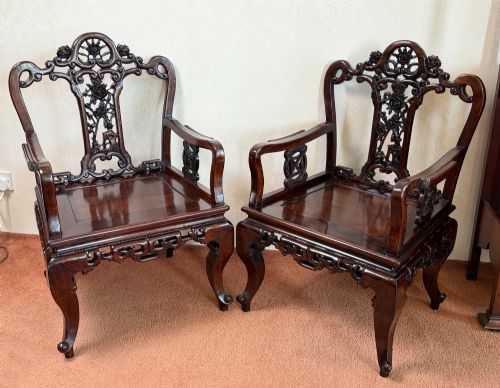



Oriental Dark Wood Chairs
Oriental dark wood chairs bring deep tones and intricate carving into a room, offering both seating and historic character.
Materials and construction
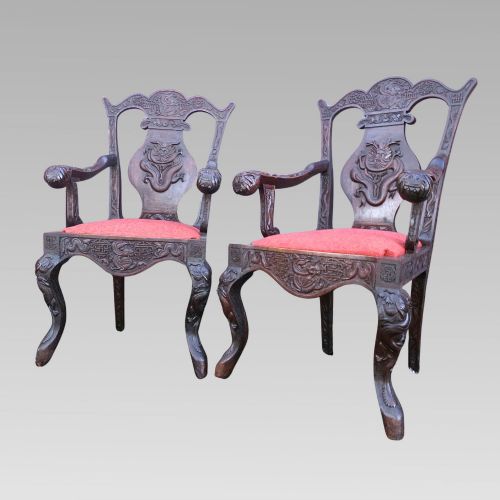
Craftsmen utilised dense timbers such as rosewood, hongmu, elm, teak, and general dark hardwoods to build these chairs. These heavy woods allowed for deep, crisp carving without compromising the structural integrity of the frame.
Joinery methods often relied on precise interlocking wood joints rather than metal fasteners, ensuring durability across centuries. Surfaces frequently display a rich natural patina, occasionally enhanced with original red lacquer or subtle brass inlay.
Evaluating the craftsmanship
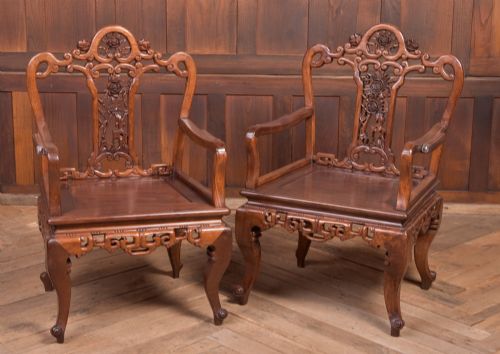
Quality rests upon the depth and precision of the carving, particularly on dragon motifs and floral panels. Crisp, deeply undercut relief work indicates a higher level of artisan skill than shallow, machine-like stamping.
The choice of timber and the preservation of the surface finish also dictate the standing of a piece. Dense rosewoods and hardwoods that retain a deep, warm patina command greater regard than dry or heavily restored surfaces.
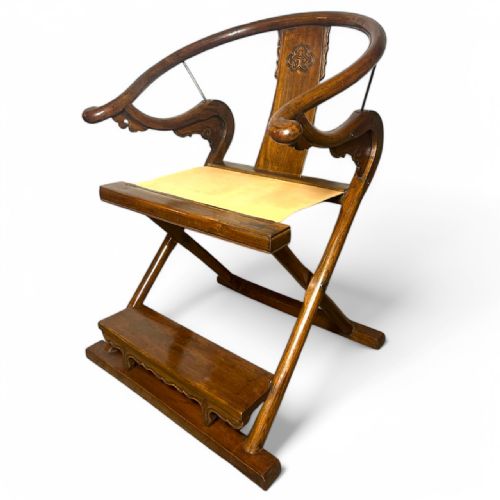
Some nineteenth-century folding chairs were built to travel across continents without losing their balance.
The Oriental Dark Wood Chairs Glossary
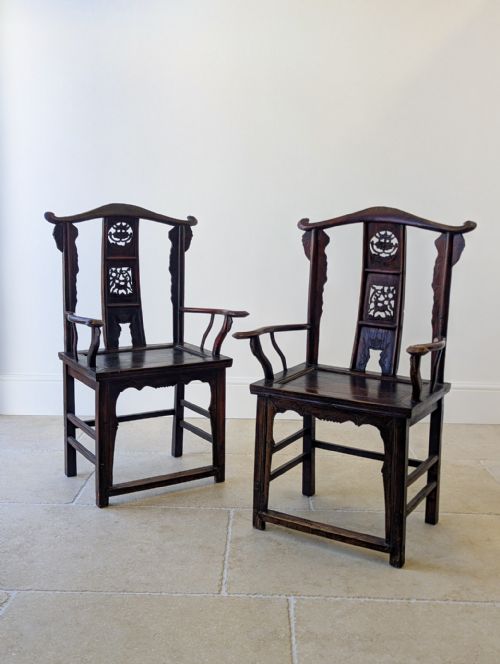
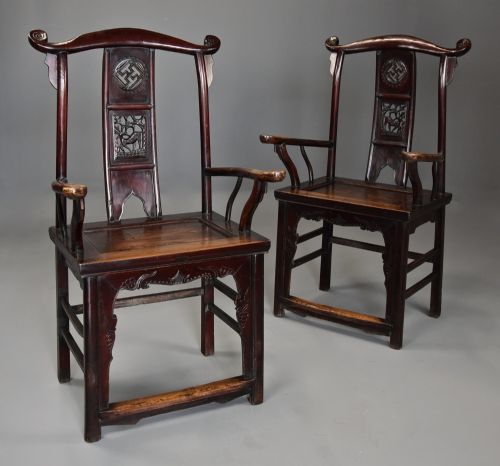
- Yokeback armchair
- A traditional Chinese chair style featuring a top creil resembling an ox yoke. The design provides comfortable shoulder support while maintaining a strict geometric aesthetic.
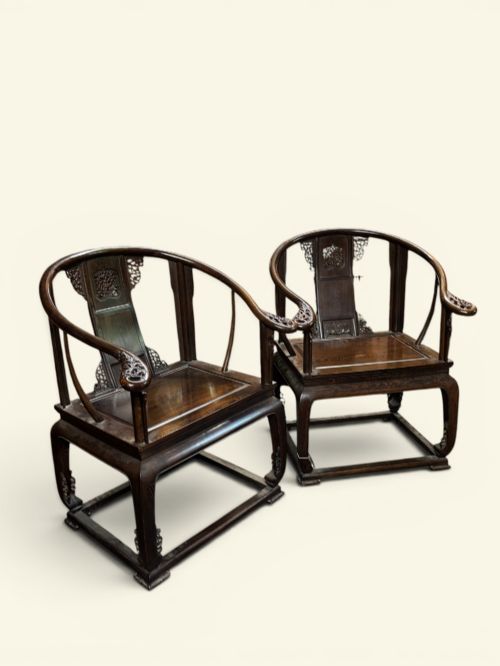
- Horseshoe-back
- A continuous, curved arm and back rail formed from a single piece of bent timber or multiple curved segments. This ergonomic shape wraps around the sitter.
- Qing Dynasty
- The final imperial dynasty of China, lasting from sixteen-forty-four to nineteen-twelve. Furniture from this era is celebrated for refined carving and formal dignity.
- Hongmu
- A translation meaning red wood, referring to a category of dense, dark tropical hardwoods used in fine Chinese furniture. It takes a high polish and supports intricate relief carving.
- Patina
- The surface sheen and coloration developed through age, handling, and waxing. A good patina shows depth rather than flat dryness.
Oriental Dark Wood Chairs: Frequently Asked Questions
How do I identify a yoke-back armchair?
Look for the distinctive curved top rail that projects slightly beyond the upright posts, resembling an ox yoke.
This form provides ergonomic support and remains a defining characteristic of traditional Chinese seating.
Where were these chairs made?
The pieces originate primarily from China, with specific examples from regional export centres and colonial workshops in India and Burma.
Different geographic regions imparted distinct carving styles and timber choices upon the frames.
How do I care for dark hardwood furniture?
Maintain the wood by keeping it away from direct heat sources and sudden humidity changes. Apply a microcrystalline wax periodically to nourish the surface patina.