




Elm Yoke Back Chairs
Elm yoke back chairs are sturdy timber seating with distinctive curved crest rails, offering structural grace and regional charm.
Elm Yoke Back Chairs
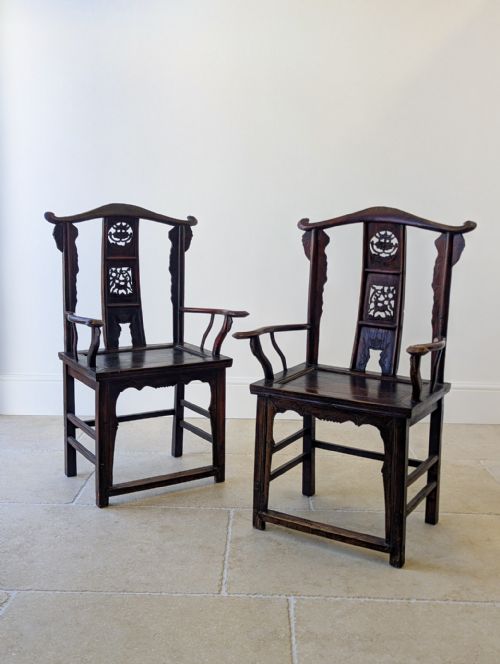
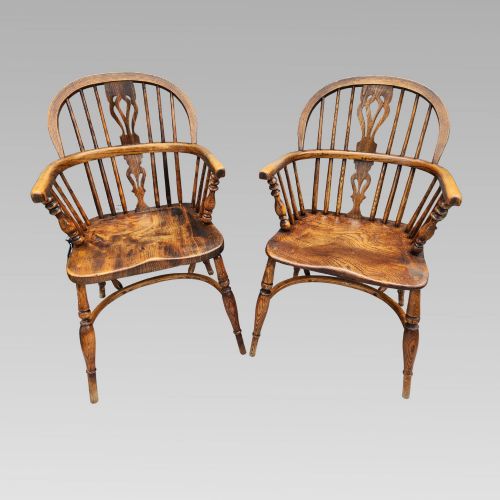
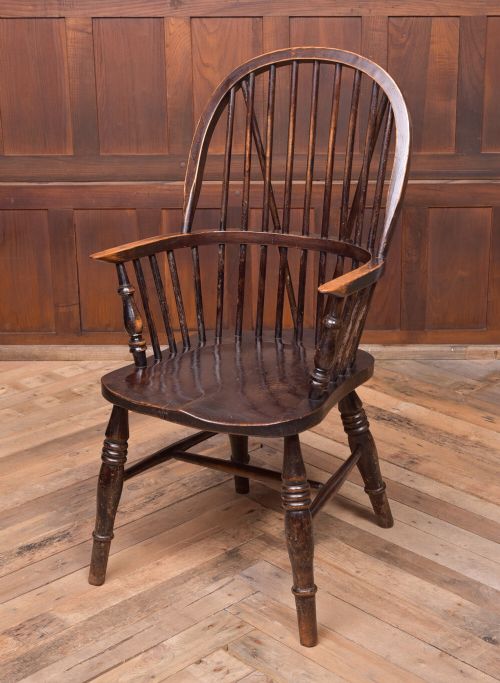
Elm yoke back chairs encompass robust seating forms that bridge English country vernacular and Qing Dynasty scholarly traditions. When searching for elm yoke back chairs, buyers encounter both Chinese scholar chairs with characteristic protruding crest rails and English Windsor seating executed in local timber.
The pieces appearing on this page span the Victorian era, the nineteenth century, and approximately 1870 to 1900, taking the form of armchairs, side chairs, and benches. Chinese examples often display lacquered finishes or blonde wood surfaces, while English interpretations utilise spindle backs and hoop forms.
Most examples survive as pairs, offering matching seating arrangements with deep historical roots. Buyers find variations ranging from formal Chinese lamp hanger designs to relaxed country Windsor armchairs.
How they were made
Makers constructed these chairs primarily from elm and ash, selecting domestic hardwoods known for toughness and interlocking grain. Chinese pieces frequently incorporate red lacquer and gold leaf over the core timber, enhancing decorative appeal while protecting the wood.
Joinery techniques relied on precise mortise and tenon connections to maintain rigidity without excessive metal hardware. Turning and steam bending shaped the Windsor spindles and the curved crest rails characteristic of yoke back designs.
Listings feature nineteenth-century pieces spanning the Victorian era, utilising elm, ash, lacquer, and gold leaf across armchair and bench formats.
What varies in quality
Quality rests in the depth of the timber's patina and the crispness of carved or turned details. Superior examples maintain tight joinery and original surface finishes, such as intact red lacquer or undisturbed aged wood polish.
The Elm Yoke Back Chairs Glossary
- Yoke-back
- A chair design featuring a curved top rail resembling an ox yoke. This form provides ergonomic support and distinctive silhouette lines.
- Scholar chair
- A traditional Chinese seating form associated with the literati class. These chairs emphasise restrained elegance and upright posture.
- Patina
- The surface sheen and coloration developed through age and handling. Good patina indicates gentle use over many decades.
- Windsor
- A chair style constructed with a solid wooden seat into which legs and back spindles are directly inserted. This tradition yields sturdy vernacular seating.
Elm Yoke Back Chairs: Frequently Asked Questions
How do Chinese and English styles differ?
Chinese elm examples often showcase clean architectural lines, red lacquer, and lamp hanger profiles rooted in Qing Dynasty traditions. They served scholarly and formal interior functions.
English country versions utilise turned spindles, hoop backs, and crinoline stretchers tailored for domestic utility. Both traditions exploit the toughness of elm timber.
Are these chairs comfortable for daily use?
These nineteenth-century chairs were designed for upright posture, particularly the scholar chairs intended for studying and contemplation. Adding a loose cushion alters the seating height and softness.
Windsor variants offer broader wooden seats shaped for extended sitting. Their sturdy timber construction supports everyday domestic life.
How should I care for lacquered elm?
Lacquered surfaces require protection from direct sunlight and excessive humidity to prevent cracking. Dust gently with a dry, soft cloth rather than using chemical polishes.
Unlacquered elm benefits from occasional application of traditional beeswax to nourish the wood. Maintaining stable room conditions preserves the historic finish.