




Carved Chinese Elm Chairs
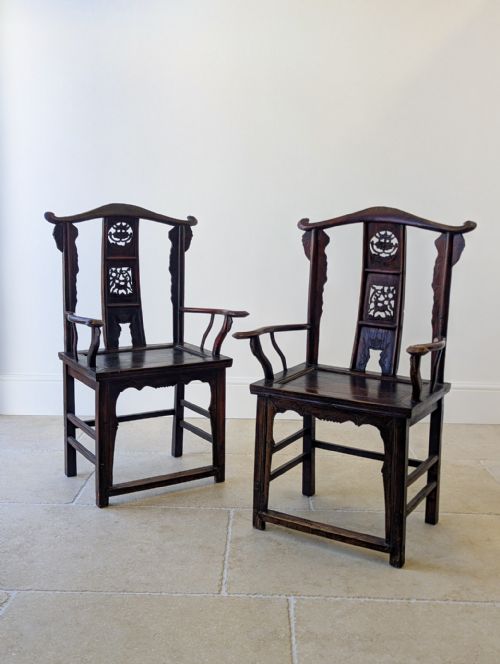
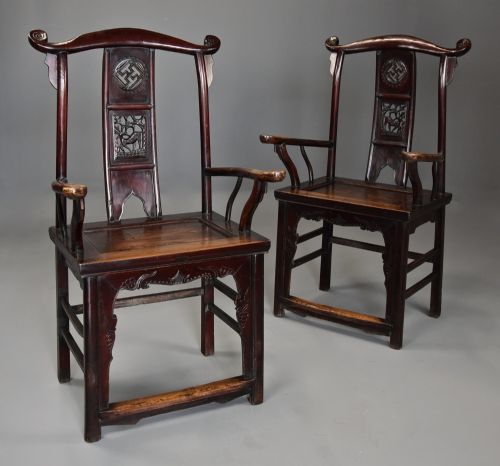
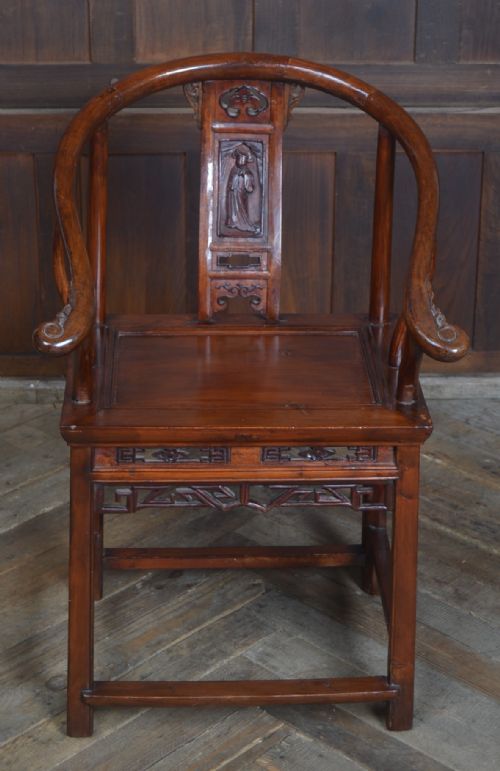
Carved chinese elm chairs bring solid hardwood construction and distinct nineteenth-century forms into a room, offering functional seating with historical character.
Carved Chinese Elm Chairs
You are most likely to meet pairs of armchairs, including yoke-back and lamp hanger styles, alongside concubine chairs and scholar chairs. These items showcase traditional joinery and carved back splats suited for everyday use or display.
How they were made
Maker workshops utilised elm wood and hardwood as the primary structural materials, shaping them into distinct chair frames without relying on modern fasteners. Carved back splats add decorative detail to the upright supports.
Certain examples received surface treatments involving red lacquer and gold leaf applications. These finishes alter the natural appearance of the wood while providing a protective layer over the elm.
The documented examples span the Victorian era and the Qing dynasty, encompassing Chinese export and domestic forms.
What varies in quality
Distinction across the range rests in the preservation of original surface finishes, such as red lacquer, compared to later interventions. Pieces retaining an established patina demonstrate more desirable visual depth.
The complexity and execution of the carved back splats dictate the level of craftsmanship within a pair or single chair. Stronger examples display crisp detail in the woodwork that elevates the overall form.
The Carved Chinese Elm Chairs Glossary
- Yoke-back
- A chair style featuring a top rail shaped like an ox yoke, curving upwards at the ends. This traditional form provides comfortable shoulder support for the sitter.
- Qing Dynasty
- The last imperial dynasty of China, spanning from sixteen-forty-four to nineteen-installed-twelve. Many nineteenth-century chairs date from the later years of this historical period.
- Elm
- A durable hardwood native to temperate regions, utilised extensively in Chinese furniture making. Its visible grain gives these seats a distinct texture.
- Concubine chair
- A specific nineteenth-century seating form designed for relaxed lounging postures. These pieces appear less frequently than standard armchairs.
Carved Chinese Elm Chairs: Frequently Asked Questions
What rooms suit these chairs?
These nineteenth-century seats fit well in studies, living rooms, and hallways where wooden furniture creates a focal point. Their architectural forms complement both traditional and modern interiors.
Pairs function effectively as accent seating or flanking a fireplace. Single chairs work well as desk seats or decorative pieces against an empty wall.
How do I care for elm wood?
Maintain the wood by dusting regularly with a soft, dry cloth to prevent grit accumulation. Keep the chairs away from direct heat sources and strong sunlight to protect the elm and any lacquer.
Apply a suitable wax polish sparingly if the wood appears dry. Avoid excessive moisture during cleaning to preserve the historical surface.
Are these chairs comfortable?
Many designs incorporate curved back splats and yoke-back rails intended to support an upright posture. They were built for purposeful daily use by scholars and officials.
While lacking modern cushioning, their ergonomic wooden contours offer surprising support. Adding a simple loose pad can enhance comfort for extended sitting.
How do I identify a yoke-back chair?
Look at the top rail of the backrest, which curves outward and upward like a traditional animal yoke. This defining silhouette distinguishes the form from standard square-backed chairs.
The central splat usually connects this upper rail directly to the seat frame. It remains one of the most recognisable styles from nineteenth-century Chinese workshops.