

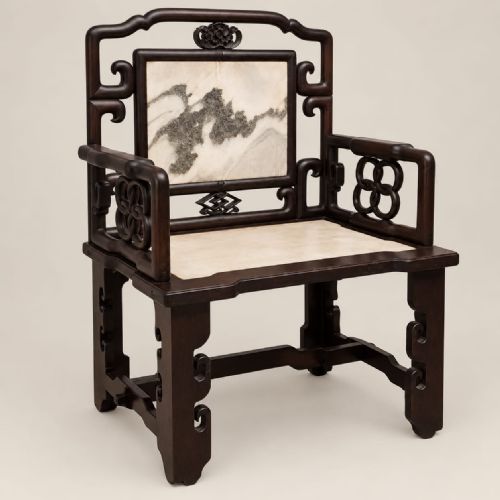
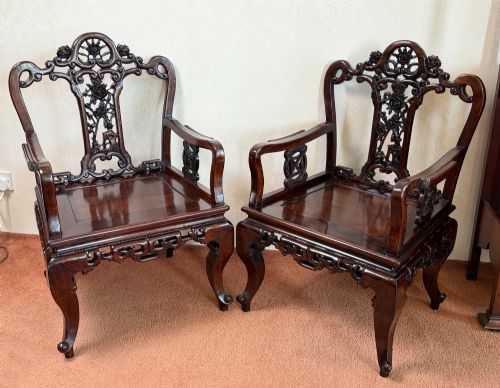
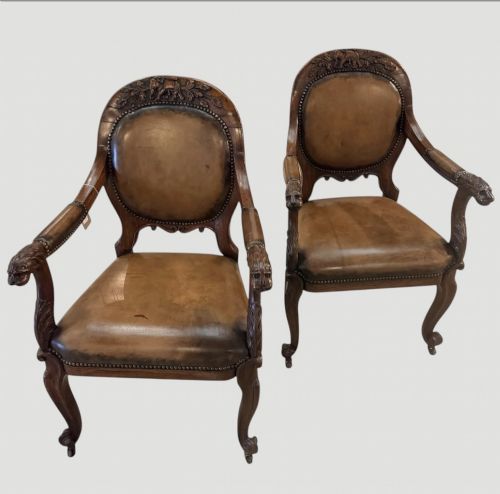
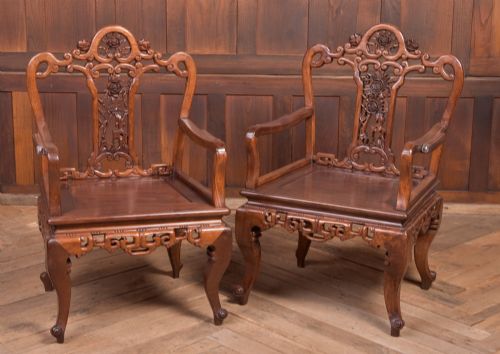





Carved Rosewood Elbow Chairs
These carved rosewood elbow chairs combine rich timber and intricate craftsmanship, offering a striking seat for any traditional or eclectic interior.
Carved Rosewood Elbow Chairs
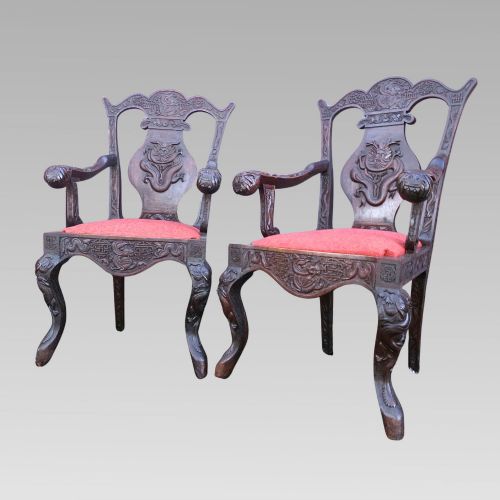
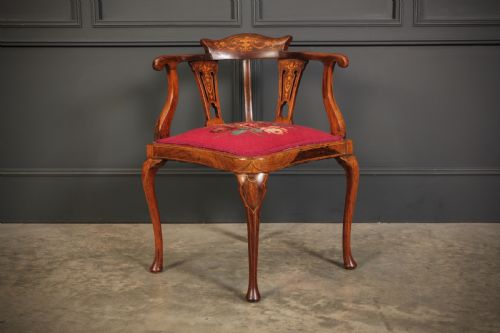
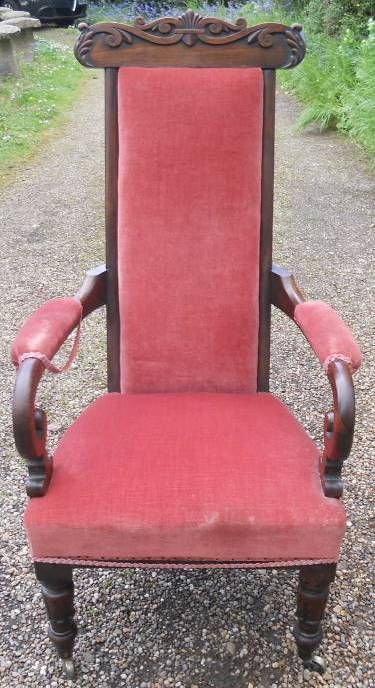
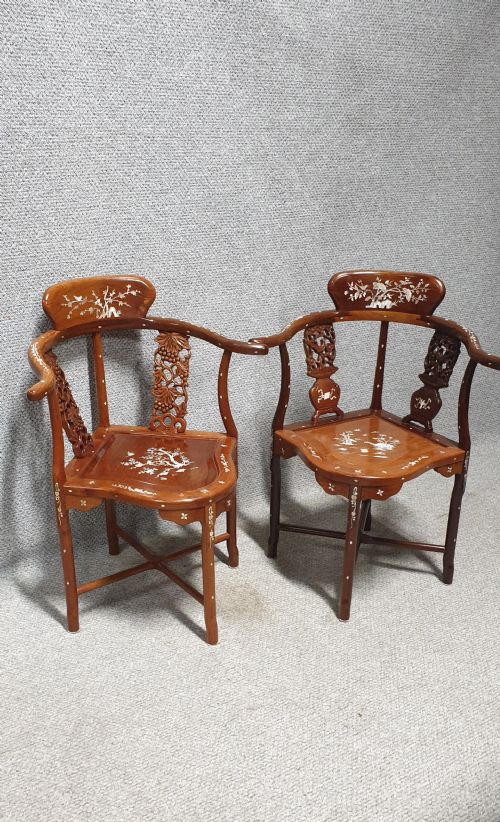
The form typically involves an open armchair or library chair featuring carved wooden frames, supportive armrests, and timbers selected for their deep grain and dark hue. Buyers frequently encounter pairs alongside individual library chairs, corner chairs, and throne-style armchairs.
Origins vary notably across the selection, encompassing British domestic workshops, Anglo-Indian colonial cabinetmakers, and Chinese workshops utilising dense hardwoods. This geographical breadth ensures that buyers searching for these elbow chairs encounter a diverse array of decorative motifs and structural proportions.
How they were made
Cabinetmakers constructed these pieces primarily from rosewood and related dense hardwoods, employing traditional joinery to support heavy carving and daily use. Selected timbers offered a naturally rich surface that could be polished to a deep lustre.
Decoration relied heavily on manual labour, including intricate surface carving of foliage or dragons, alongside detailed marquetry inlay and occasional brass wire work. Selected chairs incorporate contrasting panels of marble or upholstered inserts finished in velvet and leather.
Carved Rosewood Elbow Chairs Retail Price Guide 2026
Typical asking prices for carved rosewood elbow chairs among the pieces listed under this phrase on Sellingantiques today, from the lower quarter to the upper quarter. They describe what is for sale here now, not the wider market.
The listings span periods from the Georgian era through to the early twentieth century, incorporating rosewood, hardwood, brass, marble, and leather.
What varies in quality
The standard of carving sets the finer examples apart from simpler workshop productions, with depth, crispness, and symmetry defining superior execution. Master carvers achieved remarkable definition in dragon motifs and foliage without losing structural integrity.
Material selection and decorative detailing further distinguish the pieces, particularly where cabinetmakers integrated brass inlay, marquetry, or marble inserts into the dense rosewood frames. The cohesion between the structural timber and the applied ornamentation dictates the overall refinement of the chair.
The Carved Rosewood Elbow Chairs Glossary
- Rosewood
- A heavy, durable timber prized for its dark grain and ability to take a high polish. It forms the primary structural and visual material for the majority of these chairs.
- Elbow chair
- An armchair featuring open sides with supports for the arms. These chairs were traditionally used in libraries, studies, and formal reception rooms.
- Marquetry
- The art of applying pieces of veneer to a structure to form decorative patterns. This technique appears on selected panels and corner chair frames.
- Qing Dynasty
- The final imperial dynasty of China, spanning the seventeenth to early twentieth centuries. Pieces from this era often feature deeply carved dragon motifs and dense hardwoods.
- Brass inlay
- The technique of embedding thin brass strips or decorative shapes directly into the timber surface. It provides a bright contrast against the dark rosewood grain.
Carved Rosewood Elbow Chairs: Frequently Asked Questions
What rooms suit these chairs?
These elbow chairs work well as statement pieces in studies, drawing rooms, and hallways where their carved timber frames remain fully visible. Their robust construction allows for regular placement around a desk or as standalone seating.
Because the styles range from British Regency to Chinese Qing Dynasty, pairing them with the right surrounding interior depends on the specific carving and timber tone of the individual chair.
How do I care for rosewood?
Maintaining rosewood requires keeping the timber away from direct heat sources and strong sunlight to prevent the dense grain from drying out. Regular dusting with a soft, dry cloth preserves the polished surface.
Occasional application of appropriate furniture wax helps nourish the hardwood without building up a heavy residue on the carved details.
Are these chairs comfortable for daily use?
Many of these pieces feature open arms and supportive wooden backs designed for upright sitting in libraries and offices. Some variants include upholstered seats in velvet or leather for added cushioning.
Comfort varies according to the specific form, with larger library chairs and corner chairs offering different seating angles compared to rigid throne chairs.
How do I distinguish regional styles?
British Regency and Victorian chairs typically display classical European motifs such as turned legs and brass inlay. In contrast, Anglo-Indian and Chinese pieces exhibit distinct regional carving traditions, including intricate dragon designs and dense local hardwoods.
Examining the construction methods and decorative vocabulary helps identify whether a chair originated in a European workshop or an Eastern export centre.