





Asian Carved Armchair
An asian carved armchair brings substantial nineteenth-century presence and intricate craftsmanship into a room.
Asian Carved Armchair
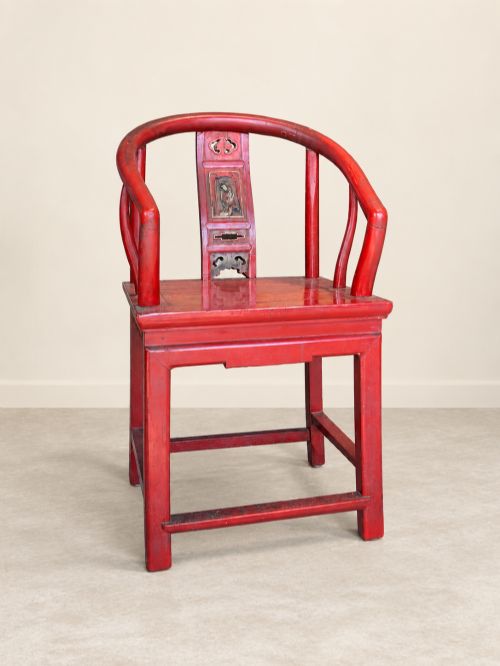
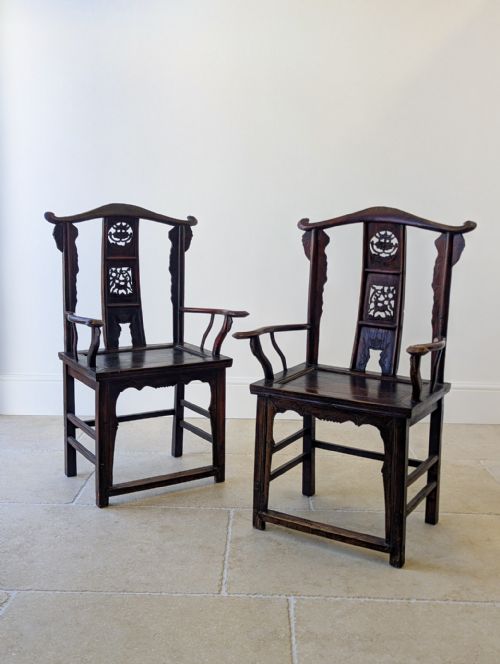
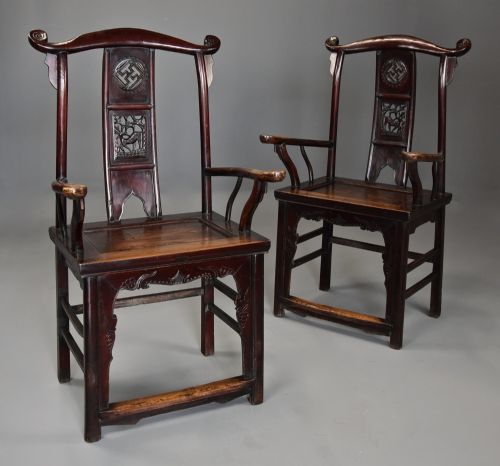
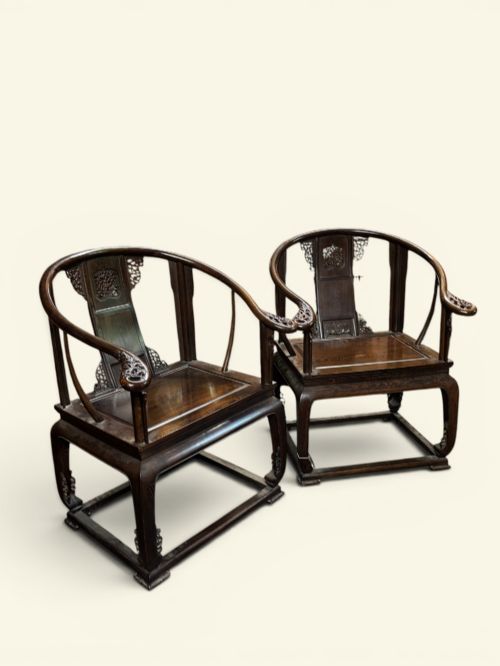
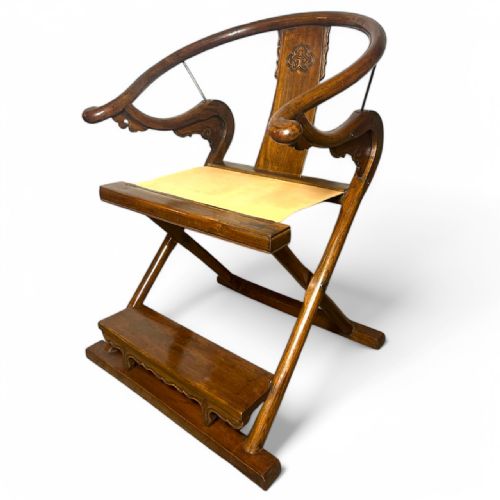
An asian carved armchair spans robust nineteenth-century seating and early twentieth-century examples shaped by Qing dynasty traditions. Buyers frequently encounter yoke-back scholars chairs, horseshoe-back designs, and substantial throne chairs alongside pairs and seating sets.
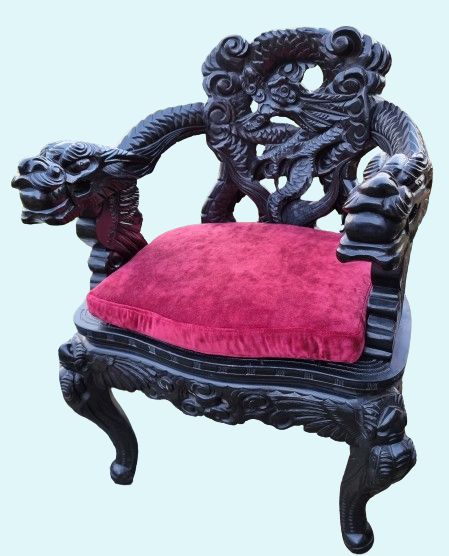
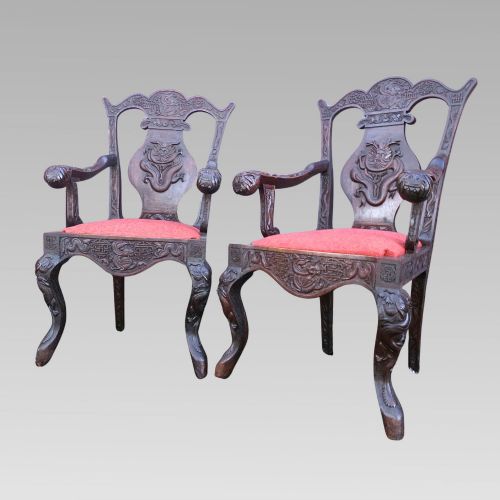
Makers drew on traditional Chinese and Anglo-Indian design vocabularies to produce functional seating and decorative hall furniture. These pieces range from simple elm forms to elaborate dragon-carved hardwoods and lacquered variations.
Materials and construction methods
Construction relies heavily on dense timbers such as hardwood, rosewood, hongmu, teak, and elm. Cabinetmakers shaped these heavy materials into stable frames utilising traditional joinery that accommodated intricate surface carving.
Selected pieces feature lacquer finishes, red lacquer coats, and inlaid details applied to the wooden structures. Original surface treatments and patinated wood mark the primary technical finishes recorded across the listings.
Current listings demonstrate a strong presence of nineteenth-century dating alongside elm and hardwood as the dominant materials.
Defining traits of construction and finish
Quality separates through the depth and crispness of the carved ornamentation, particularly on complex motifs like dragons and floral panels. Finer examples display balanced proportions in architectural elements such as yoke-backs and horseshoe crests.
The integrity of the timber and the preservation of original finishes, whether patinated elm, rosewood, or red lacquer, dictate the standard of the piece. Superior seating maintains structural cohesion alongside untouched surface textures.
The Asian Carved Armchair Glossary
- Hongmu
- A dense, dark tropical hardwood traditionally used for fine Chinese furniture and throne chairs. It offers a heavy weight and a rich natural grain.
- Yoke-back
- A chair design featuring a curved top rail resembling a traditional ox yoke. This form was favored by scholars for its ergonomic support.
- Horseshoe-back
- A continuous curved arm and backrail sweeping downward in a single fluid arc. It provides an enveloping profile seen on folding and rigid chairs.
- Lacquer
- A durable resin finish applied in multiple layers to wood surfaces. It provides a smooth, protective coating often found in red or black tones.
Asian Carved Armchair: Frequently Asked Questions
How do I identify hongmu wood?
Hongmu translates as red wood and describes a category of dense tropical hardwoods used in high-status Qing dynasty furniture. The material is remarkably heavy and durable.
Over time, hongmu develops a deep patina that accentuates its natural dark grain. It frequently appears in carved throne chairs and formal seating sets.
Where should I place an Asian armchair?
These armchairs function effectively as focal points in studies, living rooms, or hallways where their carved details can be appreciated. Pairs work well flanking a fireplace or console table.
Because many examples utilise heavy hardwoods or delicate lacquer, placement should avoid direct sunlight and rapid temperature fluctuations to protect the finish.
Are these chairs comfortable for daily use?
Many historical designs prioritise upright posture over modern cushioned lounging. Scholars chairs and horseshoe-backs were built to support an upright sitting position.
Hardwood seats are common, though some owners add custom textiles for extended sitting. Their robust construction ensures they remain functional seating options.