





Carved Chinese Throne
A carved chinese throne brings commanding presence and intricate craftsmanship into a room, fashioned from dense tropical timbers.
Carved Chinese Throne
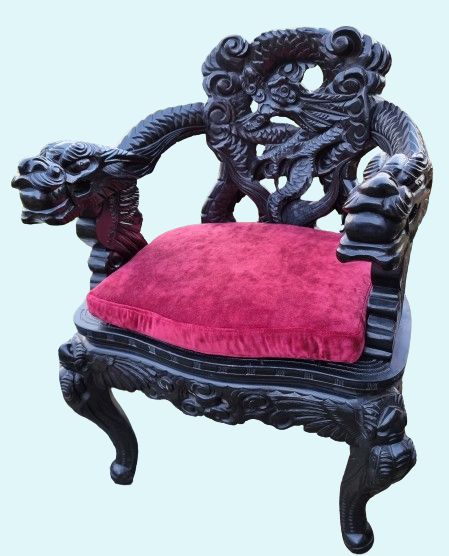
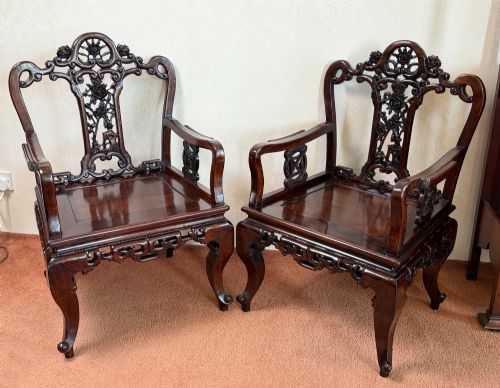
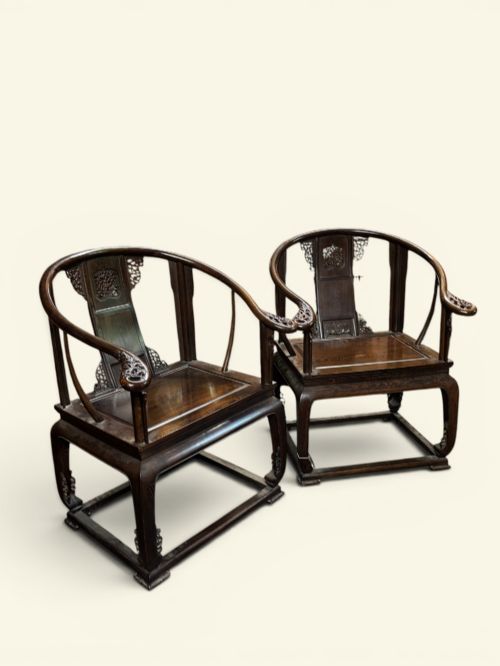
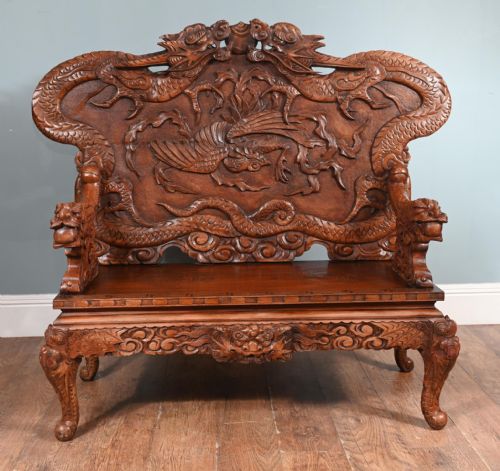
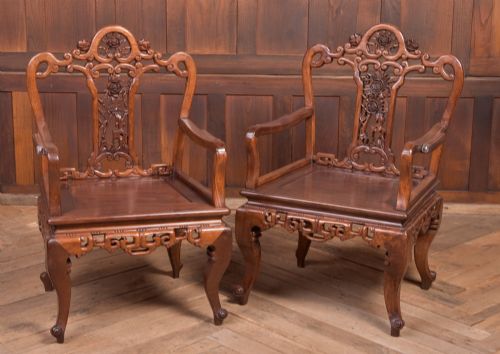
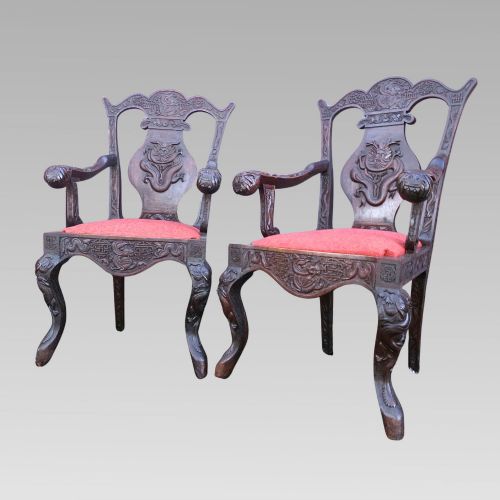
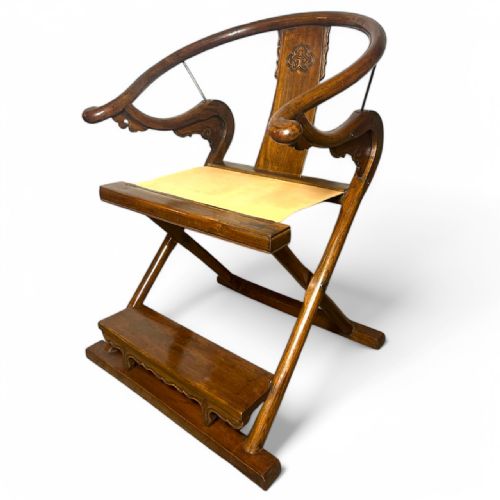
A carved chinese throne represents a pinnacle of traditional seating, often taking the form of substantial armchairs, horseshoe-back chairs, or hall benches. These commanding pieces serve as focal points, drawing the eye with deep relief carving and authoritative proportions.
The versions most commonly met span the nineteenth century, including examples shaped during the Qing Dynasty and the Chinese Export period. They range from robust single armchairs to matched pairs and larger settees designed for stately interiors.
Materials and construction methods
Workshops utilised dense timbers such as rosewood, hongmu, teak, and dark hardwood, prized for their strength and capability to hold crisp chisel work. These heavy woods formed the rigid frames necessary for elaborate joinery without metal fasteners.
Surface detailing often combined deep relief carving depicting dragons and traditional motifs with occasional inset marble panels or cinnabar lacquer. Upholstery where present included velvet, though many examples relied entirely on the polished grain of the timber.
Listings feature hard timbers including rosewood, hongmu, and teak alongside decorative elements like marble and cinnabar lacquer.
Distinctions in quality and execution
The depth and crispness of the carving dictate much of the distinction between standard and superior examples, particularly in complex motifs like dragons and foliage. Finer pieces demonstrate undercut work where the relief stands free from the background panel.
The choice and stability of the timber also determine standing, with dense varieties like hongmu and rosewood commanding greater respect than simpler elm constructions. Construction integrity, preservation of original surfaces, and symmetry in pairs further elevate certain examples above others.
The Carved Chinese Throne Glossary
- Hongmu
- A traditional Chinese term denoting dense, dark hardwoods used in fine furniture making. It translates literally to red wood and encompasses several heavy tropical species.
- Horseshoe-back
- A chair design featuring a continuous curved crestrail that sweeps down to form the armrests. This ergonomic form offers distinct comfort and structural continuity.
- Cinnabar lacquer
- A decorative coating built from multiple layers of tree sap mixed with mercuric sulphide, carved while semi-hardened. This technique yields a rich red finish capable of holding intricate detail.
- Qing Dynasty
- The final imperial dynasty of China, spanning from sixteen-forty-four to nineteen-twelve. Furniture from this era often exhibits confident proportions and deep symbolic carving.
- Settle
- A wooden bench featuring a high solid back and enclosed arms designed to block drafts. In this context, it adopts traditional Chinese joinery and ornamental carving.
Carved Chinese Throne: Frequently Asked Questions
Where were these chairs placed?
These authoritative seats traditionally occupied principal reception rooms or ancestral halls, where they denoted status and accommodated honoured guests or household heads.
In modern interiors, they function effectively as standalone statement pieces in hallways, studies, or living rooms.
How do I care for hardwood furniture?
Maintain the timber by keeping pieces away from direct heat sources and sudden humidity shifts, which can cause wood to split or joints to loosen. Regular dusting with a soft, dry cloth preserves the polished surface without the need for heavy chemical polishes.
Apply a neutral microcrystalline wax sparingly if the wood appears dry, buffing gently to maintain the natural sheen.
Are these seats comfortable to use?
Many examples are designed with upright postures in mind, reflecting traditional etiquette and formal seating requirements. Some incorporate generous proportions and supportive horseshoe-back rails that offer a surprisingly accommodating sit.
Adding a simple custom cushion can adapt the seating for prolonged daily use while protecting the wooden base.
How can I distinguish period styles?
Examine the timber selection, weight, and carving style, comparing them against documented examples from the nineteenth century and the Qing era. Finer pieces display hand-chiseled depth and natural timber ageing that modern reproductions struggle to replicate accurately.
Check the joinery methods underneath and behind the piece to ensure traditional pegged and mortise construction is present.