
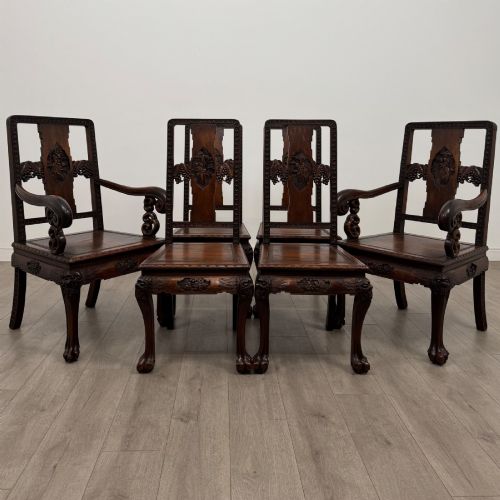
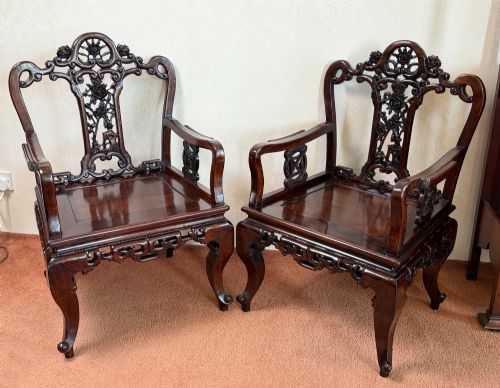


Chinese Hardwood Side Chair
A Chinese hardwood side chair is a dense, formal seat built for traditional interiors, prized for its architectural joinery and polished timber grain.
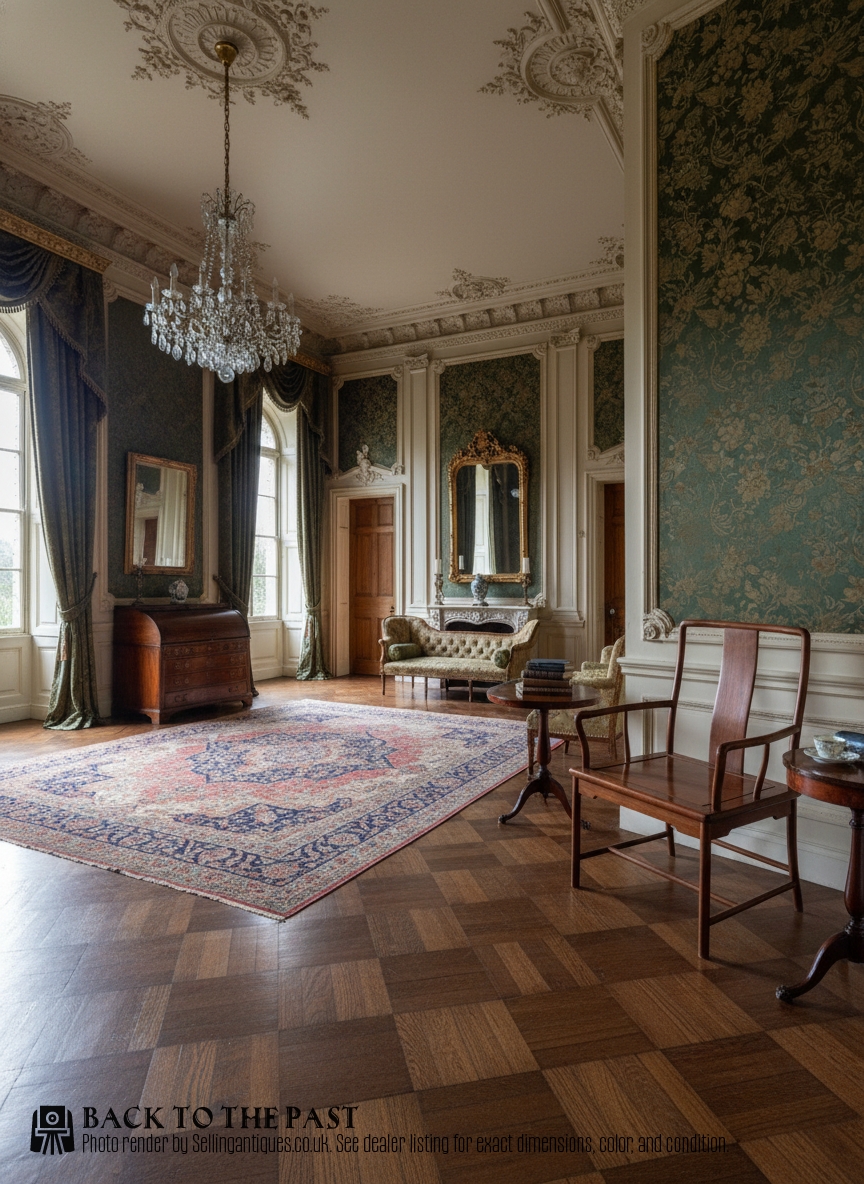
Chinese Hardwood Side Chair
A Chinese hardwood side chair is a formal seat designed without arms, intended for placement against a wall or around a table in traditional interiors. These pieces display rigid, upright proportions and robust joinery that relies on precise interlocking joints rather than metal fastenings.
You are most likely to encounter 19th century examples on this page, alongside pieces from the Qing Dynasty and the early 20th century. The selection ranges from carved hall furniture to matched pairs finished in rosewood, elm, or lacquered surfaces.
The form often includes straight legs, stepped stretchers, and carved backsplats depicting traditional motifs. While side chairs dominate, the inventory also spans occasional armchairs and throne chairs.
How they were made
Construction relies on dense timbers such as rosewood, elm, and huanghuali, chosen for their structural strength and rich natural grain. Cabinetmakers shaped these heavy woods using complex mortise and tenon joinery that allowed the timber to expand and contract with humidity changes.
Surface elaboration frequently involves intricate hand carving on the backsplats and rails, depicting foliage, geometric patterns, or symbolic designs. Certain variations incorporate inset marble panels or woven cane seats to provide textural contrast against the dark polished wood.
Listings feature woods such as rosewood, elm, huanghuali, and marble alongside cane and lacquer.
What varies in quality
The distinction between tiers rests upon the choice of timber and the crispness of the hand carving. Denser woods like huanghuali and high-grade rosewood achieve deeper patination and structural integrity over centuries compared to utilitarian elm.
Execution of the joinery and the depth of relief carving dictate the refinement of a piece. Superior examples exhibit seamless joints and fluid, deeply undercut motifs that reflect high workshop standards rather than hurried production.
The Chinese Hardwood Side Chair Glossary
- Mortise and tenon
- A traditional woodworking joint where a projecting tongue fits snugly into a corresponding cavity to lock two pieces at a right angle. This technique underpins the rigid frames of these chairs without relying on nails.
- Cane
- Woven rattan strip material used to form resilient, breathable seat panels. It appears frequently on framed seating frames to offer lighter visual weight.
- Hongmu
- A translation meaning red wood, applied broadly to dense tropical hardwoods used in traditional Chinese cabinetmaking. It encompasses several heavy species valued for dark tones and polish.
Chinese Hardwood Side Chair: Frequently Asked Questions
What is a Chinese hardwood side chair?
A Chinese hardwood side chair is an armless, upright seat constructed from dense timbers such as rosewood, elm, or huanghuali. These chairs were built using traditional joinery methods and often feature carved backsplats.
They served functional and formal roles in traditional households, frequently positioned in halls or against walls.
How do I identify a Qing Dynasty chair?
Qing Dynasty chairs are typically identified by heavy proportions, dark hardwood construction, and elaborate hand-carved motifs on the rails and backsplats. They often reflect strict adherence to traditional forms and formal aesthetics.
Evidence in the listings shows these pieces spanning the 19th century and earlier periods.
Were these chairs used at dining tables?
In traditional Chinese interiors, side chairs were rarely grouped around low dining tables in the Western manner. Instead, they stood formally along the walls of reception rooms or beside tea tables.
Pairs were commonly arranged symmetrically to maintain balance within the room layout.
How should I care for hardwood furniture?
Hardwood furniture benefits from stable indoor humidity levels away from direct heat sources and sunlight to prevent timber splitting. Regular dusting with a soft, dry cloth preserves the polished finish and natural grain.
Avoid using silicone-based polishes that can build up on antique surfaces over time.