


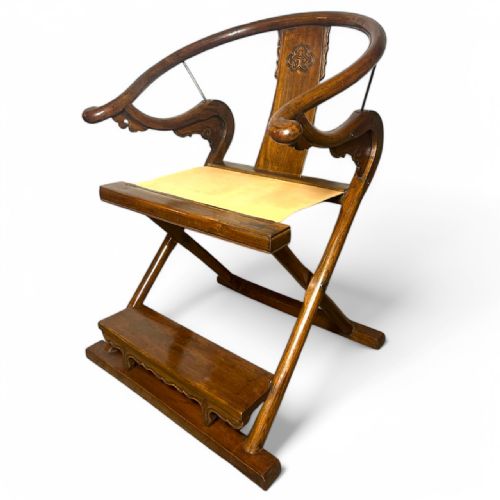
Asian Wood Carving Chair
An asian wood carving chair brings deep relief-carved panels, dense tropical timber and historic regional seating forms straight into a room.
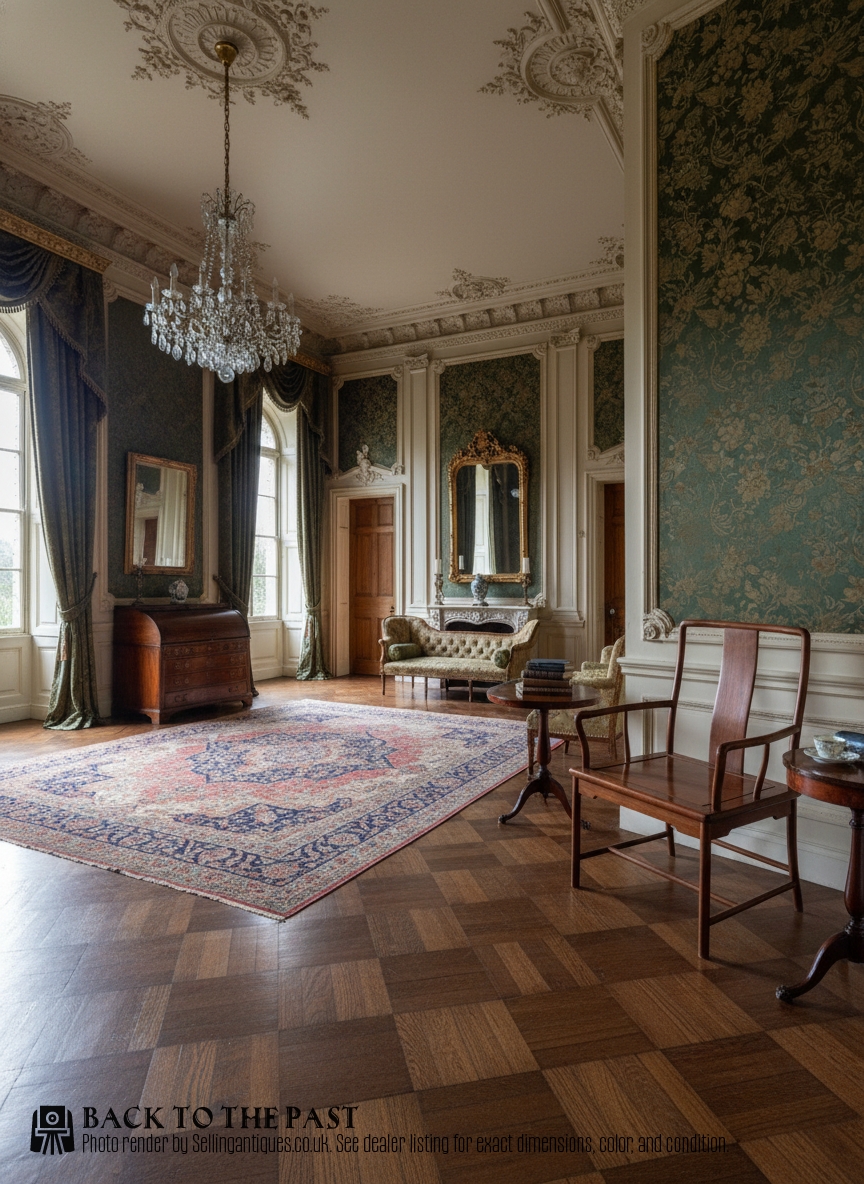
Asian Wood Carving Chair
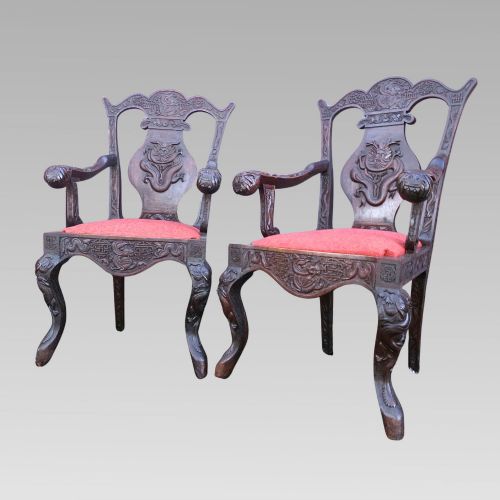
When you search for an asian wood carving chair, you encounter sturdy armchairs, benches, and throne seats rooted in the nineteenth century and the Qing Dynasty. The listings here present substantial seating in elm, rosewood, and hardwood, alongside painted or lacquered surfaces.
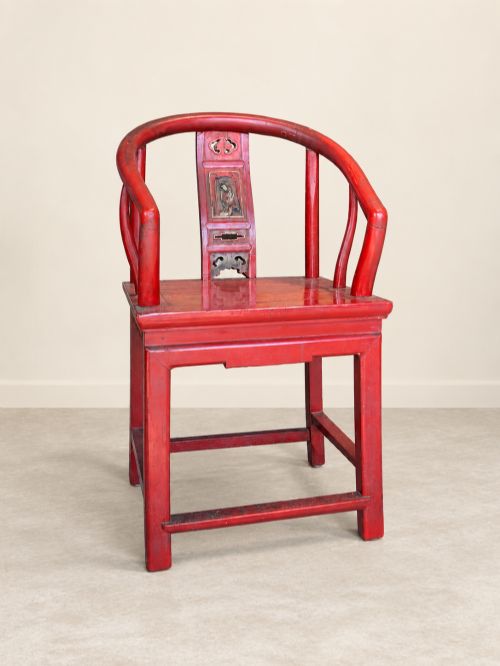
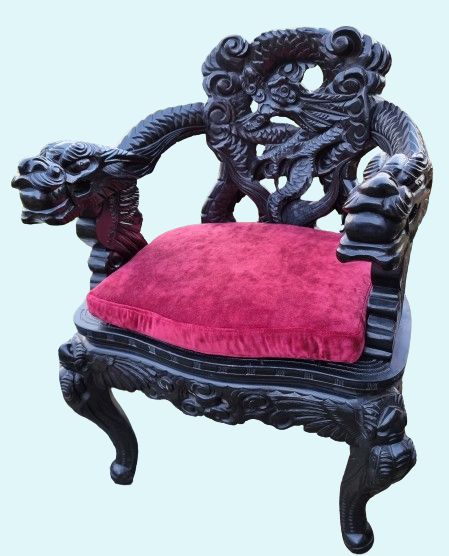
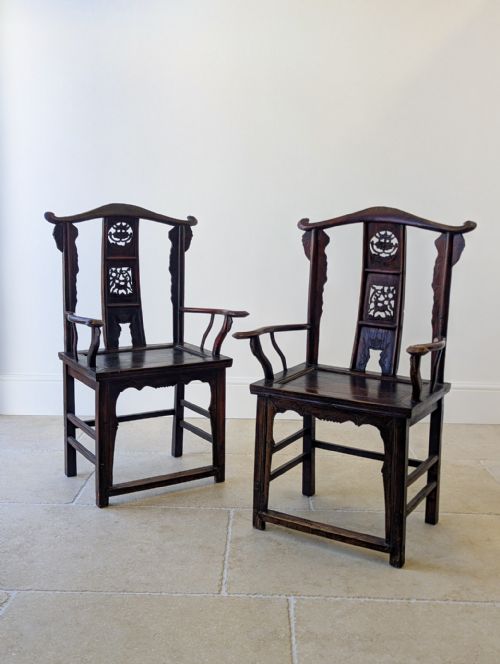
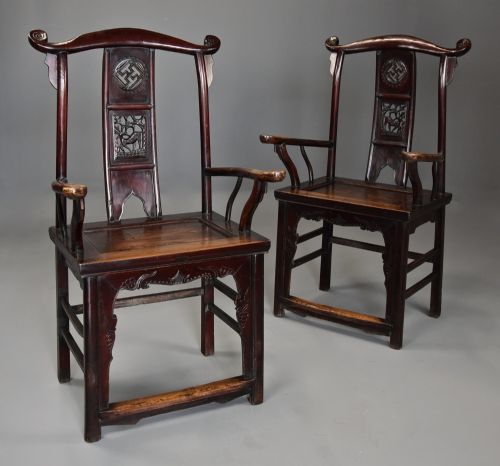
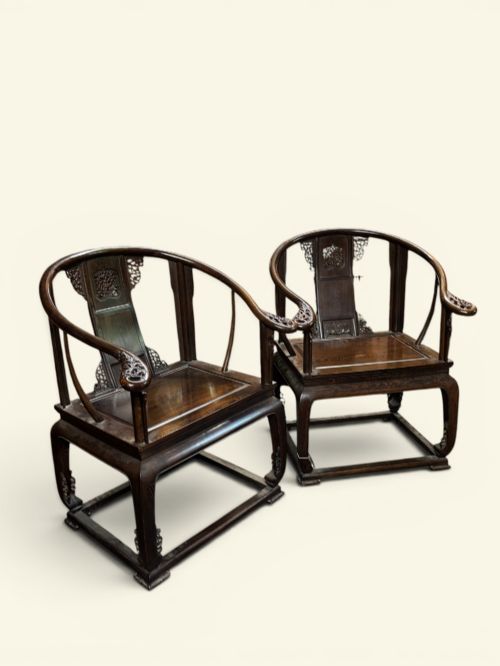
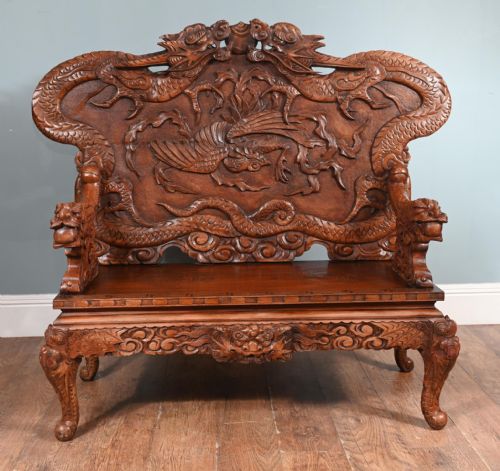
The most common formats you meet are yoke-back armchairs, horseshoe-back chairs, and elaborately carved dragon benches. Many pieces survive as pairs, reflecting formal traditional Chinese and Burmese seating arrangements.
Makers utilised architectural joinery like lamp-hanger frames and folding mechanisms, pairing structural simplicity with dense figural carving. These items serve equally as sculptural focal points and functional daily seating.
Distinctions in craftsmanship and preservation
The distinction between ordinary and exceptional examples rests in the crispness of the chisel work and the integrity of the timber. Superior pieces display sharply defined dragon scales and facial expressions, whereas lesser work appears soft or rounded through wear and over-finishing.
Surface preservation dictates value, with original red lacquer or undisturbed patinated elm sitting far above heavily restored or stripped alternatives. Original joinery tightness without modern structural reinforcement indicates a well-preserved piece.
Current listings feature hardwood, elm, teak, and rosewood, spanning periods from the Victorian era back through the Qing Dynasty.
The Asian Wood Carving Chair Glossary
- Yoke-back
- A traditional chair design featuring a curved top rail resembling a ox yoke. This shape provides comfortable shoulder support while maintaining a strict vertical silhouette.
- Horseshoe-back
- A seating form where the back and arm rails are forged from a single continuous curved piece. The sweeping line creates an enveloping armrest structure.
- Cinnabar
- A bright red mineral pigment applied in multiple coats to wooden surfaces before being carved. This technique creates depth through layered red relief work.
- Hongmu
- A category of dense, heavy Chinese hardwoods translated literally as red wood. Craftsmen prized this material for its rich natural colour and suitability for fine carving.
- Patina
- The surface sheen and softening of edges developed through age and use. A good patina indicates genuine historic handling rather than chemical ageing.
Asian Wood Carving Chair: Frequently Asked Questions
Where should I place an Asian carved chair?
These substantial seats function well as standalone statement pieces in hallways, studies, or living rooms. Their sculptural carving makes them effective visual anchors away from plain walls.
Avoid placing them in direct sunlight or near heat sources, as historical hardwoods and lacquer finishes react poorly to rapid temperature shifts and dry air.
Are yoke-back chairs comfortable for daily sitting?
Most historic examples were designed for upright posture rather than lounging, featuring rigid wooden seats and straight vertical back panels. Adding a loose linen or silk cushion softens the seat without obscuring the timber frame.
The ergonomic curve of the yoke rail provides surprisingly good lumbar and shoulder support when seated upright.
How can I tell nineteenth-century chairs apart?
Look closely at the tool marks, timber density, and how the joinery has aged and settled. Nineteenth-century examples often exhibit hand-chiseled depth and natural timber shrinkage that modern reproductions cannot replicate.
Examine the underside and joints for signs of traditional pegging and hand-planed surfaces rather than machine-cut uniformity.