




Antique Dragon Bench
An antique dragon bench brings carved hardwood and mythological detail straight into a hallway, offering a sturdy seat with centuries of craftsmanship behind it.
Antique Dragon Bench
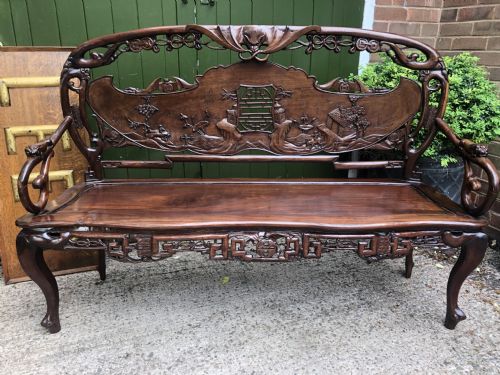
An antique dragon bench sits within the wider category of Chinese export and Qing Dynasty seating, taking the form of hall benches, settles, and corner seats. These pieces range from the mid-nineteenth century up to the early twentieth century, showing traditional carving traditions.
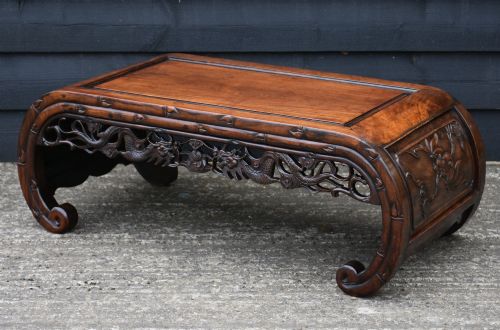
Most examples found here utilise dense Asian timbers like rosewood and hongmu, often shaped into high-backed settles or low tables with dragon motifs. Buyers encounter various seating configurations, from single hall benches to larger dining suites complete with armchairs.
Materials and construction methods
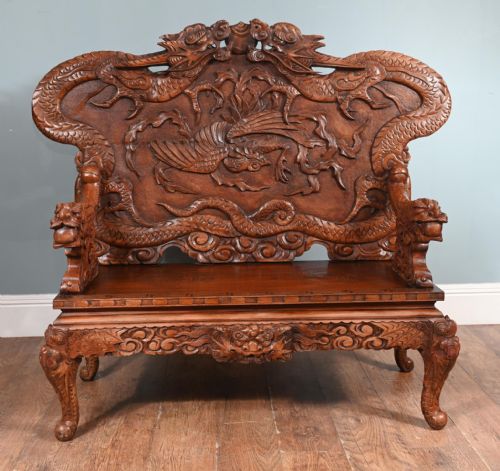
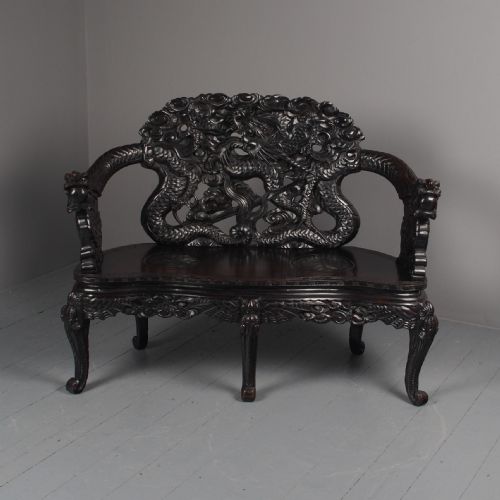
Cabinetmakers worked with heavy hardwoods such as rosewood and ebonised timber, shaping them through traditional joinery without reliance on modern metal fasteners. Surfaces received deep relief carving to depict coiled dragons and foliage.
Certain examples incorporate cinnabar lacquer finishes or carved bone inlay to accent the woodgrain. These finishes required meticulous layering and polishing by skilled artisans during the nineteenth and early twentieth centuries.
Coiled dragons glare fiercely from armrests, keeping a watchful eye on everyone entering the hallway.
Judging the quality of carving and timber
Depth and precision of the carved dragon details dictate the visual strength of the piece, separating standard production from master workshops. Crisp undercut relief work shows greater skill than shallow surface incisions.
The choice of raw material impacts weight and stability, with dense rosewood and heavy hongmu commanding attention over softer woods. Uniform colour and sound historical joinery further distinguish superior examples.
The Antique Dragon Bench Glossary
- Qing Dynasty
- The final imperial dynasty of China, lasting from sixteen-forty-four to nineteen-twelve. Many decorative hardwood items originate from this extended period.
- Rosewood
- A heavy, durable timber prized for its rich grain and dark colour. Cabinetmakers utilised this material for high-status seating.
- Cinnabar Lacquer
- A technique involving multiple layers of coloured resin applied to a wooden base before carving. This process creates a smooth, durable red surface.
- Settle
- A wooden bench featuring a high back and solid arms to block drafts in large hallways. These items served practical seating needs in traditional interiors.
- Hongmu
- A translation meaning red wood, referring to various dense tropical hardwoods used in traditional Chinese furniture. This material takes a high polish and supports intricate carving.
Antique Dragon Bench: Frequently Asked Questions
Where should I place a hall bench?
These benches suit large entrance halls, landings, or living spaces where the high carved back can be appreciated against a plain wall. They provide functional seating while anchoring the room's decorative scheme.
Ensure the space accommodates the deep footprint and heavy proportions typical of nineteenth-century Chinese hardwood furniture.
How do I care for hardwood furniture?
Maintain the wood by dusting with a dry microfibre cloth and avoiding direct sunlight or intense heat sources. Excessive temperature changes cause timber to split.
Apply a neutral wax sparingly only when the surface appears dry, buffing gently to preserve the natural sheen of the rosewood.
What defines Qing Dynasty style?
Qing design incorporates symmetrical layouts, symbolic motifs like dragons, and deep relief carving on substantial timber frames. The aesthetic emphasises status and traditional craftsmanship.
Pieces from this era reflect both domestic preferences and items produced specifically for Western export markets.
Are these benches comfortable to sit on?
Original wooden seats were designed for upright posture rather than lounging, often featuring flat carved timber panels. Owners frequently add loose squab cushions for comfort.
The sturdy construction ensures they remain functional for daily seating despite their antique status.