
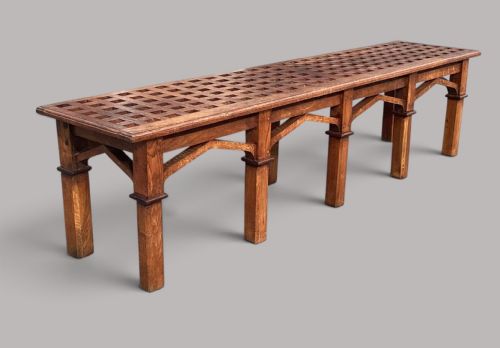
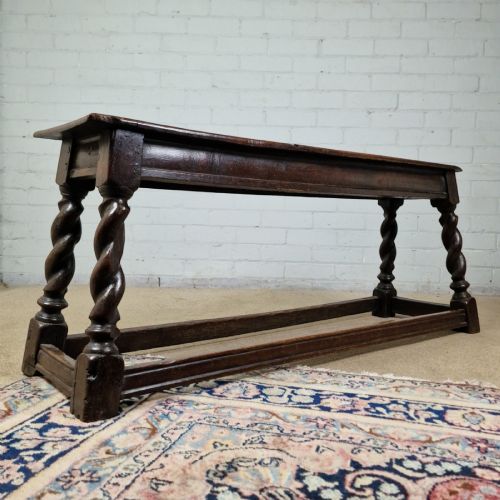
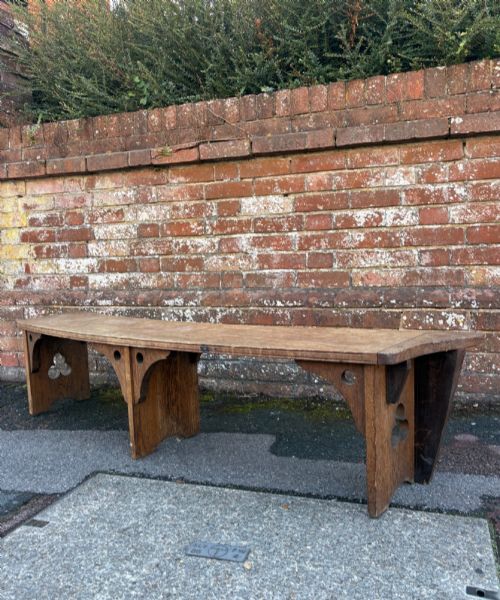
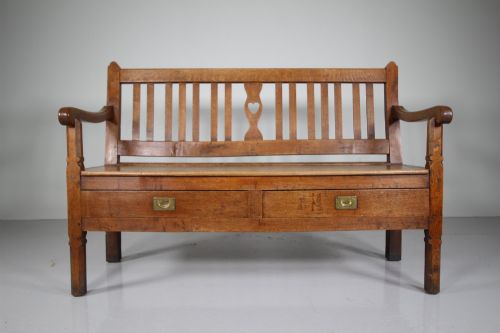


Carved Hall Seat
When you need a carved hall seat, you are looking at substantial timber furniture designed to anchor an entranceway with period character.
Carved Hall Seat
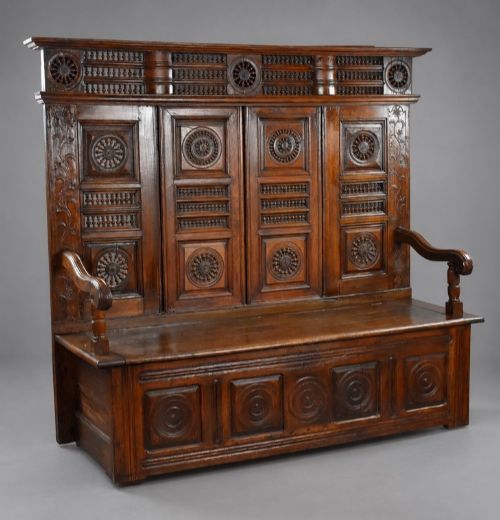
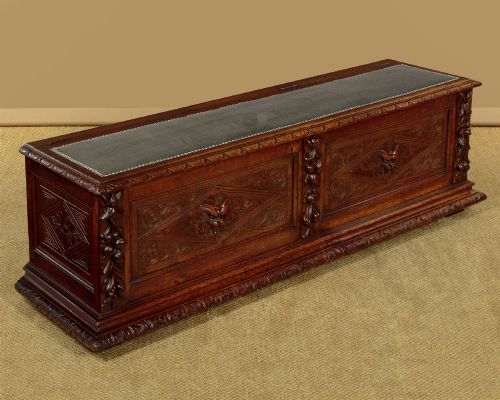
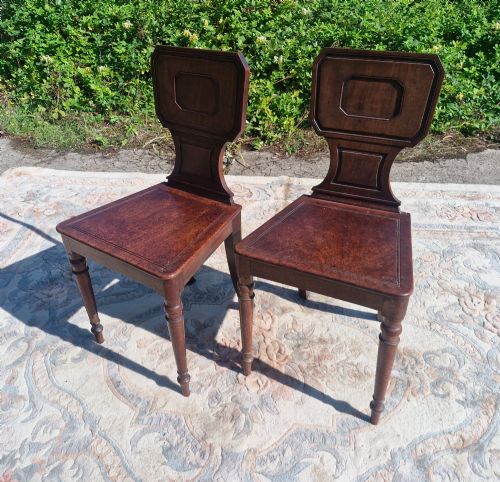
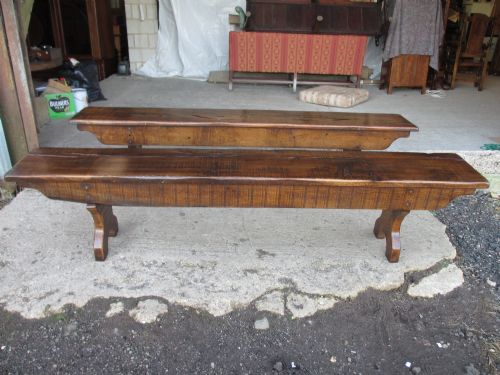
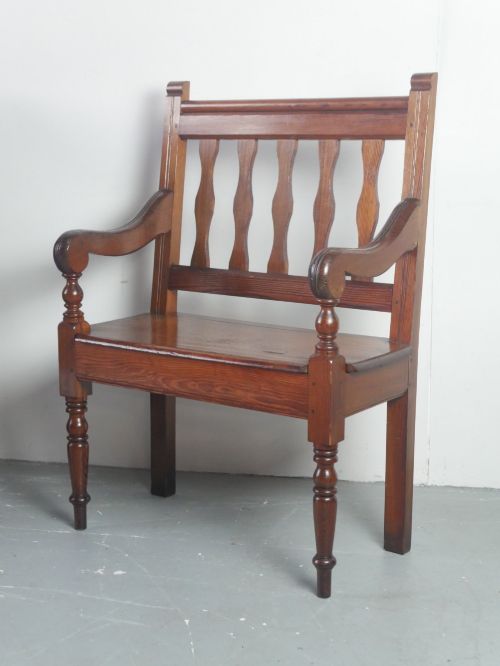
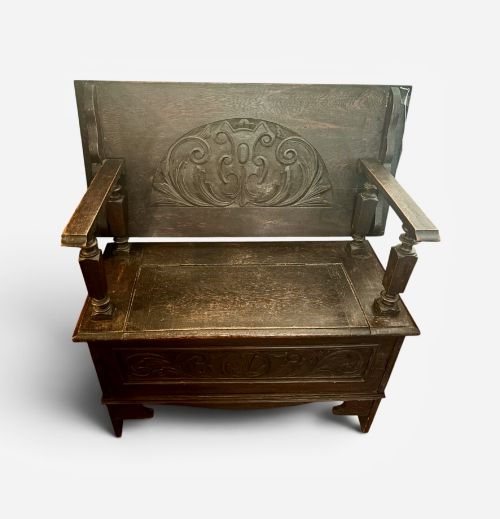
A carved hall seat serves as both a practical resting place and a striking architectural feature in a domestic entrance. These pieces range from upright hall chairs and double benches to box settles and monks benches that double as storage chests.
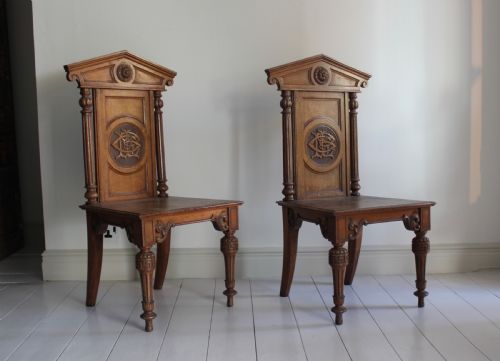
The version most commonly met on this page is the Victorian carved oak hall seat, frequently detailed with regional motifs, linenfold panels, or hinged box compartments. Eighteenth-century examples appear less often, offering deep patination and heavier proportions.
Makers drew on various historic design idioms, producing Gothic revival, Jacobean revival, and Arts and Crafts interpretations alongside standard Regency and Georgian forms.
How They Were Made
Carpenters relied principally on solid oak, mahogany, and walnut to construct these pieces, utilising dense native hardwoods capable of withstanding heavy daily use in busy corridors. Panels were tongue-and-groove jointed or hand-carved in relief with strapwork, foliage, and heraldic emblems.
Secondary materials included brass hinges for storage compartments, leather upholstery, and occasional fabric or tapestry inserts on cushioned variants. Surfaces were typically waxed or polished to highlight the natural grain of the wood.
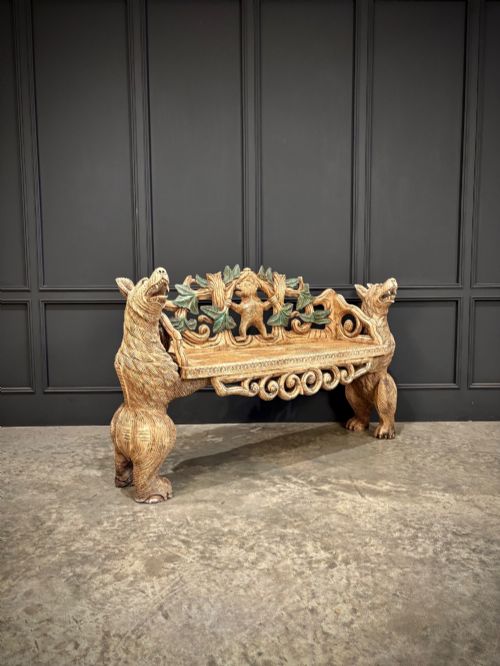
Certain Black Forest benches incorporate carved bears gripping umbrellas in their paws, guarding coats with fierce determination.
What Varies In Quality
The distinction between standard examples and superior pieces rests on the depth and clarity of the hand-carving. Crisp relief work executed by skilled hands elevates a plain timber frame into a notable work of vernacular art.
Construction methods also dictate grade; tight joinery, original hardware on box seats, and the use of thick, unwarped planks demonstrate higher workshop standards than later assembled or heavily restored alternatives.
Charles Tozer·W.A. Willcocks·Gillows
The Carved Hall Seat Glossary
- Settle
- A wooden bench with a high back, solid arms, and often a hinged seat concealing a storage box below. This form kept drafts away from inhabitants sitting near unheated doorways.
- Monks Bench
- A convertible piece of furniture featuring a hinged back that folds down flat over the arms to form a table top. It provides dual utility in compact entrance spaces.
- Gothic Revival
- A nineteenth-century style drawing inspiration from medieval architecture. Pieces feature pointed arches, trefoil motifs, and heavy traceried panels.
- Shield Back
- A chair design popular in the eighteenth century where the wooden backrest takes the contour of a heraldic shield. Carved ornamentation typically fills the central splat.
- Greenman
- A sculptural motif depicting a human face carved with leaves, vines, or branches sprouting from the mouth. It symbolises rebirth and spring in traditional woodwork.
Carved Hall Seat: Frequently Asked Questions
What is a monks bench used for?
A monks bench serves as a dual-purpose item providing both seating and a flat surface when the back folds down. In historic hallways, it offered a place to sit while removing boots and a concealed chest for winter garments.
Today, the storage compartment remains useful for shoes or accessories while occupying minimal floor space in narrow entryways.
How do I date an oak hall bench?
Dating relies on observing construction marks, wood shrinkage, and the prevailing stylistic revival of the period. Eighteenth-century versions show hand-adzed tool marks and pegged joints, whereas Victorian pieces often display machine-sawn backing boards and heavier factory carving.
Examining the wear patterns on the seat and arms also helps determine whether the piece dates to the original era of manufacture or a later revival.
Where should I place a hall seat?
These pieces fit naturally against an empty wall in a hallway, mudroom, or spacious landing where their proportions can be appreciated. Their shallow depth allows them to sit comfortably in corridors without obstructing movement.
Pairing a bench with appropriate wall hooks creates a traditional boot room aesthetic while keeping the floor clear.
Are hall chairs and hall benches comfortable?
Historic hall seating prioritises upright posture and structural durability over soft cushioning. Most examples feature carved wooden seats designed for brief rests rather than long lounging.
Owners often add loose textile cushions or pads to hard wooden seats if they intend to sit for extended periods.