






Dragon Carved Settle
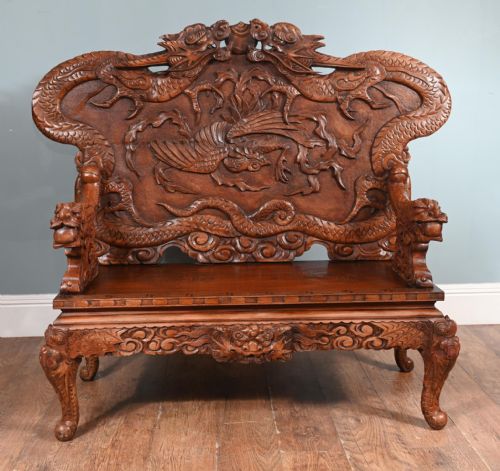
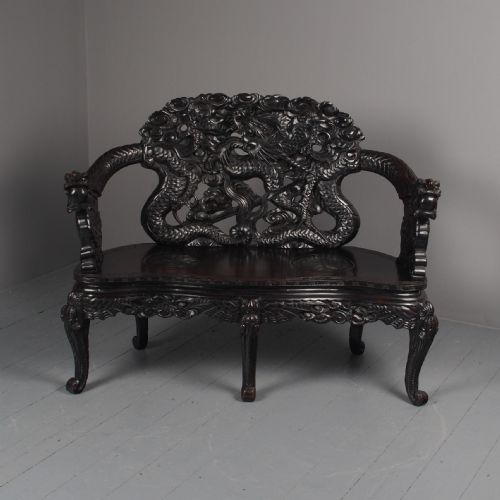
These dragon carved settle pieces bring fierce myth and rich timber grain straight into a hallway, offering solid seating carved with coiled beasts.
Dragon Carved Settle
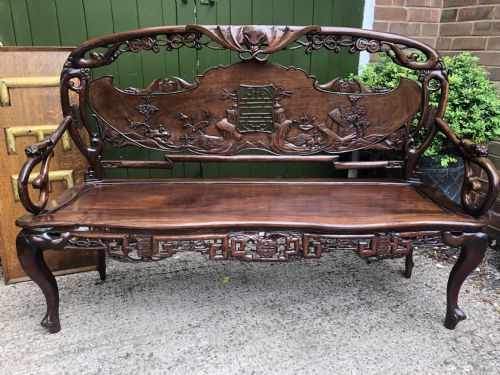
A dragon carved settle stands as a substantial hall bench or seating set, often linked to Chinese Export and Qing Dynasty traditions. These forms combine high-backed seating with deep relief carving depicting writhing dragons.
Most examples found here date from the nineteenth and early twentieth centuries, spanning the periods around eighteen sixty to nineteen thirty. The selection includes corner benches and hall seats alongside broader dining suite configurations.
Buyers seek these forms to anchor an entranceway or large room with traditional Chinese woodworking and dramatic motifs. The most common format is the hardwood hall bench featuring panelled backs and detailed armrests.
How they were made
Craftsmen built these pieces using dense hardwoods, rosewood, and ebonised timber, often applying pigment or cinnabar lacquer to highlight the carved surfaces. Traditional joinery techniques secured heavy planks without relying on modern metal fasteners.
Carvers worked directly into the seasoned wood to form the muscular curves of dragon motifs, sometimes integrating bone inlay or marble panels into the backrests. Lacquered finishes required multiple coats applied and polished by hand to achieve a deep lustre.
Dragon Carved Settle Retail Price Guide 2026
Typical asking prices for dragon carved settle among the pieces listed under this phrase on Sellingantiques today, from the lower quarter to the upper quarter. They describe what is for sale here now, not the wider market.
Occasional horseshoes appear in the seating arrangements, proving that even mythological dragons need somewhere stable to stand.
What varies in quality
The depth and precision of the chisel work dictate the visual impact of the carving, separating fluid, lifelike dragon scales from flat, mechanical incisions. Superior examples display high relief where the claws and heads project boldly from the background timber.
Material selection and structural integrity also define the better pieces, with choice hardwoods and stable rosewood holding detail far crisper than softer substitute woods. The preservation of original lacquer and the tightness of the frame construction mark the upper tier of the range.
The Dragon Carved Settle Glossary
- Settle
- A wooden bench with a high back, solid arms, and often a storage box beneath the seat. This form provides a draught-proof barrier in historic hallways.
- Cinnabar lacquer
- A traditional red coating built from multiple layers of tree sap mixed with mercuric sulphide pigment. Artisans carved intricate patterns into this thick surface once cured.
- Qing Dynasty
- The final imperial dynasty of China, lasting from sixteen forty-four to nineteen twelve. Pieces from this era often feature formalised dragon motifs and robust hardwood construction.
- Ebonised hardwood
- Timber treated with chemical stains or dark finishes to imitate the appearance of ebony. This process gives the carved elements a uniform, light-absorbing darkness.
Dragon Carved Settle: Frequently Asked Questions
Where should I place a dragon carved settle?
These benches suit large entrance halls, spacious landings, or living rooms where their high backs and detailed carvings can be viewed without obstruction. They function well as statement seating that commands attention in a room.
Ensure the floor is level and sturdy, as these hardwood pieces carry considerable weight. Keep them away from direct heat sources to prevent the timber or lacquer from splitting.
How do I care for the lacquer and wood?
Dust the carved surfaces regularly with a soft, dry cloth to prevent grit from settling into the deep recesses of the dragon motifs. Avoid chemical polishes that can build up and dull the historic finish.
Maintain a stable indoor humidity level to protect the dense hardwoods and delicate lacquer work from cracking. Occasional treatment with suitable conservation wax preserves the sheen of the timber.
Are these pieces comfortable to sit on?
Most historic settles feature upright wooden backs and firm seats designed for formal hall use rather than lounging. Adding a custom cushion can improve comfort for everyday seating.
The solid armrests and supportive proportions make them practical for putting on shoes or brief seating in an entryway.
How can I tell the period of a settle?
Examine the timber shrinkage, tool marks, and wear patterns on the seat and armrests to gauge the age of the structure. Nineteenth-century and early twentieth-century examples display hand-cut joinery and patination consistent with traditional workshops.
Stylistic details, such as the specific form of the Qing Dynasty dragon carvings and the use of rosewood or ebonised surfaces, help narrow down the date of manufacture.