


Dark Timber Entryway Bench
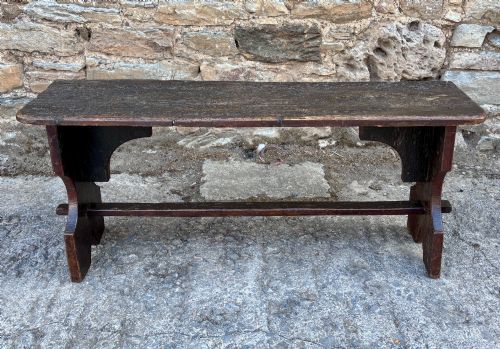
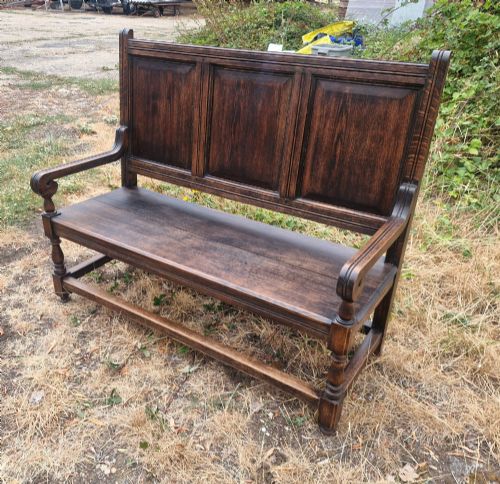
A dark timber entryway bench grounds an entrance hall with deep grain and immediate utility.
Dark Timber Entryway Bench
A dark timber entryway bench provides practical seating and storage right inside the front door. These pieces range from simple rustic pine boards to heavily carved mahogany and oak seats.
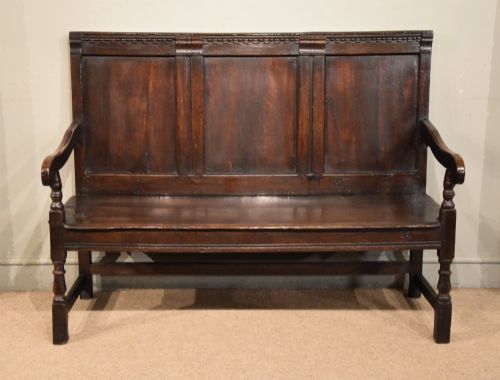
You are most likely to encounter 19th century and Edwardian examples on this page, often built as hall benches or settle forms. Many include lift-up lids or integrated shoe storage beneath the seat.
The styles span from austere Irish vernacular and rustic country to grand Jacobean revival and Victorian gothic designs. Each piece reflects the functional needs of historical hallways.
How they were made
Cabinetmakers utilised dense hardwoods such as oak, mahogany, walnut, rosewood, and ebonised timber to build these entryway seats. Pine also appears frequently in simpler country and regional workshop pieces.
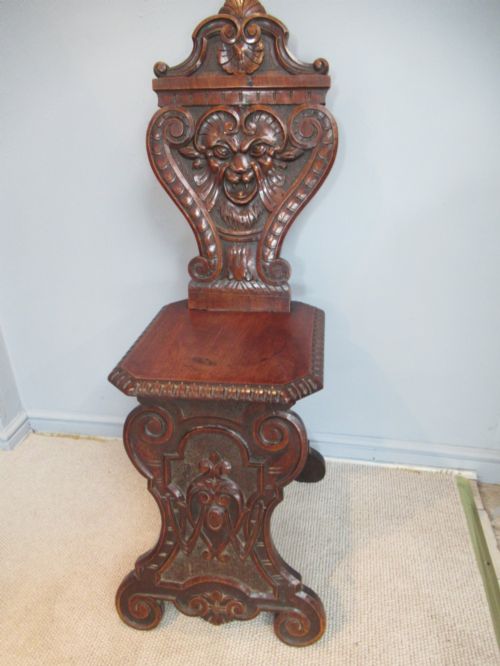
Construction relies heavily on traditional joinery, including panelled backs, mortise and tenon joints, and sturdy box bases. Carving is frequently applied by hand to the crest rails, panels, and arm supports.
Surfaces were finished to highlight the natural grain of the dark wood, often through wax polish or oil rather than heavy modern varnishes.
Several seats double as shoe lockers, proving our ancestors were just as tired of tripping over boots by the front door.
What varies in quality
The standard of a dark timber entryway bench depends largely on the selection of the wood and the integrity of the joinery. Dense, figured mahogany or well-selected quarter-sawn oak represents the higher end of the scale.
Carving depth and execution distinguish standard workshop production from finer cabinetwork. Crisp, deep relief work on panels and arms indicates a more skilled hand than shallow machine routing or basic surface incision.
The proportion and stability of the frame dictate durability. Pieces that retain their original hinges on lift-up lids and solid, uncompromised structural timbers hold greater integrity.
The Dark Timber Entryway Bench Glossary
- Settle
- A wooden bench with high back and arms, often featuring a box seat for storage. It was designed to keep draughts away from the sitter in a hallway or kitchen.
- Quarter-sawn
- A method of cutting logs that produces a distinct grain pattern with parallel growth rings. This technique yields stable timber less prone to warping.
- Vernacular
- Architecture or furniture built by local craftsmen using regional materials and traditional methods. These pieces prioritize function over academic stylistic rules.
- Panelled
- Construction method where thin wooden panels are set within a grooved frame to allow for natural wood expansion. This prevents the timber from splitting as humidity changes.
Dark Timber Entryway Bench: Frequently Asked Questions
How do I care for a dark timber entryway bench?
Maintain the wood by applying a natural beeswax polish periodically to nourish the surface and protect the grain. Avoid placing the bench in direct sunlight or directly against heating radiators to prevent the timber from drying out and splitting.
Clean surfaces regularly with a dry or barely damp cloth, avoiding harsh chemical cleaners that strip historical finishes.
Were these benches used for storage?
Many historical hall benches and settles were specifically constructed with lift-up seat lids to conceal muddy boots, heavy garments, and umbrellas. This dual purpose made them essential furniture for busy Victorian and Edwardian entryways.
Some regional examples incorporate dedicated compartments or lower rails specifically built for shoe and boot storage.
How can I tell the period of an oak hall bench?
Examine the construction marks, nail types, and hinge mechanisms used within the framework. Hand-cut joints and forged iron hardware generally indicate older eighteenth or nineteenth-century work, while machine-made screws point toward later Victorian and Edwardian manufacturing.
The style of the carved decoration also corresponds to revival movements active during the nineteenth century.