
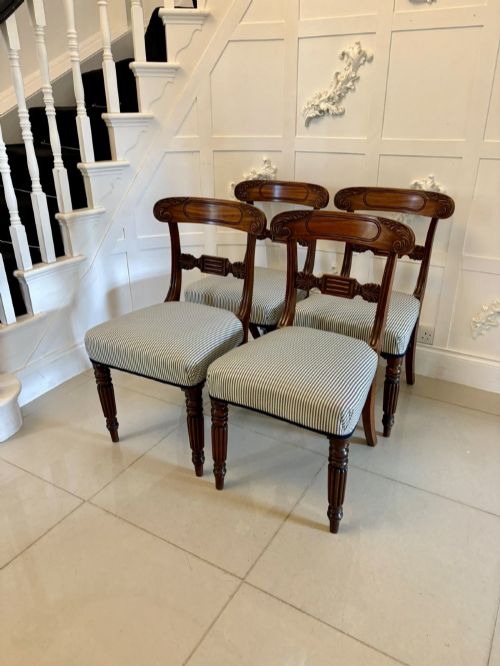
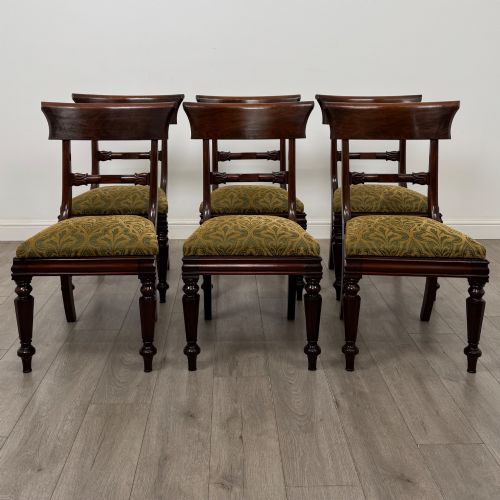
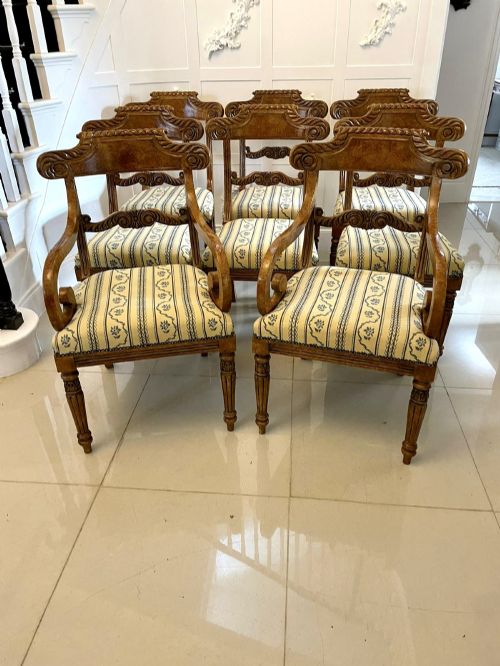
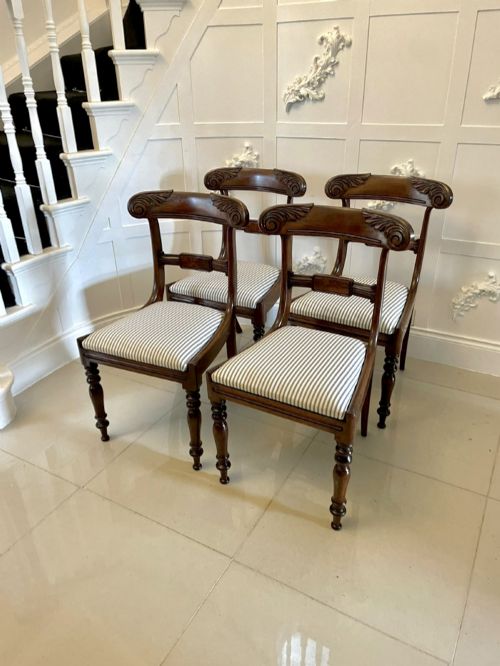
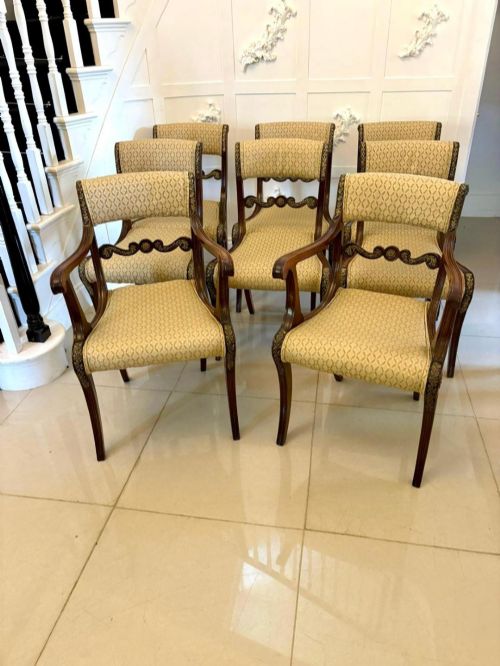
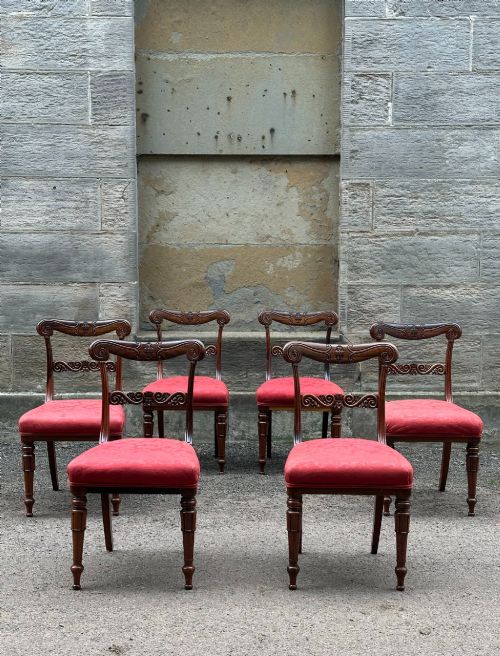


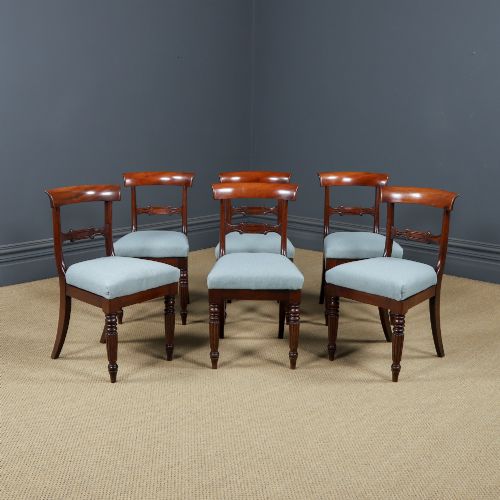
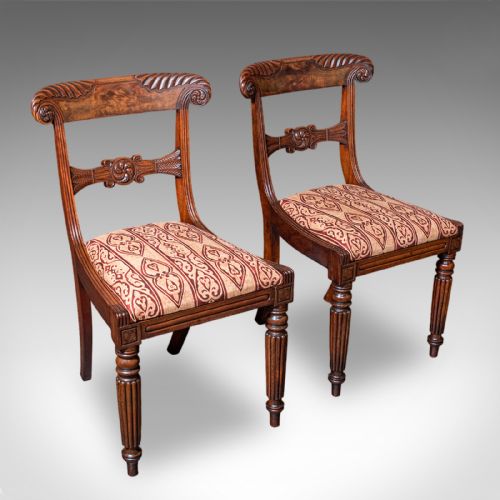
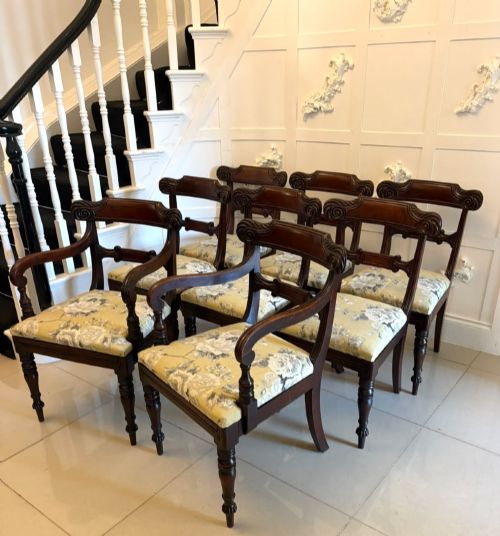
Regency Carved Dining Chairs
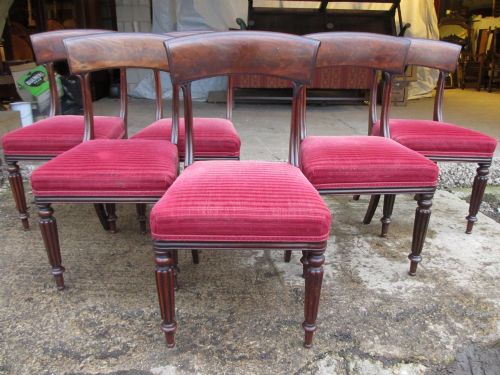
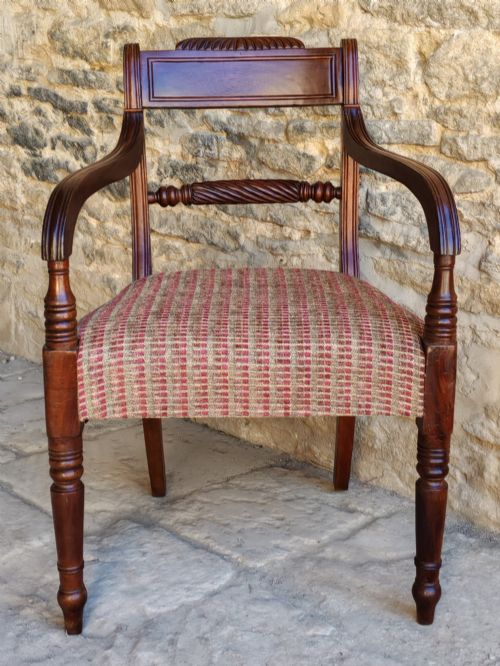
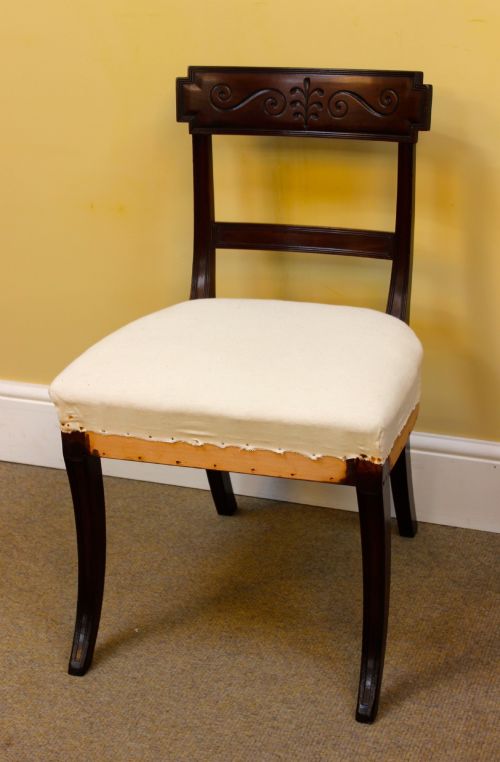
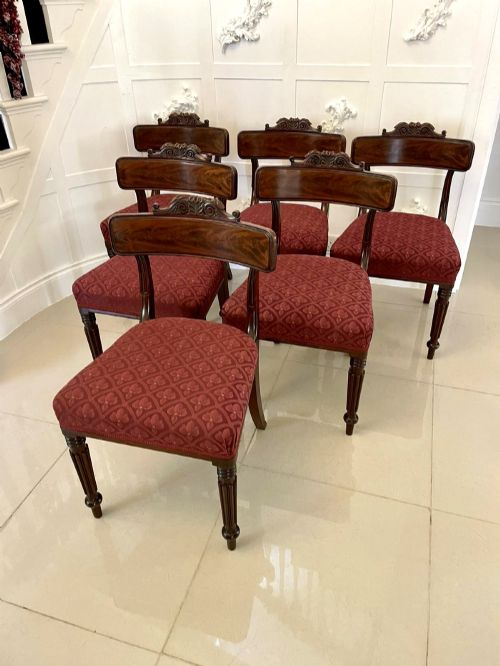
Regency carved dining chairs combine formal classical lines with substantial timber frames designed for nineteenth century dining rooms.
Regency Carved Dining Chairs
When searching for regency carved dining chairs, buyers encounter seating designed during the early nineteenth century and later revival periods. Most examples found here take the form of side chairs and armchairs shaped from dense hardwoods.
The inventory spans mahogany and rosewood constructions, alongside related William IV and Georgian pieces sharing similar classical proportions. Sets range from isolated pairs up to larger dining suites numbering ten or twelve seats.
Makers often drew inspiration from ancient Greek and Roman motifs, incorporating sabre legs, ropeback rails, and brass inlay. These seating forms served formal reception spaces and primary dining tables.
Materials and Construction
Cabinetmakers relied heavily on solid mahogany and rosewood, selected for their grain pattern and structural strength under heavy use. Secondary timbers such as beech or birch occasionally appear in concealed frame sections.
Decorative elements included inlaid brass lines, ebonised finishes, and simulated rosewood graining painted over a simpler wood base. Seats were typically upholstered in fabric, leather, or velvet, supported by webbing or cane.
The listings feature mahogany and rosewood timbers alongside brass inlay and cane seating panels from the nineteenth century.
Gradations in Quality
The highest tier pieces display crisp, deep hand-carving along the top rail and bar backs, executed with precision by skilled cabinetmakers. Lesser examples rely on shallower stamped ornamentation or simpler turned components.
Timber selection dictates overall longevity, with dense Cuban mahogany and figured rosewood commanding greater regard than plain domestic woods. Original surface patination and matching timber grains across an entire set elevate the standing of a suite.
Gillows
The Regency Carved Dining Chairs Glossary
- Sabre leg
- A curved rear or side leg that tapers toward the foot, mimicking the shape of a cavalry sword.
- Bar back
- A horizontal wooden splat spanning the uprights of a chair back, often carved or reeded.
- Carver
- An armchair designed to match a set of smaller dining side chairs, usually placed at the table ends.
- Cane
- Woven rattan material utilised for lightweight seat panels, providing flexible support.
- Brass inlay
- Thin strips of brass set flush into the timber surface to create geometric or classical patterns.
Regency Carved Dining Chairs: Frequently Asked Questions
How do I spot a true nineteenth century set?
Examine the timber joints, hand-cut screws, and wood patination visible underneath the seat frame. Nineteenth century pieces show distinct tool marks and material ageing absent in later revival copies.
Compare the carving depth and wood density against documented examples from the same decade. Genuine sets maintain uniform timber selection across every chair in the group.
Can I mix carvers with side chairs?
Traditional dining arrangements paired a pair of arm-equipped carvers at the head of the table with matching side chairs along the flanks. This setup provided comfortable seating for hosts while preserving legroom.
Ensure the overall height and back design align closely if assembling a dining group from separate pairs or smaller sets.
What upholstery fabrics suit these frames?
Period-appropriate choices include horsehair cloth, damask, leather, and textured velvet in deep, muted tones. These materials complement the dark grains of rosewood and mahogany frames without overwhelming the carved details.
Modern neutral linens also work well in contemporary interiors by softening the formal geometry of classical dining seats.
How should I care for antique rosewood?
Apply a microcrystalline wax periodically to nourish the timber and protect the original surface finish from drying out. Avoid placing antique chairs near direct heat sources or strong sunlight to prevent wood splitting.
Lift chairs by the seat rails rather than the top carved backs when moving them around a room to avoid loosening the structural joints.