




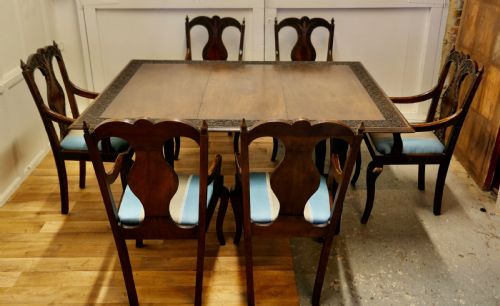


Anglo Indian Dining Chairs
Anglo Indian dining chairs bring together dense exotic timbers and intricate regional carving to anchor a room with serious presence.
Anglo Indian Dining Chairs
When you search for Anglo Indian dining chairs, you are looking at seating produced during the colonial period, frequently drawing on Regency, William IV and Victorian design idioms adapted by local artisans. The pieces appearing here span side chairs, armchairs and substantial suites, often executed in dark, heavy timbers.
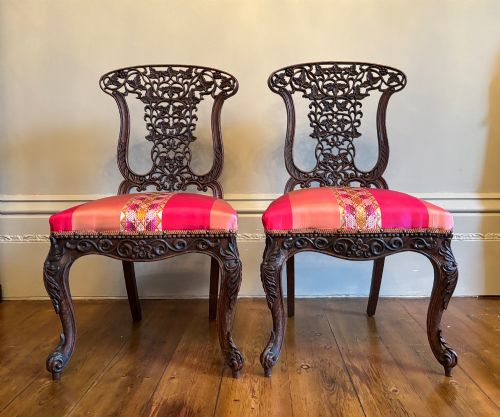
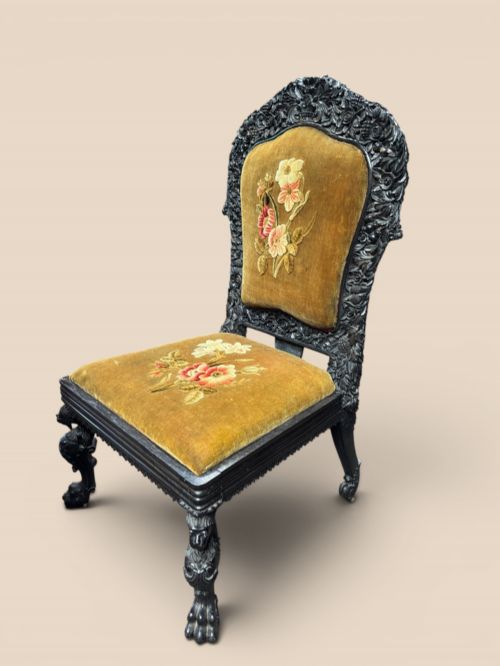
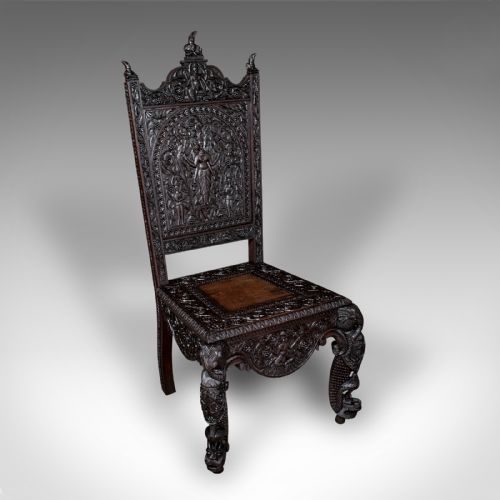
The most common forms on this page include nineteenth-century single chairs and sets featuring carved frames, with regional variations stretching from Ceylon and Burma to broader Indian workshops. You will encounter caned seats paired with solid timber frames as well as versions prepared for squab cushions and velvet upholstery.
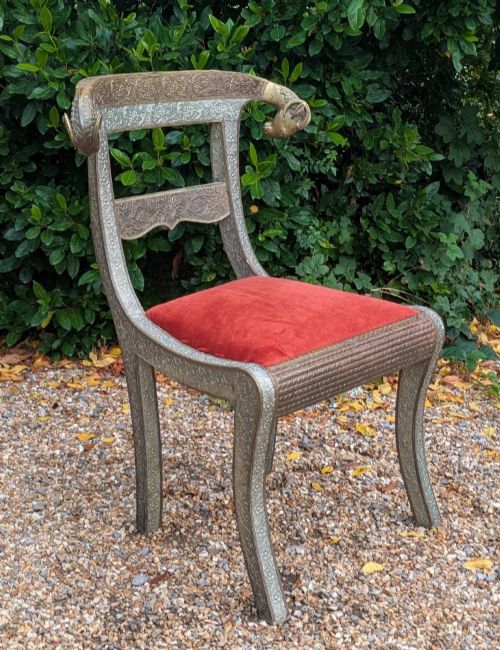
Makers blended British formal seating geometry with deeply carved foliage, animal motifs such as rams' heads, and turned supports. These chairs served colonial households and grand residences, surviving today as robust examples of cross-cultural cabinet making.
How they were made
Workshops utilised dense tropical hardwoods including ebony, rosewood, padauk, teak and general heavy hardwood, chosen for their ability to hold exceptionally crisp hand-carved detail. These timbers were worked using traditional joinery methods, often combined with turned elements and applied silver metal sheet decoration on specific ceremonial forms.
Caning formed a primary method for seating surfaces in warmer climates, offering natural resilience and breathability within carved wooden rails. Where softer comfort was required, frames accommodated squab cushions covered in velvet or modern upholstery fabrics.
Listings feature pieces spanning the nineteenth century through to the 1930s, constructed in ebony, rosewood, teak and padauk.
What varies in quality
Quality rests in the depth, sharpness and flow of the hand-carving across the crest rails and splats, distinguishing fluid artisan work from rigid or mechanical execution. The choice of primary timber also dictates standing, with solid ebony and figured rosewood pieces holding a different visual weight compared to standard teak or mixed hardwoods.
The integrity of the frame construction and the fineness of the cane work or upholstery preparation dictate the longevity and structural composure of each piece. Matching sets demonstrate a higher degree of initial commission planning than assembled groups of single side chairs.
The Anglo Indian Dining Chairs Glossary
- Padauk
- A heavy, dense tropical timber with a reddish-brown hue that darkens with age, frequently utilised for nineteenth-century carved furniture. It provides a stable base for intricate floral and foliate relief work.
- Cane
- Woven split rattan utilised for resilient, breathable chair seats in colonial furniture. It offers flexibility and keeps the sitter cool in warmer climates.
- Squab cushion
- A loose, removable pad placed on a caned or wooden seat base for added comfort. These are traditionally upholstered in materials such as velvet.
- Regency style
- A classical British design idiom characterised by sabre legs, reeded members and ancient Greek or Roman motifs. In colonial pieces, these proportions merge with local carving techniques.
- Ceylonese
- Pertaining to furniture originating from Ceylon, known for distinctive deep relief carving and the use of calamander, ebony and other native hardwoods.
Anglo Indian Dining Chairs: Frequently Asked Questions
Are these chairs comfortable for daily use?
Many examples feature caned seats or space for squab cushions, providing a firm base suitable for long dinner parties. Their upright proportions reflect nineteenth-century dining standards rather than modern lounging ergonomics.
Adding appropriate cushions alters the sit while preserving the visible carved wooden frame. Buyers often use them around a main dining table or place single accent chairs in studies and hallways.
How do I care for exotic hardwoods?
Dense timbers such as ebony, rosewood and padauk respond best to stable indoor humidity and protection from direct sunlight. Dusting with a dry, soft cloth maintains the finish without stripping natural oils from the wood.
Avoid placing these pieces near modern heat sources which can cause the dense grain or hand-carved joints to shift. Periodic light conditioning keeps the timber surface rich and deep in tone.
How can I tell the period of these chairs?
Dating relies on comparing the structural silhouette, such as Regency sabre legs versus Victorian balloon backs, against the style of the hand-carving. The choice of timber, from solid ebony to teak, often aligns with the workshop traditions of a specific decade.
Documentation, historical joinery techniques and patination on the underside help establish whether a piece belongs to the nineteenth century or later revival periods.
Can I mix different styles around one table?
Mixing single side chairs and armchairs creates an eclectic dining arrangement that reflects how many of these pieces survived over generations. Matching sets remain uncommon, so pairing items with similar timber tones or carving depths works well.
Keeping a consistent scale ensures that chairs of different heights sit comfortably together beneath a dining table. The shared colonial aesthetic ties diverse carved motifs into a unified room.