

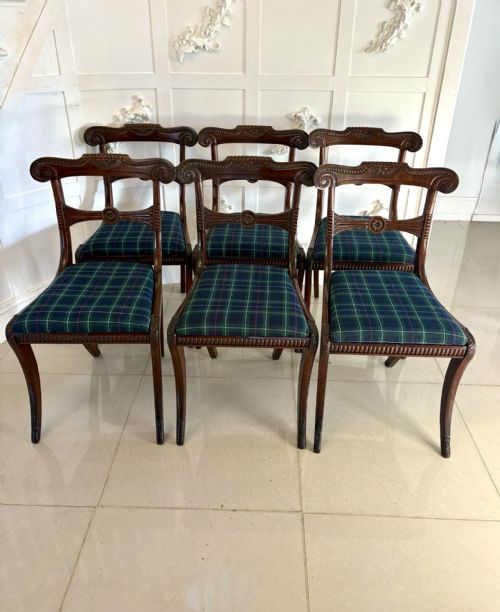
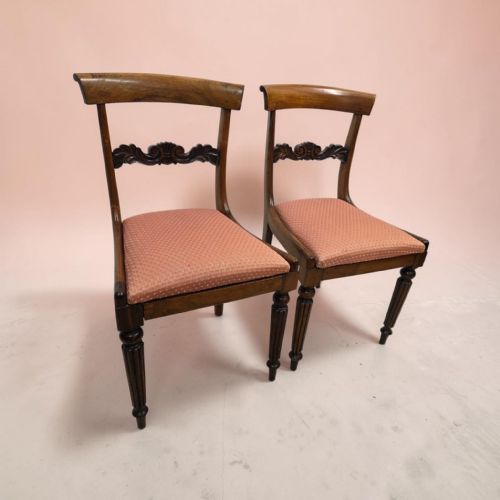
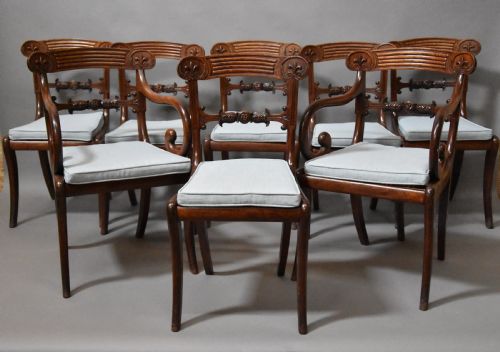
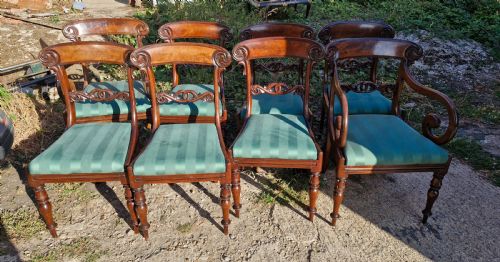
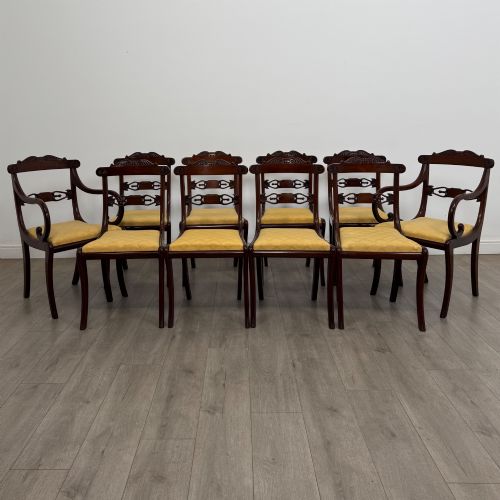
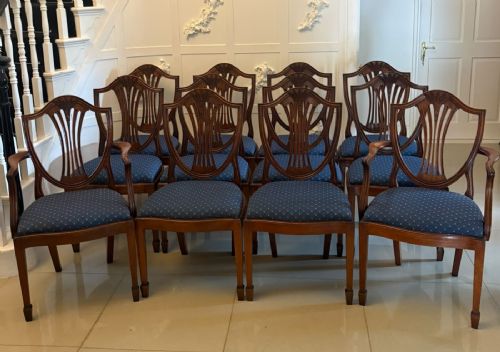
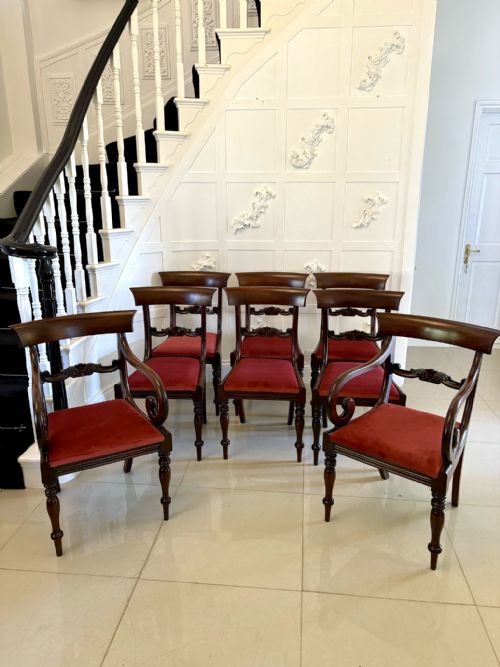
Period Dining Room Chairs
Period dining room chairs anchor a room with architectural timber and traditional design, offering solid seating for long dinners.
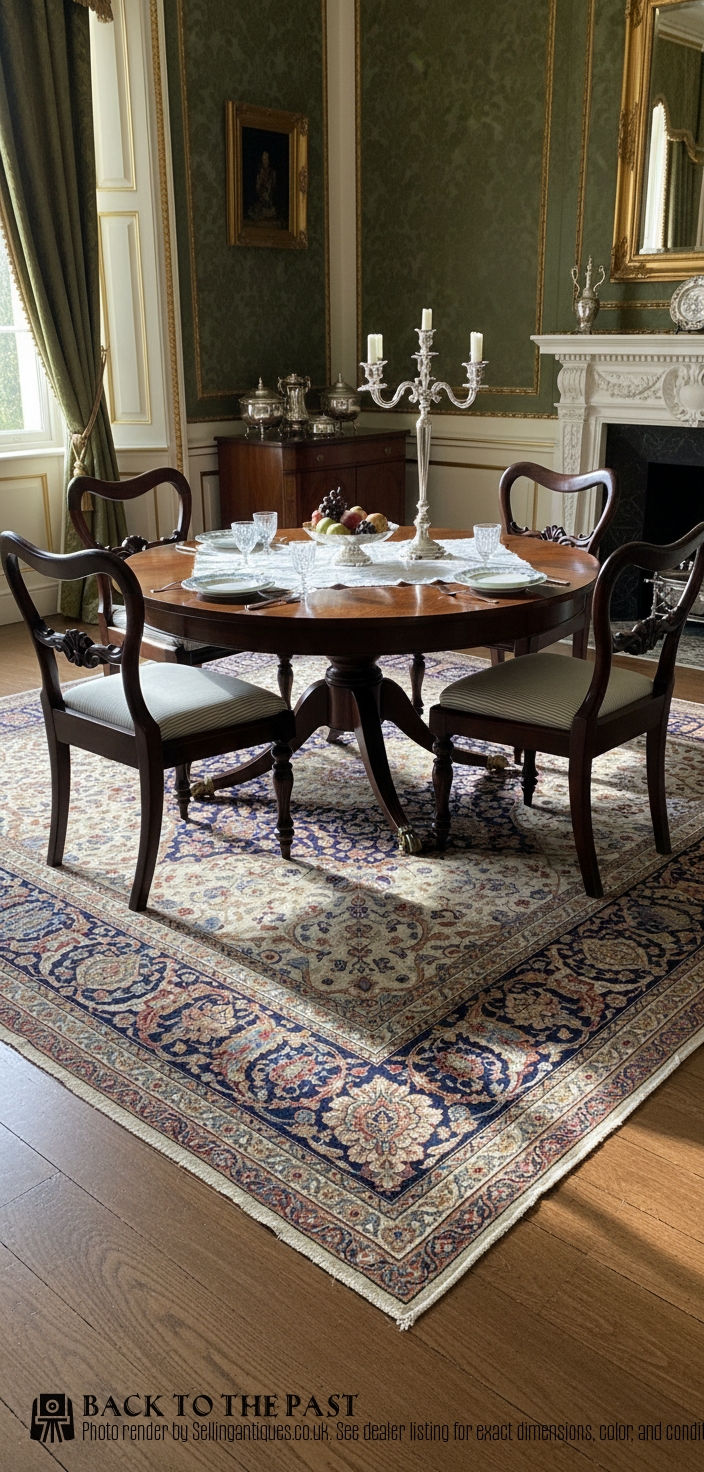
Period Dining Room Chairs
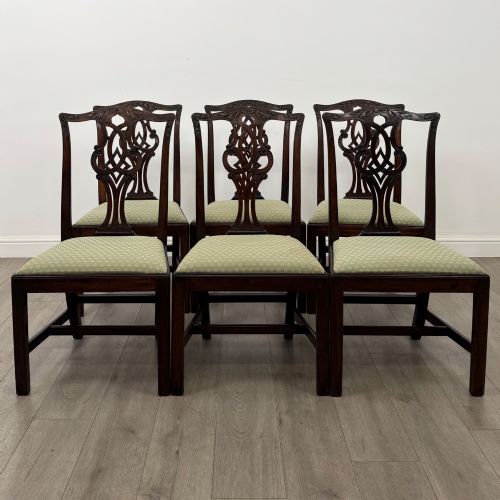
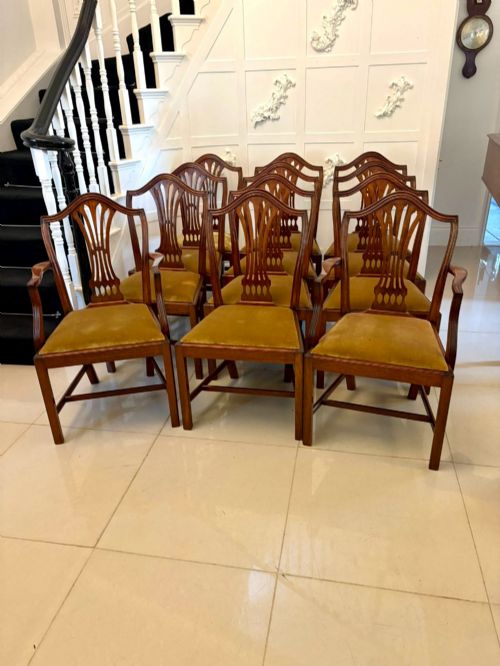
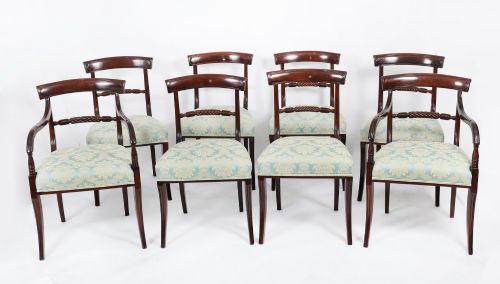
Period dining room chairs bring historic craftsmanship to the table, spanning Georgian, Regency, Victorian, and Edwardian eras. These seating options include sets of side chairs and matching carvers with armrests, designed for formal dining rooms.
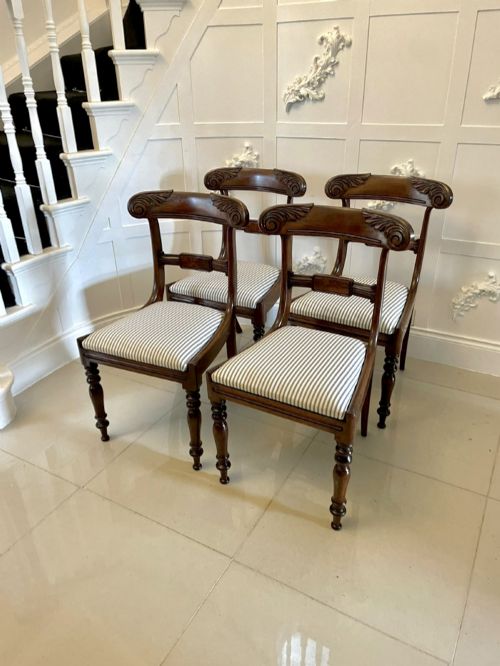
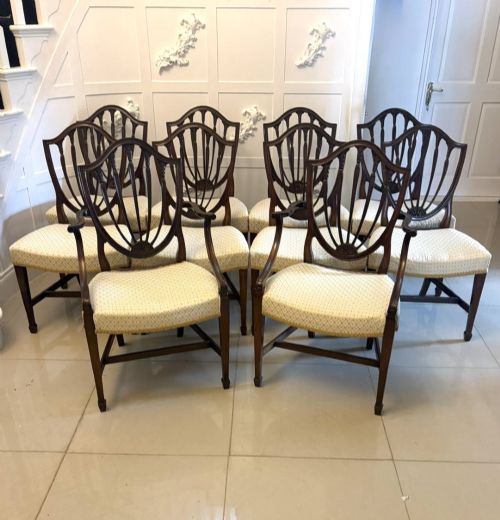
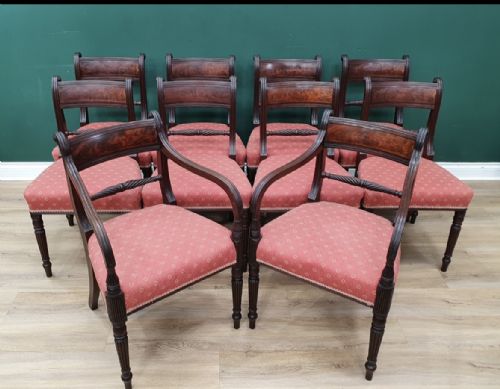
Mahogany dominates the listings, frequently shaped into shield backs, bar backs, and balloon backs. Elm, oak, walnut, and maple also appear alongside upholstered seats covered in fabric, leather, or velvet.
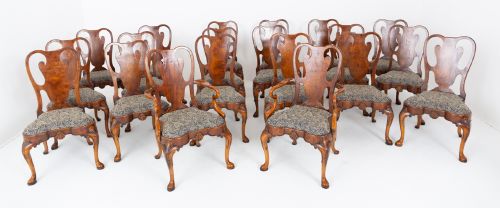
Buyers will encounter single chairs and large sets numbering up to twenty pieces. Regency and Georgian styles appear most often, alongside revival pieces from later decades.
Assessing Craftsmanship
The refinement of the timber carving separates standard sets from exhibition pieces. Crisp reeding, deeply undercut foliage, and balanced proportions reflect the skill of the original workshop.
Original timber surfaces and consistent patination across a full set elevate the standing of the chairs. Uniformity in timber grain and matching frames within large sets indicate a cohesive original manufacture rather than later assembly.
Period Dining Room Chairs Retail Price Guide 2026
Typical asking prices for period dining room chairs among the pieces listed under this phrase on Sellingantiques today, from the lower quarter to the upper quarter. They describe what is for sale here now, not the wider market.
Upholstery materials on these chairs include leather, velvet, and various woven textile fabrics.
Maple & Co·Lamb of Manchester
The Period Dining Room Chairs Glossary
- Carver
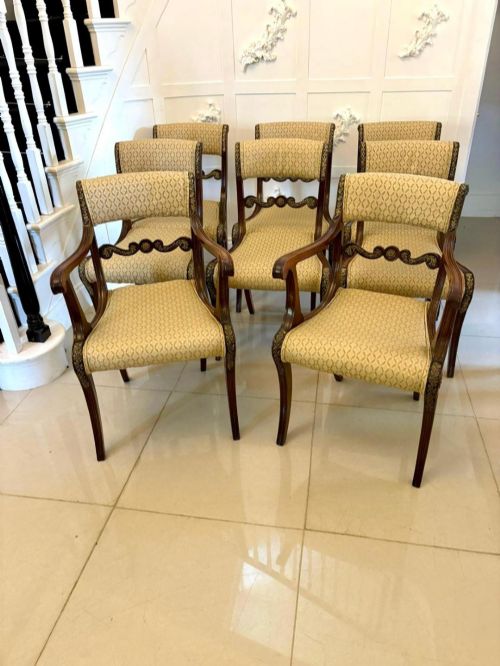
- An armchair designed to sit at the head of a dining table. These feature matching stylistic details to the smaller side chairs in a set.
- Shield Back
- A chair back shaped in the outline of a heraldic shield, popularised during the late eighteenth century by designers like Hepplewhite.
- Bar Back
- A horizontal wooden slat crossing the upper back of a chair, often curved for comfort and common in Regency designs.
- Balloon Back
- A rounded, oval-shaped chair back resembling a hot air balloon, characteristic of Victorian seating.
- Reeded Legs
- Cylindrical table or chair legs carved with parallel convex mouldings that resemble stacked reeds.
Period Dining Room Chairs: Frequently Asked Questions
How many chairs come in a typical set?
Sets vary widely from small groups of four up to twenty matching seats. Many larger dining sets include a combination of standard side chairs and two armchairs for the heads of the table.
Buyers should check the exact breakdown of singles and carvers listed in each description before purchasing.
How do I identify Regency dining chairs?
Regency chairs often feature classical motifs inspired by ancient Rome and Greece, including brass inlay, sabre legs, and bar backs. Mahogany is the predominant wood for this style.
Look for reeded details on the legs and curved top rails typical of the early nineteenth century.
Are these chairs comfortable for daily use?
Most period dining chairs offer sturdy upright support designed for formal dining rather than lounging. Upholstered drop-in pads provide firm cushioning.
Many sets retain their original padding style, though modern buyers occasionally update the textile upholstery for everyday comfort.
What is the difference between Georgian and Victorian chairs?
Georgian chairs, dating from the eighteenth and early nineteenth centuries, favour restrained classical lines, mahogany frames, and carved shield or ladder backs. Victorian examples from later in the nineteenth century often feature heavier proportions and balloon backs in walnut or mahogany.
Victorian pieces also showcase the influence of the Aesthetic Movement and revival styles.