
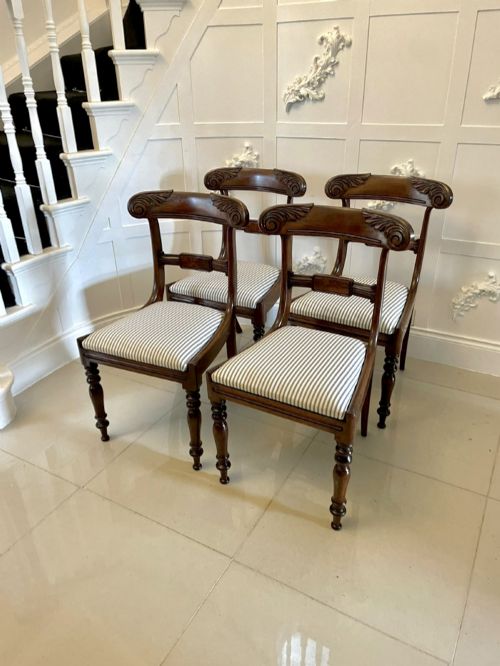


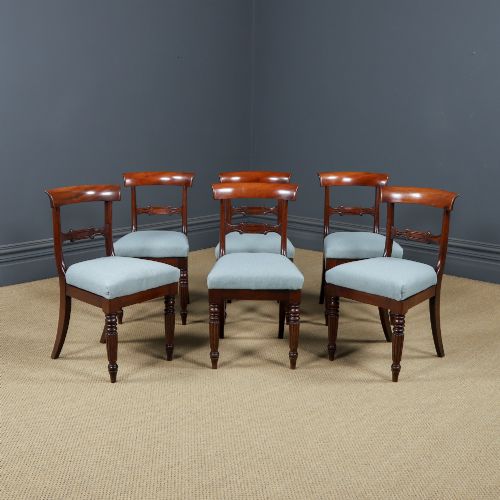
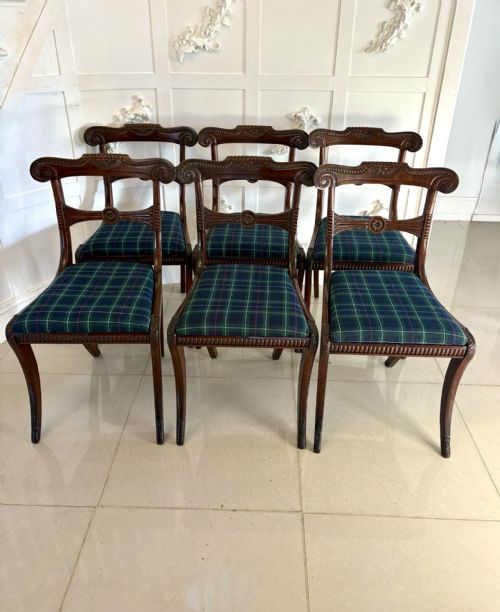
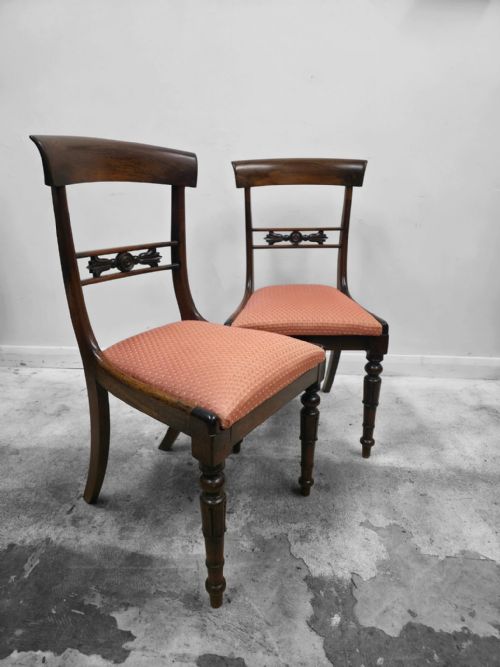
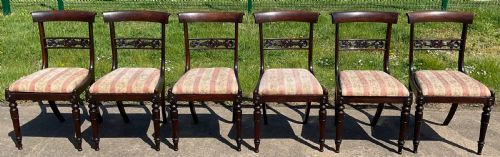

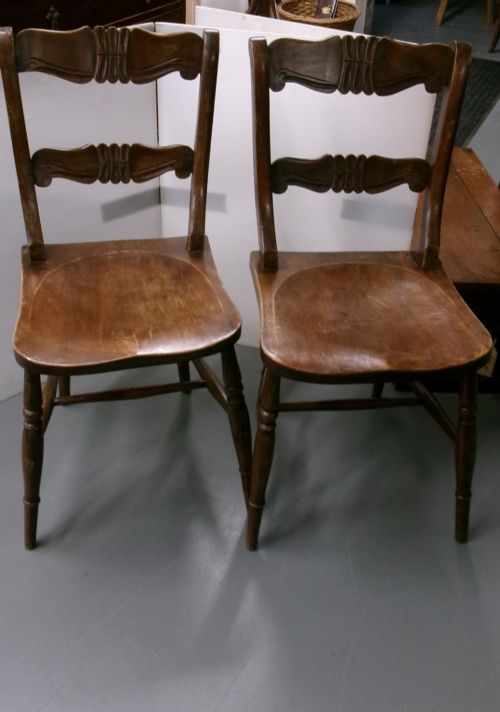


Carved Bar Back Chairs
These carved bar back chairs are classic dining seats that bring period British warmth and sturdy character to a room.
What carved bar back chairs are
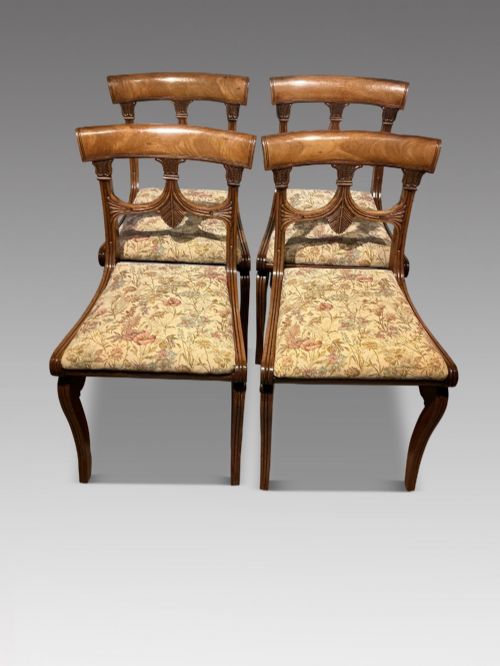
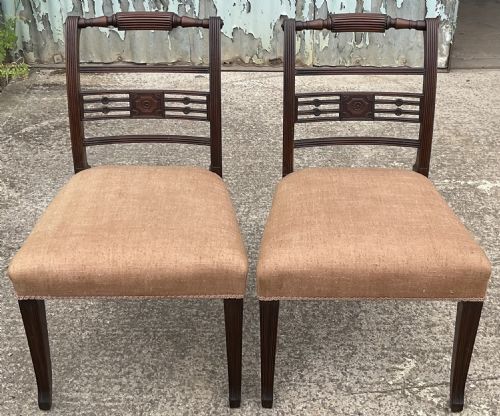
When you search for carved bar back chairs, you are looking at timber dining seats defined by a horizontal wooden crossbar along the upper back. These pieces appear most frequently from the Regency, William IV, and Victorian periods, often made in sets or smaller groupings of dining chairs.
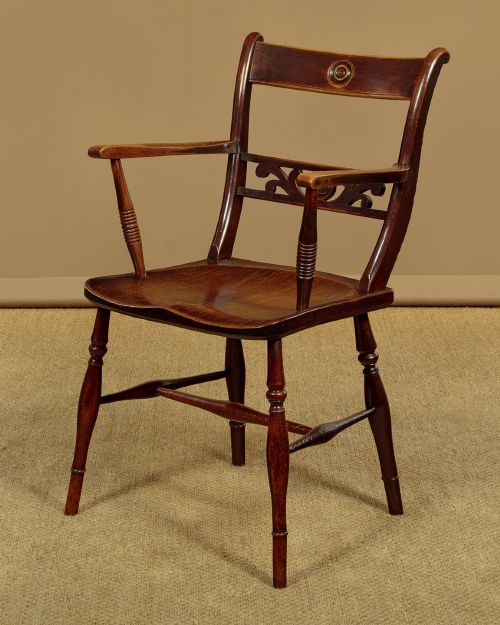
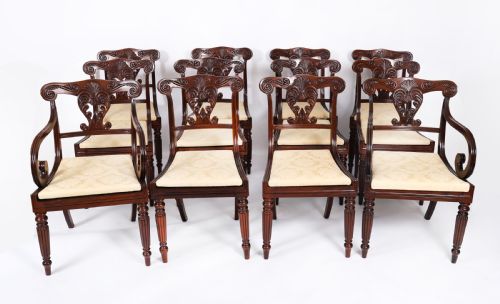
The forms span simple country kitchen variations in elm and beech through to formal dining seats in mahogany, rosewood, and walnut. Many examples include carved decorative details on the top rail or splat, ranging from simple arched shapes to scroll carved bars.
How they were made
Cabinetmakers worked predominantly in dense hardwoods such as mahogany, rosewood, walnut, and pollard oak, alongside regional timbers like elm and beech for country pieces. Timber was selected for grain and strength, allowing makers to shape horizontal back rails and slender legs.
Construction relied on traditional joinery methods, with turned, reeded, or carved forelegs and understretchers supporting the frame. Seats were typically drop-in or overstuffed, upholstered in fabrics, velvet, or traditional textiles.
Retail Price Guide 2026
Typical UK retail prices for carved bar back chairs, calculated from the Sellingantiques database of over a million retail prices indexed since 2003. This retail price guide relies exclusively on Sellingantiques data; no external sources or auction records are used, so the figures do not describe the wider market.
Some kitchen chairs from eighteen ninety keep you guessing whether they served for meals or card games.
What varies in quality
The distinction between standard examples and finer pieces lies in the choice of timber and the crispness of the carving. Richly figured mahogany, rosewood, or pollard oak combined with deeply defined scroll work or reeded turnings mark out the better productions.
Proportion and structural integrity also divide the range, as larger matched sets command attention for their uniformity. The handling of the back rail and the integration of the carved splat reveal the maker's hand.
The Carved Bar Back Chairs Glossary
- Bar back
- A dining chair featuring a horizontal wooden bar across the upper back. This style was particularly popular during the Regency and Victorian eras.
- Splats
- The vertical central strip of wood within a chair back. In these pieces, the splat often connects to the horizontal carved bar.
- Reeded
- A decorative moulding consisting of parallel convex rounded lines carved into the wood. This technique frequently appears on the forelegs of Regency and William IV examples.
- Overstuffed
- An upholstered seat where the padding covers the wooden seat rail completely. It is commonly found on formal dining chairs from the nineteenth century.
Frequently Asked Questions
How do I date a carved bar back chair?
Dating relies on timber choice, leg turning, and the style of the carved back rail. Regency pieces often show clean classical lines, while William IV and Victorian examples introduce heavier scroll work and walnut.
Examining the construction methods underneath the seat frame also helps confirm the period. Later Victorian versions frequently feature shaped balloon backs and cabriole legs.
Are these chairs comfortable for daily dining?
Most period dining chairs were designed for upright posture during formal meals. Many feature overstuffed or padded seats that offer comfortable support for regular use.
Consider the seat height and depth relative to your dining table. Sets with upholstered pads provide a softer sit than solid wood varieties.
What woods were commonly used?
Mahogany is the most frequent timber found in these listings, alongside rosewood, walnut, and pollard oak. Regional variations sometimes utilise elm or beech for country kitchen seating.
Finer sets often highlight the natural grain of Cuban mahogany or pollard oak. Softer woods appeared primarily in utilitarian or provincial pieces.
Do these chairs come in large sets?
Sets appear in varying quantities, ranging from small pairs and groups of four up to larger sets of six, eight, ten, or twelve. Finding larger matched sets is less common than finding pairs or smaller groups.
Many listings comprise assembled sets or partial suites gathered over time. Checking the subtle variations in timber grain helps determine if the set originated together.