

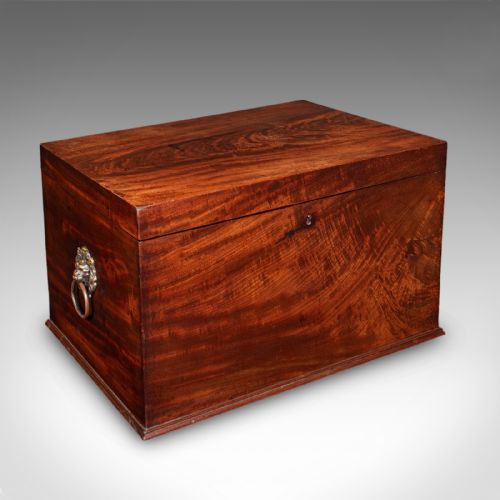


Irish Regency Furniture
Irish regency furniture comprises substantial mahogany and rosewood tables, cellarettes, and seating built in the early nineteenth century.
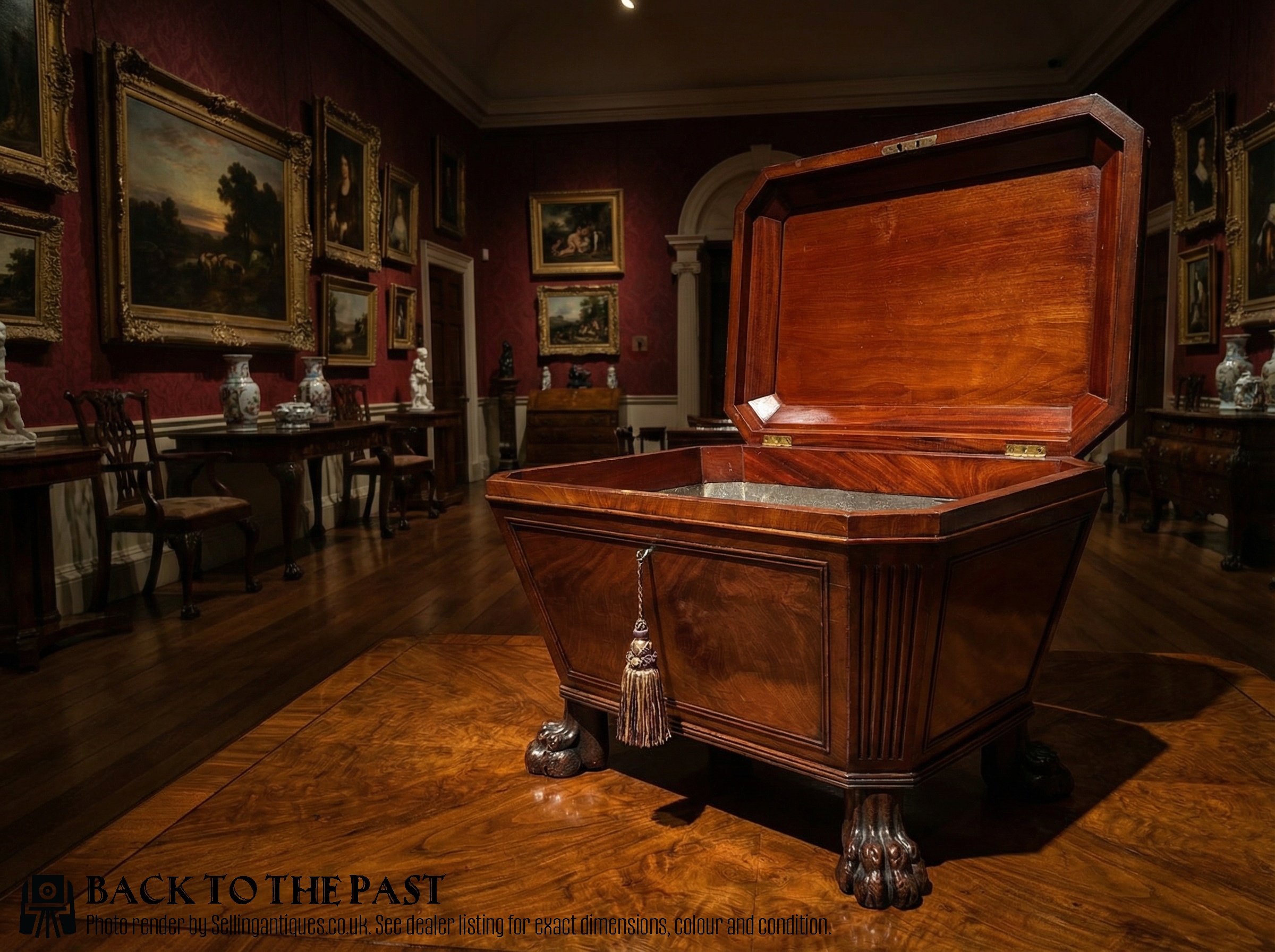
Irish Regency Furniture
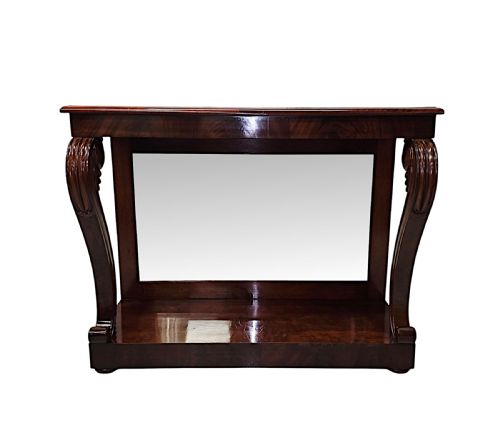
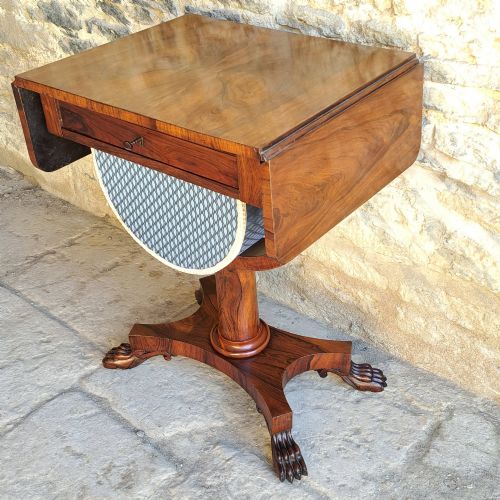
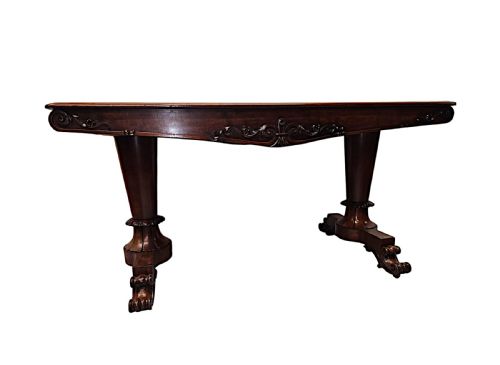
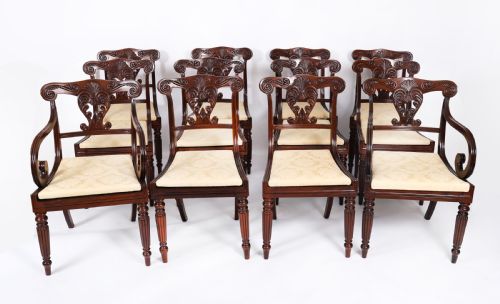
Irish regency furniture encompasses a distinct group of early nineteenth century domestic pieces designed for formal dining, libraries, and drawing rooms. When searching for irish regency furniture, buyers encounter large dining tables, serving tables, and cellarettes alongside smaller occasional items such as sewing tables and bedside cabinets.
The objects originate primarily from the nineteenth century, spanning periods noted as Regency, Georgian, and William IV. These pieces reflect the output of Dublin workshops and provincial makers working in styles that range from restrained classical lines to heavily carved architectural forms.
Serving tables, library tables, and cellarettes dominate the available forms, often constructed from dense hardwoods like mahogany and rosewood. Buyers find both large-scale dining furniture intended for grand estates and more intimate items suited to domestic interiors.
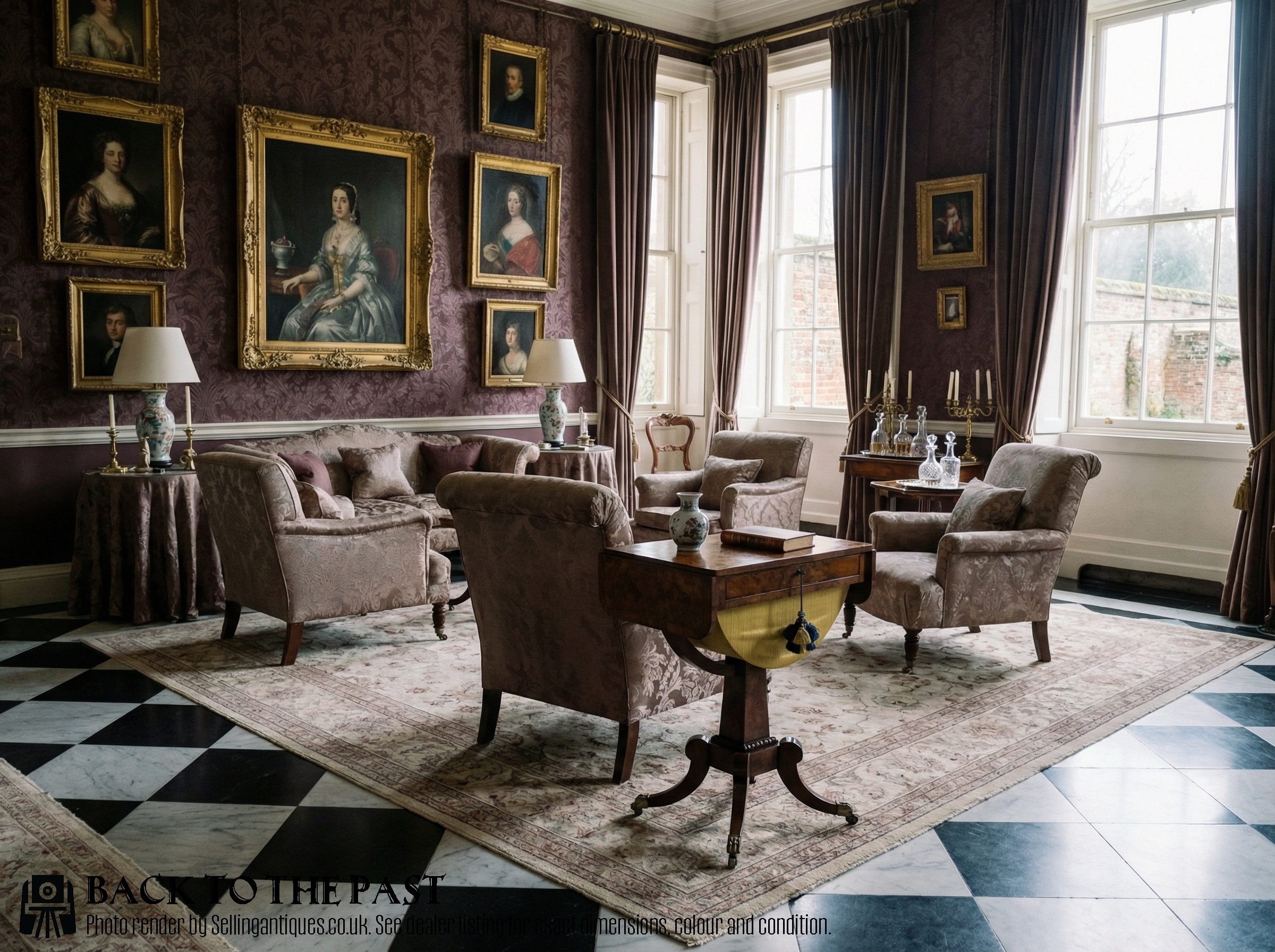
Materials and Construction
Cabinetmakers constructed irish regency furniture using dense timbers such as mahogany, rosewood, burr elm, pollard oak, and burr yew. These woods were selected for their rich grain patterns and durability, providing a solid foundation for large dining tables, bookcases, and sideboards.
Decoration relied heavily on natural timber figuring supplemented by applied brass mounts, glass panels, and detailed carving in giltwood and gesso. Upholstery fabrics and interior fittings completed functional pieces like sofas, dining chairs, and work tables.
Irish Regency Furniture Retail Price Guide 2026
Typical asking prices for irish regency furniture among the pieces listed under this phrase on Sellingantiques today, from the lower quarter to the upper quarter. They describe what is for sale here now, not the wider market.
Materials documented across these pieces include mahogany, rosewood, burr elm, pollard oak, giltwood, brass, and glass.
Evaluating Quality and Craftsmanship
Quality in irish regency furniture rests on the selection of timber, the crispness of carved details, and the integrity of structural joinery. Pieces featuring figured veneers, well-executed paw feet, and intact maker stamps or labels command greater attention.
The distinction between standard domestic output and exceptional workshop production lies in the weight of the timber, the complexity of forms like sarcophagus cellarettes or breakfront bookcases, and the survival of original surface finishes.
Gillingtons of Dublin·Williams and Gibton·Strahan of Dublin·Robert Strahan and Co·The Woodworkers Ltd Kilkenny
The Irish Regency Furniture Glossary
- Cellarette
- A fitted box or cabinet used for storing and cooling wine bottles at the dining table. These often take sarcophagus forms supported on paw feet.
- Serving Table
- A large side table positioned in a dining room to hold dishes and silverware before service. Irish examples frequently feature heavy carved decoration and mahogany construction.
- Library Table
- A freestanding desk or table designed for reading and writing in a study or library. They usually incorporate drawers and finished backs for central placement.
- Giltwood
- Wood that has been coated with gold leaf or gold paint for decorative effect. This finish appears frequently on mirrors and ornamental frames.
- Gesso
- A plaster-based mixture applied to wood surfaces as a base for gilding or painting. It allows craftsmen to model intricate low-relief ornamentation.
Irish Regency Furniture: Frequently Asked Questions
What defines irish regency furniture?
Irish regency furniture is identified by its nineteenth-century origins, heavy use of dense mahogany and rosewood, and distinct Dublin workshop characteristics.
The style bridges Georgian restraint and William IV mass, incorporating carved paw feet, bold grain patterns, and architectural proportions.
How do I identify a Dublin workshop piece?
Makers from Dublin often marked their work with stamps, paper labels, or distinct structural signatures like specific secondary woods and robust carving.
Firms such as Gillingtons and Strahan produced distinctive serving tables, library tables, and cellarettes that reflect these regional traits.
Where were cellarettes used in homes?
Cellarettes functioned primarily in dining rooms as dedicated storage boxes for cooling and holding wine bottles near the dining table.
Their heavy construction in mahogany, often shaped like sarcophagi on paw feet, allowed them to sit securely on the floor beside serving tables.
How do I care for rosewood and mahogany?
These dense hardwoods require stable indoor humidity away from direct heat sources and sunlight to prevent timber movement and fading.
Routine maintenance involves gentle dusting with a dry cloth and occasional application of appropriate natural waxes to preserve the surface.