
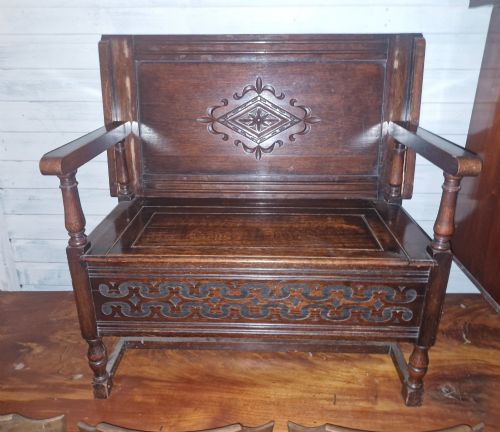
Antique Table Chairs
Antique table chairs bring together matched seating and dining surfaces spanning the seventeenth century to the Art Deco period.
Antique Table Chairs
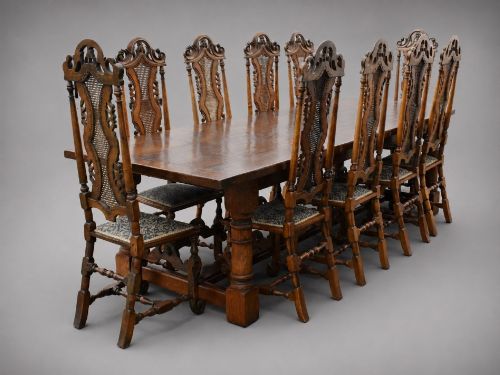
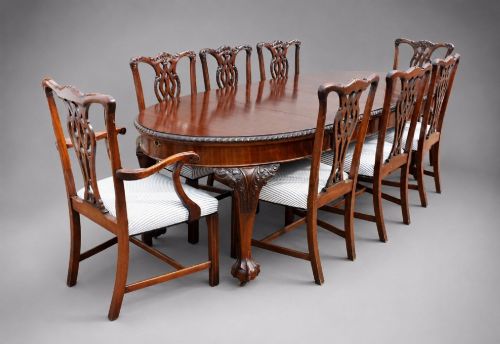
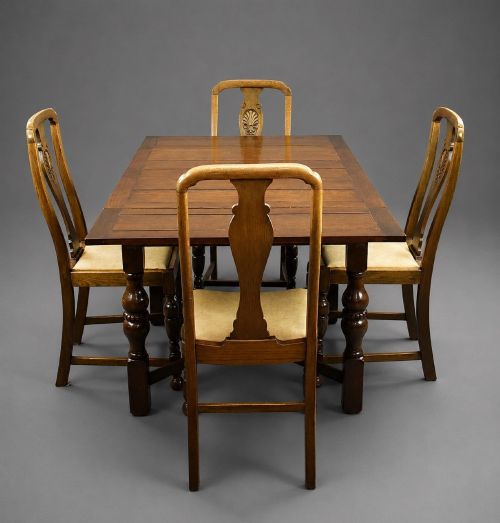
When searching for antique table chairs, buyers examine matched dining sets, boardroom suites, and garden settings that pair tables with complementary seating. These combinations range from seventeenth-century oak refectory boards with high-back chairs to extensive Victorian and Edwardian mahogany extending tables accompanied by dozens of matching seats.
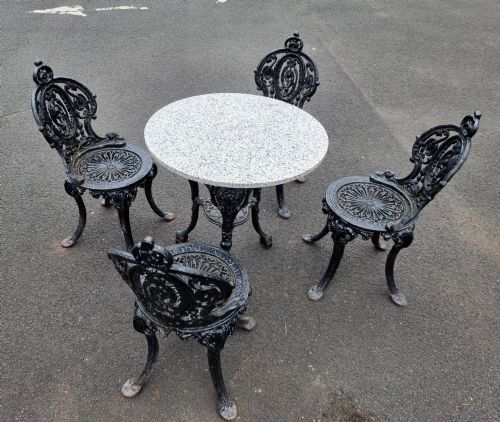
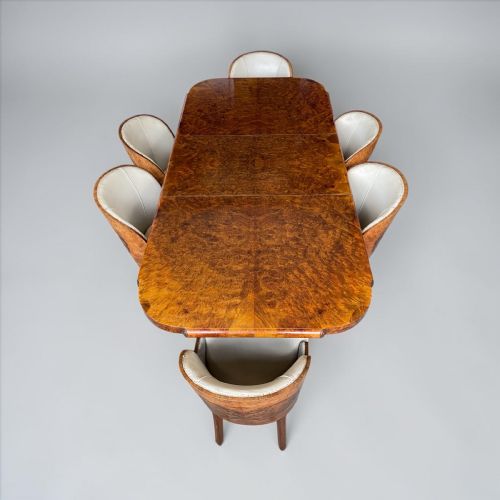
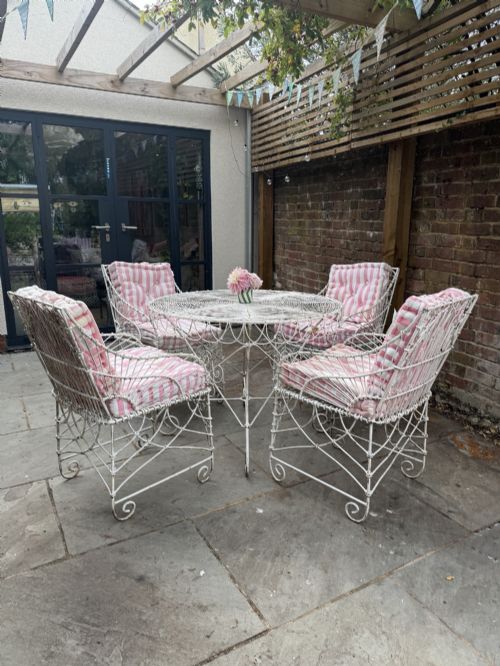
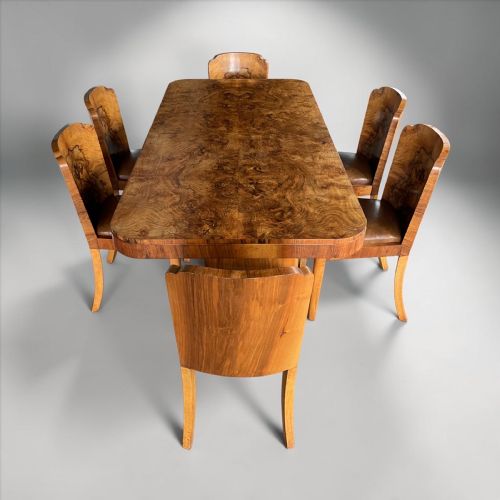
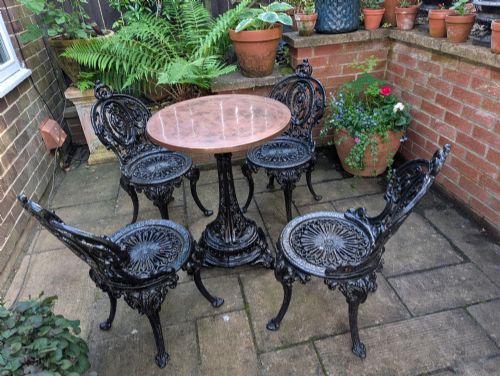
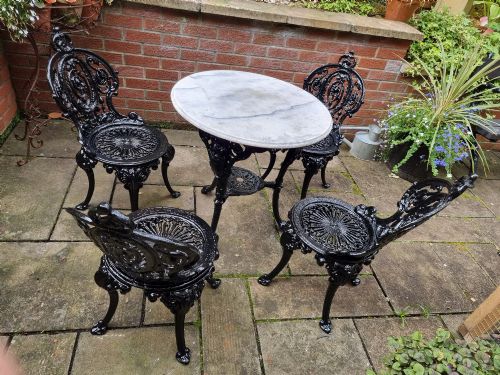
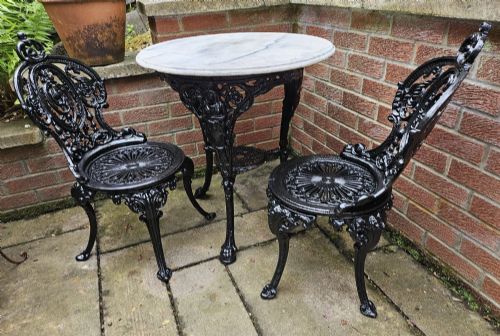
The most common configurations on this page include twentieth-century dining sets in oak or walnut, alongside substantial Art Deco suites featuring satinwood, maple, and burr walnut. Buyers also encounter specialised groupings such as bistro sets with marble tops, cast-iron garden furniture, and Chinese rosewood parlour suites.
The historical span represented in these collections stretches from seventeenth-century joined oak through Regency and George III periods up to modernist designs of the 1930s. Each period introduces distinct proportions and regional carpentry methods that define the relationship between the table and its surrounding chairs.
Materials and Construction Techniques
Makers utilised dense hardwoods such as oak, mahogany, walnut, and rosewood for structural durability, employing draw-leaf mechanisms and extending central runners to accommodate large dining configurations. Secondary timbers and veneers like burr walnut, satinwood, and maple provided decorative surface contrast on table tops and chair backs.
Joinery methods evolved from pegged mortise and tenon frames in early refectory tables to sophisticated screw-threaded extension screws and steam-bent components in later Victorian and Edwardian examples. Seating elements frequently incorporated hand-stitched leather, woven textiles, needlepoint, and brass detailing to secure upholstery to wooden frames.
Assessing Craftsmanship and Integrity
Quality separates simple utility furniture from masterwork suites through the selection of timber figures, such as book-matched burr walnut veneers or dense, quarter-sawn oak rays. The harmony between the table and chairs also dictates standing; superior suites maintain uniform patination, matching grain direction, and original hardware across every component.
Structural integrity relies upon tight, uncompromised joinery in the chair frames and smooth operation in extending table mechanisms. The retention of original upholstery foundations, hand-carved decorative motifs, and maker signatures elevates the historical and material standing of the set.
Maurice Adams·Christopher Dresser·Harry and Lou Epstein·Hille·Gillow·Heals
The Antique Table Chairs Glossary
- Refectory table
- A long, narrow dining table historically used in monasteries and large halls, typically constructed from solid oak with heavy stretcher bases. These pieces frequently feature carved friezes and thick top boards.
- Draw-leaf table
- An extending table fitted with pull-out leaves stored beneath the primary surface, allowing the top to expand without removing the central section. This mechanism appeared across seventeenth-century oak iterations and later revival periods.
- Sabre leg
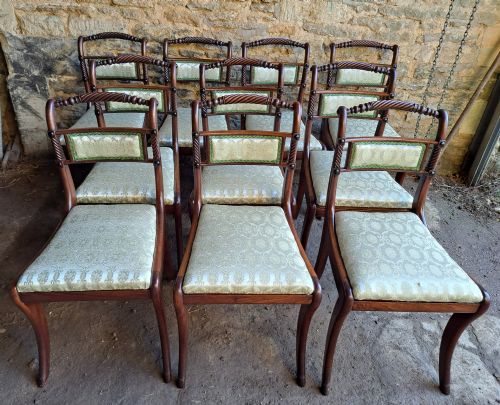
- A concave, outwardly curving chair leg tapering toward the foot, commonly found on Regency dining chairs. This form draws inspiration from classical Greek furniture profiles.
- Bar back
- A chair design featuring a horizontal curved top rail resembling a yoke or bar, often supported by vertical splats. It represents a prevalent style among nineteenth-century mahogany seating.
- Parlour suite
- A coordinated set of seating and occasional furniture designed for formal reception rooms, often comprising a sofa, armchairs, and side chairs. These sets frequently exhibit elaborate regional carvings or exotic hardwoods.
Antique Table Chairs: Frequently Asked Questions
How do I match antique chairs to a table?
Matching antique table chairs involves comparing timber species, finish patination, and stylistic periods such as Jacobean Revival or Art Deco. Look for consistent secondary woods and proportional clearance between the chair seat height and the table apron.
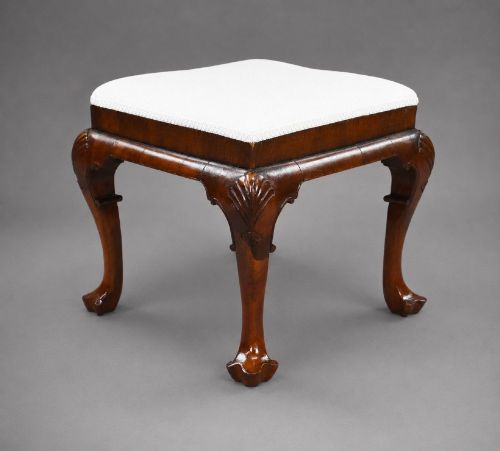
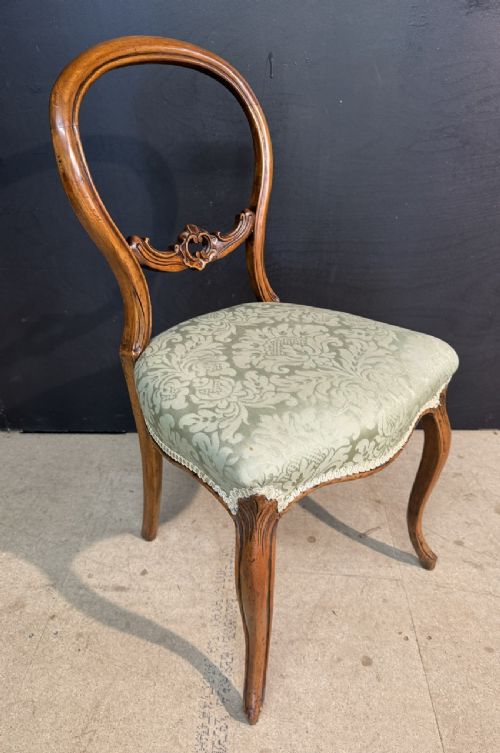
Sellers often list sets that remained together historically, preserving uniform wear patterns. Mixing pieces requires careful attention to leg styles, such as cabriole or sabre configurations.
Were antique dining sets always sold together?
Many formal dining suites were commissioned as singular unified projects by cabinet makers, ensuring identical timber selection and carving details. Large households also acquired tables and chairs separately as dining requirements expanded.
Over centuries, sets became separated or reunited based on aesthetic compatibility. Examining the underside joinery and wear distribution helps determine if the chairs originated with the table.
How should I care for antique wood and leather?
Antique table chairs require stable indoor humidity levels away from direct heat sources and sunlight to prevent timber splitting and veneer lifting. Regular dusting with a dry, soft cloth preserves the historic wax or French polished surface.
Leather upholstery benefits from periodic specialised conditioning to maintain flexibility without blocking natural breathability. Avoid silicone-based sprays that can permanently alter vintage finishes.
What defines an extending dining table mechanism?
Extending mechanisms rely on wooden runner tracks or metal winding screws concealed beneath the table top to part the surface evenly. Additional leaves insert into the centre to increase seating capacity.
Earlier tables utilised loose leaves held by wooden pins, while Victorian and Edwardian examples introduced crank handles. Smooth operation depends on the alignment of the internal runners and table aprons.