
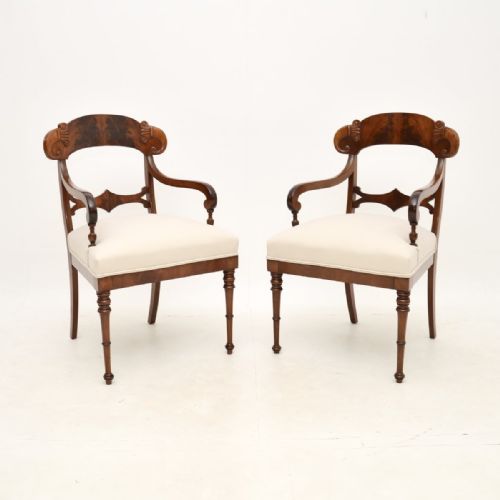


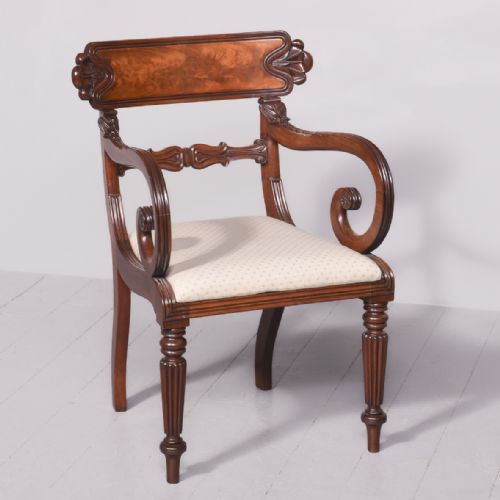


Flame Mahogany Chairs
Flame mahogany chairs bring intense, figured grain to the dining room or parlour, offering a rich focal point for traditional interiors.
Flame Mahogany Chairs
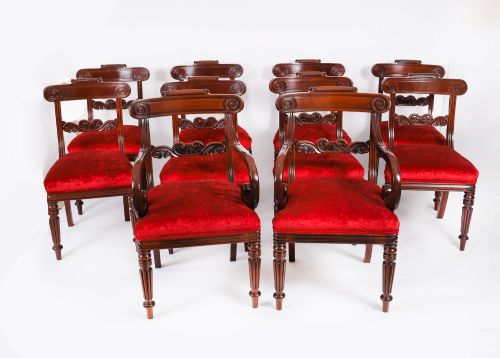
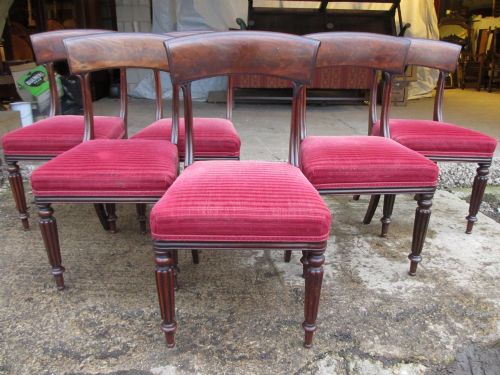
When you search for flame mahogany chairs, you encounter seating built primarily during the Georgian, Regency, and William IV periods, alongside mid-nineteenth-century examples. These pieces span dining chairs in large sets, individual carvers, armchairs, and Gainsborough chairs, reflecting the varied social spaces of their eras.
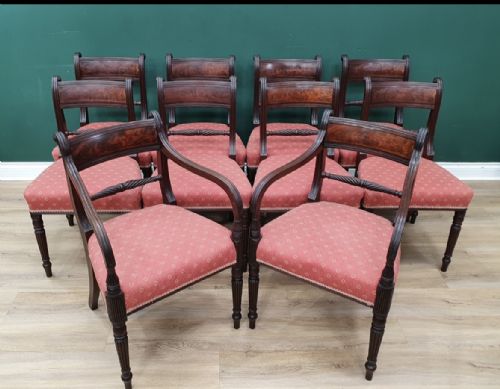
The form most frequently met on this page is the dining chair, often appearing in sets of four, six, eight, ten, or twelve. Alongside these, occasional armchairs and desk armchairs emerge from the evidence, showing how cabinet makers applied this figured timber to seating intended for both formal dining and private study.
How flame mahogany chairs were made
Cabinet makers constructed these chairs using solid mahogany frames combined with flame mahogany veneer to achieve the striking figured surface. Sections of timber cut from the fork of the tree create the characteristic flame or feather pattern across the backs.
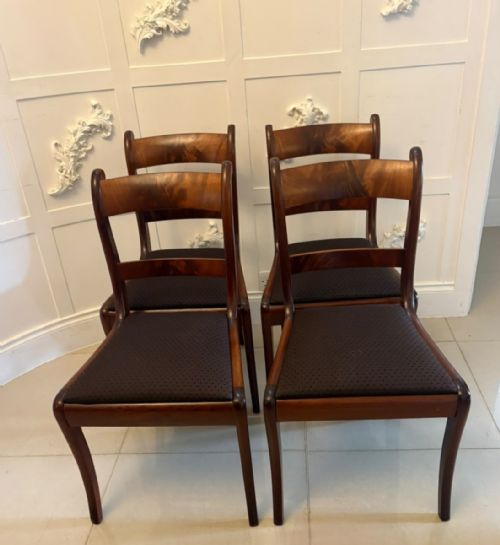
Many examples incorporate upholstery in fabric or textile, supported by structural elements shaped into sabre legs or bar backs. Brass details occasionally appear on specific forms, while other pieces rely entirely on the polished grain and carved woodwork.
Flame Mahogany Chairs Retail Price Guide 2026
Typical asking prices for flame mahogany chairs among the pieces listed under this phrase on Sellingantiques today, from the lower quarter to the upper quarter. They describe what is for sale here now, not the wider market.
What varies in quality
The visual impact of the figured grain separates standard examples from the finest items. Cabinet makers who selected timber with deep, symmetrical flame patterns achieved a much higher decorative effect than those using simpler cuts of wood.
The scale and completeness of matching sets influence the standing of the seating. Large sets originating from the Regency or William IV periods demonstrate greater uniformity in timber selection and carving than smaller groups assembled later.
The Flame Mahogany Chairs Glossary
- Flame mahogany
- A veneer cut from the fork of the mahogany tree that produces a distinctive, flickering flame pattern. This figured wood appears prominently across chair backs to catch the light.
- Bar back
- A horizontal cross-rail forming the upper section of a chair back, often curved for comfort. This shape defines many Regency dining chairs.
- Sabre leg
- A chair leg that curves outward in a concave sweep resembling a cavalry sword. It provides a stable and elegant support found on nineteenth-century seating.
- Gainsborough armchair
- A wide, upholstered armchair with open padded arms and short legs, designed in the eighteenth century. These chairs offer generous proportions and detailed woodwork.
Flame Mahogany Chairs: Frequently Asked Questions
What periods do these chairs come from?
The listings span the eighteenth and nineteenth centuries, taking in the Georgian, Regency, William IV, and George IV eras. Pieces from around eighteen-fifty also appear.
Cabinet makers of these periods utilised dense tropical hardwoods and sophisticated veneering techniques to produce formal seating for wealthy households.
How are large dining sets usually sold?
Dining chairs often appear in groups ranging from sets of four up to sets of ten or twelve. Some larger offerings combine single chairs with matching armchairs.
Matching a large number of figured timber chairs indicates that a household originally commissioned a substantial suite for a formal dining room.
What is a carver chair?
A carver is an armchair designed to sit at the head of a dining table. These pieces feature integrated armrests to accommodate the host.
They share the wood, style, and upholstery of the smaller single chairs in the set while offering a more commanding presence.
How do I care for flame mahogany?
Keep polished timber furniture away from direct sunlight and excessive heat sources to prevent the veneer from drying out. Gentle dusting with a soft cloth maintains the finish.
Avoid placing damp items directly onto the polished wood surfaces to protect the delicate grain underneath.