




Art Deco Dining Set
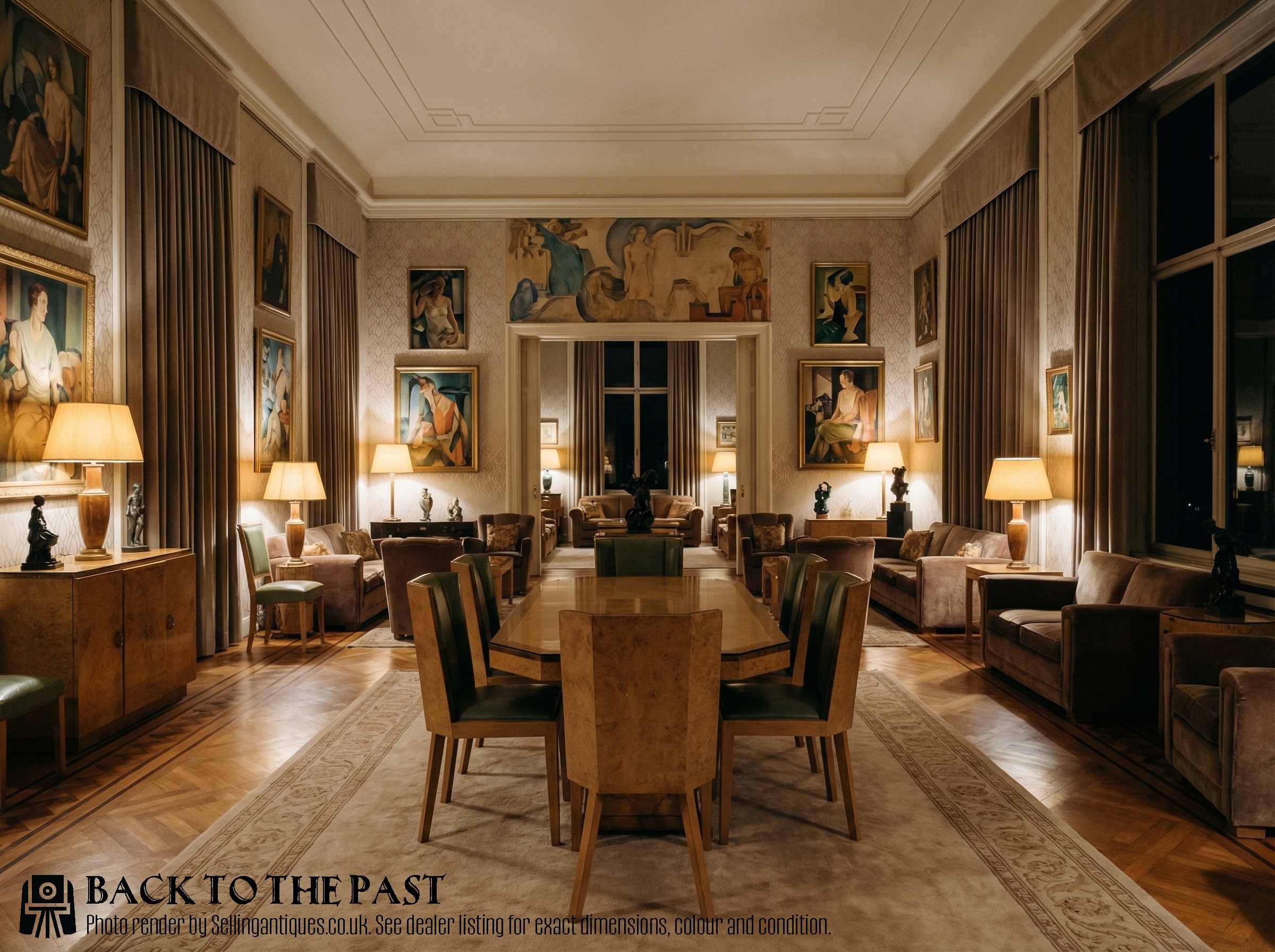
An art deco dining set brings geometric symmetry and striking grain patterns to the room, anchoring the space with unmistakable interwar confidence.
Art Deco Dining Set
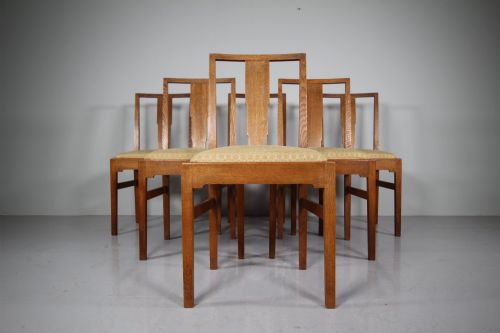
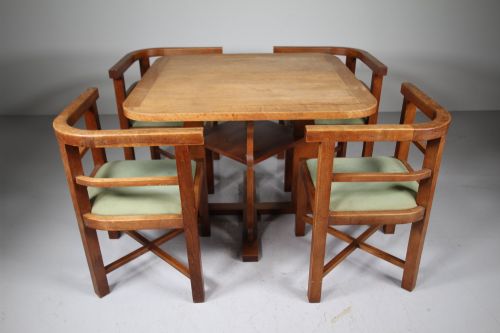
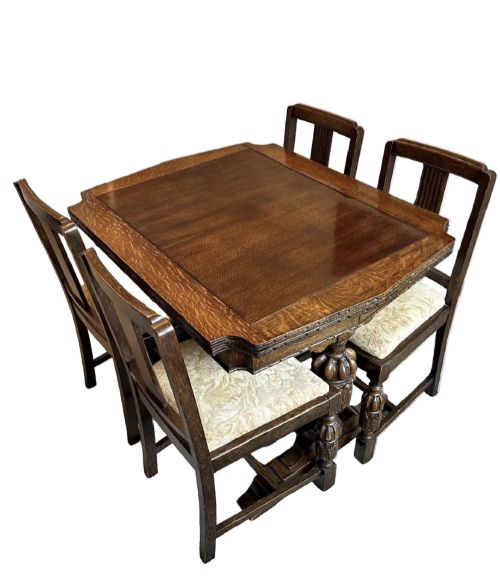
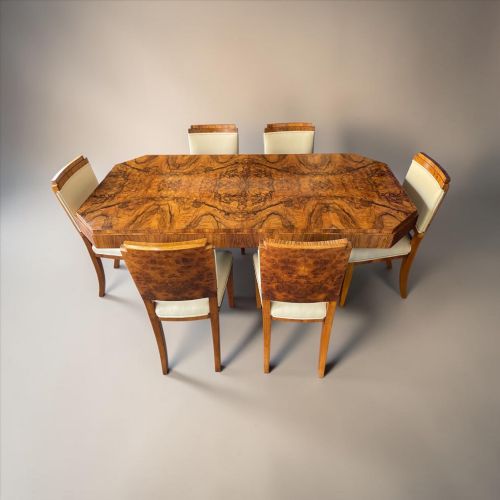
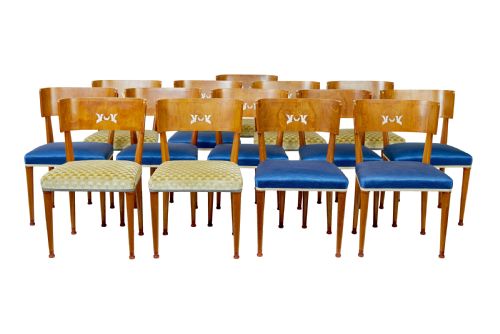
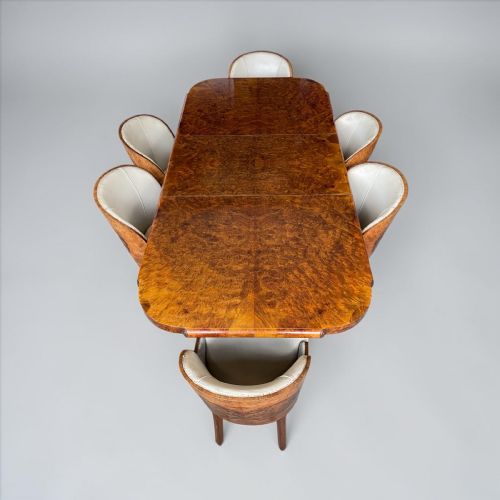
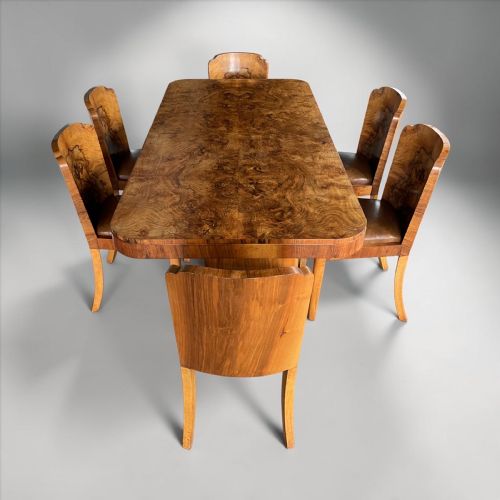
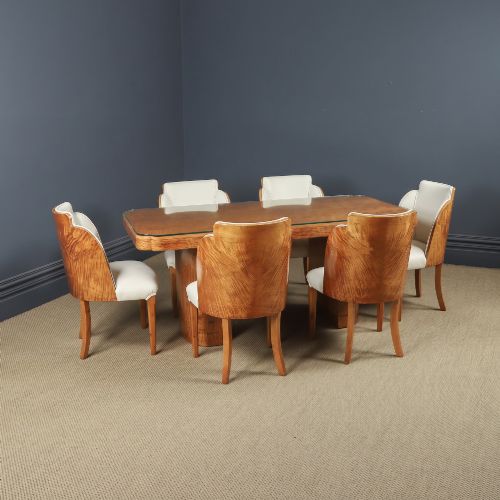
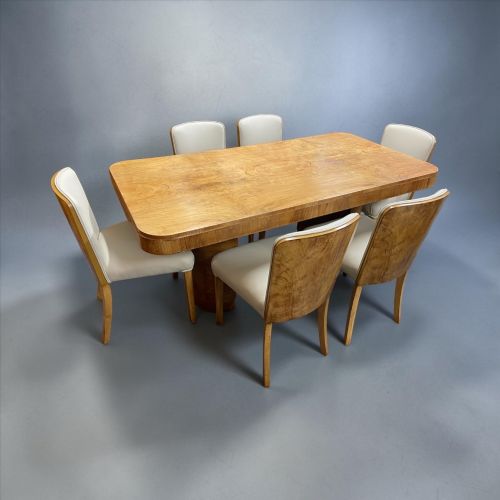
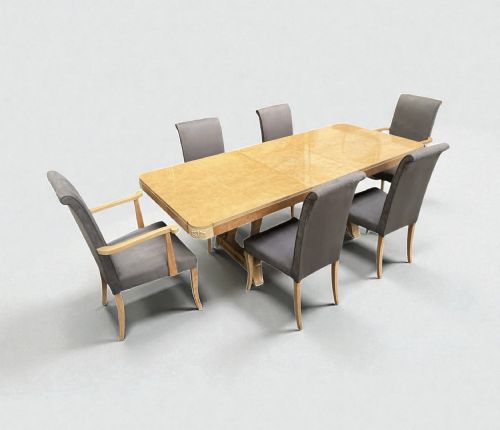
An art deco dining set typically comprises a central dining table accompanied by matching chairs, designed to create a unified aesthetic for entertaining. The version you are most likely to meet on this page pairs a substantial walnut, oak, or burr maple table with a set of six or eight upholstered chairs.
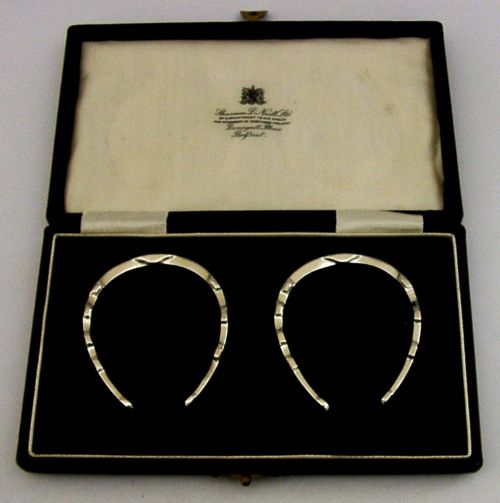
Beyond full suites of tables and chairs, the category encompasses smaller coordinated groupings such as cutlery canteens, knife rests, and napkin rings. These auxiliary sets share the same linear motifs and streamlined proportions characteristic of the period.
The materials and forms reflect a deliberate break from traditional ornamentation, favouring clean silhouettes and rich timber grains. Suites often originate from the interwar decades, spanning the nineteen twenties and nineteen thirties, though some examples draw on Edwardian foundations.
How they were made
Cabinet makers utilised exotic and domestic veneers such as burr walnut, bird's eye maple, calamander, and macassar ebony over solid timber frames. These decorative veneers were carefully matched and laid out to create symmetrical patterns across table tops and sideboard doors.
Seating frames were constructed primarily from oak, walnut, or elm, often shaped into characteristic geometric curves or klismos silhouettes. Upholstery materials like leather, velvet, and woven fabric were then applied to padded seats and backs, secured with traditional tacks or piping.
Art Deco Dining Set Retail Price Guide 2026
Typical asking prices for art deco dining set among the pieces listed under this phrase on Sellingantiques today, from the lower quarter to the upper quarter. They describe what is for sale here now, not the wider market.
Silver lucky horseshoe napkin rings bring a touch of nineteen thirties superstition straight to the dinner table.
What varies in quality
The grade of timber veneer and the precision of its book-matching dictate much of the visual hierarchy among these dining suites. Superior examples display continuous, unbroken grain patterns across multiple leaves of a table or the backs of a matching suite of chairs.
Construction methods and the reputation of the workshop also define the upper tier of pieces. Suites produced by notable London cabinet makers demonstrate tighter joinery, heavier framing timbers, and more refined carving or inlay work compared to standard commercial output.
Maurice Adams·Harry and Lou Epstein·Hille·Walker and Hall
The Art Deco Dining Set Glossary
- Klismos
- An ancient Greek chair form revived during the twentieth century with sweeping, concave back legs and a curved backrest. These graceful chairs offer both ergonomic comfort and a distinctive silhouette.
- Book-matching
- A veneer technique where adjacent slices of wood are opened like a book so that the grain mirrors itself symmetrically. This method highlights the natural patterns of burr walnut and maple.
- Canteen
- A fitted wooden box or chest designed to store a matching set of cutlery securely. These fitted cases often feature multiple lined trays for knives, forks, and spoons.
- Calamander
- A dense, heavily figured tropical hardwood featuring dark brown and black stripes over a fawn background. Cabinet makers valued this timber for high-end decorative banding and inlay.
- Burr walnut
- A prized wood growth containing swirling knot formations that produce intricate, organic patterns. It was frequently utilised on prominent table tops and chair backs during the interwar period.
Art Deco Dining Set: Frequently Asked Questions
How many chairs usually come with a set?
Most dining suites include six or eight chairs, though occasional suites provide smaller or larger configurations depending on the original commission.
Buyers should verify whether the seating count matches the extending capacity of the accompanying table.
What woods were used for these sets?
Cabinet makers relied heavily on burr walnut, oak, bird's eye maple, and exotic veneers like macassar ebony.
These timbers were chosen specifically for their dramatic grain patterns rather than heavy surface carving.
How do I care for leather upholstery?
Original leather upholstery requires regular conditioning with appropriate balms to prevent drying and cracking over time.
Keep these surfaces away from direct sunlight and excessive heat sources to preserve the finish.
Are these tables usually extendable?
Many dining tables from this era incorporate hidden draw leaves or central butterfly mechanisms to accommodate extra guests.
Checking the underside reveals the sliding runners and internal engineering used to support the extension.