


1930s Walnut Dining Set
A 1930s walnut dining set brings the bold geometry of Art Deco into the modern interior through rich timber and striking grain.
1930s Walnut Dining Set
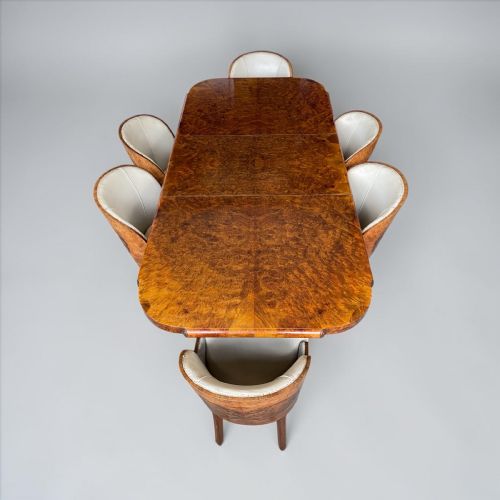
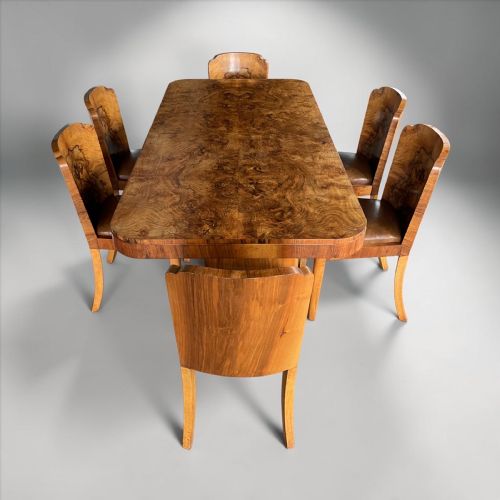
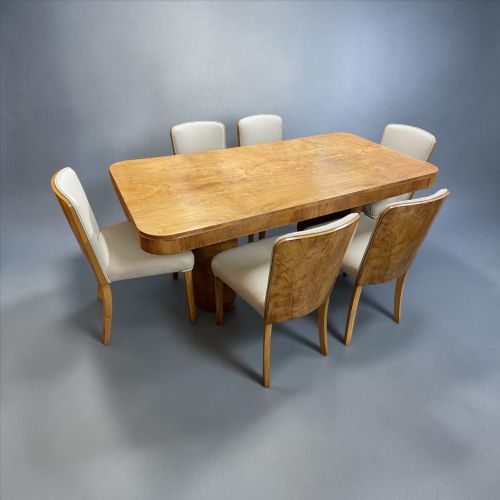
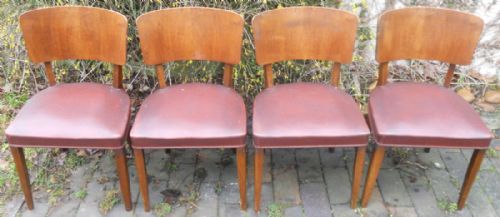
A 1930s walnut dining set brings together a matching dining table and chairs designed for formal or everyday entertaining during the interwar period. The groupings found here span from compact four-chair arrangements to grand suites seating eight around an expansive table.
Most examples lean heavily into the Art Deco style, defining the aesthetic of the dining room with sweeping curves or architectural lines. Alongside tables and standard seating, certain suites feature distinctive cloud back chairs that shape the silhouette of the room.
How they were made
Cabinet makers utilised choice timber and walnut veneer to cover large surfaces with dramatic grain patterns, particularly burr walnut which creates swirling, organic textures across table tops and chair backs. Black walnut also appears, lending a deeper and more uniform tone to the woodwork.
Seating frames rely on sturdy hardwood and timber construction to support upholstered elements covered in fabric or leather. Skilled craftsmanship ensures that complex curved shapes, such as cloud backs, remain structurally sound over decades of use.
Listings feature items originating from the Edwardian period through to the 1930s, constructed predominantly in walnut, burr walnut veneer, hardwood, and timber.
What varies in quality
The choice and matching of veneer dictate the visual impact of a suite, with book-matched burr walnut creating symmetrical patterns that elevate the piece far above plain timber surfaces. Makers who paid meticulous attention to grain continuation across table leaves and chair frames achieved a markedly superior finish.
Attribution to notable workshops and makers introduces distinct craftsmanship tiers, where documented production by established London firms or designers commands greater regard. The integration of specialised seating designs, such as cloud backs or stamped frames, further distinguishes standard production from exceptional suites.
Maurice Adams·Harry and Lou Epstein·Hille London
The 1930s Walnut Dining Set Glossary
- Burr walnut
- A prized timber cut from walnut tree growths, featuring intricate swirling grain patterns. It provides a highly decorative surface for high-end furniture.
- Cloud back
- A distinct chair design from the Art Deco period featuring a curved, upholstered backrest resembling a stylized cloud. It offers both distinct styling and comfortable support.
- Art Deco
- A design style popular in the 1920s and 1930s characterised by sleek geometric shapes, streamlined forms, and modern materials. It dominates the aesthetics of these dining suites.
1930s Walnut Dining Set: Frequently Asked Questions
How many people do these sets seat?
The dining suites listed here typically accommodate between four and eight diners around a central table. The exact seating capacity depends on the specific arrangement of chairs accompanying the table.
Larger suites often include six or eight chairs, making them suitable for traditional dining rooms. Compact configurations seating four offer a practical option for smaller spaces.
What materials are used in these sets?
These dining sets make extensive use of walnut, including burr walnut and black walnut variants. Furniture makers frequently applied walnut veneer over sturdy hardwood and timber frames.
Seating components incorporate additional materials for comfort and style. Upholstery options span traditional fabric and leather finishes.
How do I care for walnut furniture?
Maintaining walnut dining furniture requires protecting the timber and veneer from excessive moisture and direct sunlight. Regular dusting with a soft cloth preserves the natural sheen of the wood.
Leather and fabric upholstery benefit from routine gentle cleaning suited to the specific textile. Avoiding harsh chemical polishes ensures the historic finish remains undamaged.