
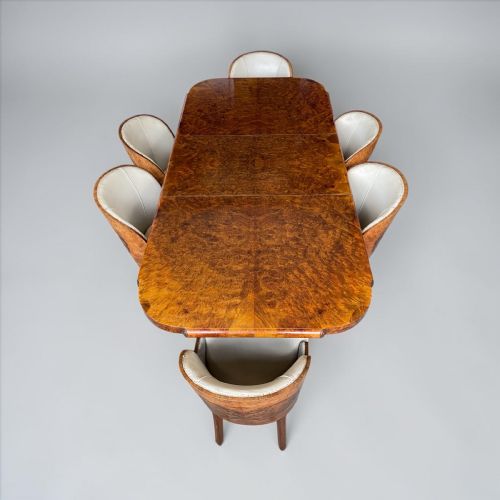
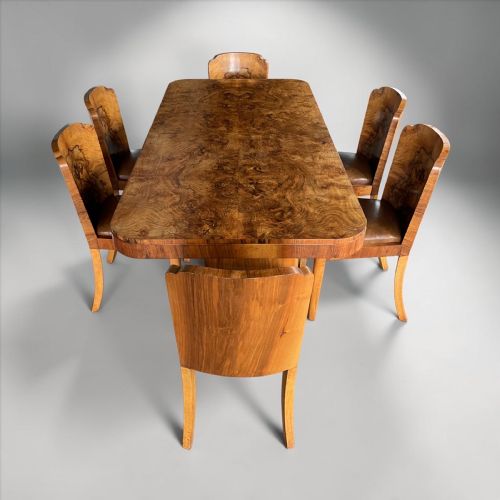
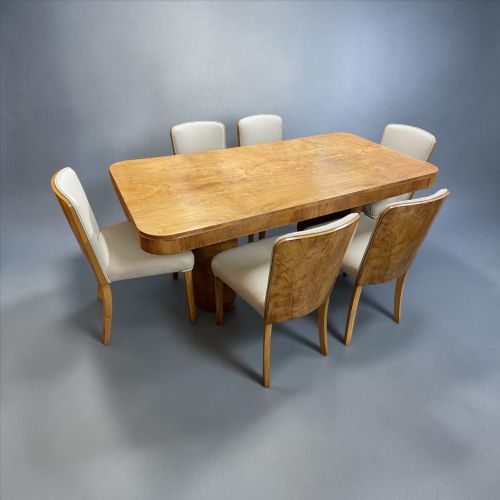


Burr Walnut Dining Suite
A burr walnut dining suite brings distinct grain and structured form to a room, combining dining tables and chairs for a complete interior.
Burr Walnut Dining Suite
A burr walnut dining suite comprises matching tables and chairs designed to furnish a dining room with coordinated timber and style. The options on this page span the Edwardian period through to the 1920s and 1930s, offering complete sets ready for daily use.
Most examples found here emerge from the Art Deco period or adopt a Queen Anne revival style. These suites range from compact table and chair sets to larger groupings including sideboards and cabinets.
Makers such as Maurice Adams, Harry and Lou Epstein, Hille London, and Maple and Co appear within the records for this search phrase. Each maker brings distinct interpretations to the burr walnut dining suite, balancing traditional woodworking with modernist lines.
How they were made
These suites utilise solid hardwood and timber frames overlaid with highly figured walnut veneer. The distinctive burr walnut pattern comes from abnormal growths on the tree, yielding intricate swirling figures across table tops and cabinet doors.
Many chairs accompanying these tables incorporate upholstery in leather or fabric. Joinery techniques from the Edwardian period, 1920s, and 1930s ensure structural stability beneath the decorative veneers.
What varies in quality
Quality in a burr walnut dining suite rests on the selection and matching of the veneer. Uniformity of grain pattern across a large table top and associated sideboard indicates careful timber preparation by the maker.
The sophistication of the design and the reputation of the maker elevate certain suites above others. Pieces bearing stamps from workshops like Hille London or names such as Epstein or Maple and Co demonstrate superior craftsmanship and detailing.
Maurice Adams·Harry and Lou Epstein·Hille London·Maple and Co
The Burr Walnut Dining Suite Glossary
- Burr walnut
- Timber taken from a tree growth that produces complex, swirling grain patterns. This wood is sliced into veneers to surface prominent areas of furniture.
- Walnut veneer
- A thin layer of walnut timber applied over a secondary wood base. This technique allows furniture makers to display rich grain patterns without using solid burr timber throughout.
- Art Deco
- A design style prominent in the 1920s and 1930s characterised by streamlined geometric forms and modern materials. Suites from this era often feature bold curved outlines and contrasting dark woods.
- Queen Anne style
- A revival aesthetic drawing on eighteenth-century furniture forms with cabriole legs and curved proportions. These suites present a more traditional appearance than their Art Deco counterparts.
- Dining suite
- A matched set of furniture for the dining room, typically comprising a table and multiple chairs, and occasionally including sideboards or cabinets.
Burr Walnut Dining Suite: Frequently Asked Questions
What pieces are included in a dining suite?
A standard dining suite includes a dining table and a set of chairs, which frequently numbers six or eight. Larger configurations may incorporate matching sideboards and cabinets to complete the room.
These pieces were designed to coordinate in timber and style, creating a unified appearance for formal dining spaces.
How do I care for burr walnut furniture?
Burr walnut benefits from regular dusting with a soft, dry cloth and protection from direct sunlight and heat sources. Avoiding excessive moisture prevents damage to the delicate veneer surface.
Applying a suitable wax polish periodically helps maintain the sheen and nourishment of the timber.
What is the difference between Art Deco and Queen Anne styles?
Art Deco suites from the 1920s and 1930s feature sleek geometric lines and streamlined forms. They emphasise modern aesthetic principles and striking grain patterns.
Queen Anne style suites draw on earlier traditional designs, typically displaying curved legs and classical proportions suited to more formal interiors.
Can I use a vintage dining suite every day?
Vintage dining suites are constructed from solid hardwoods and sturdy timber frames intended for functional use. Normal daily dining falls well within their structural capabilities when handled with reasonable care.
Using protective mats on table surfaces helps preserve the walnut veneer during meals.