

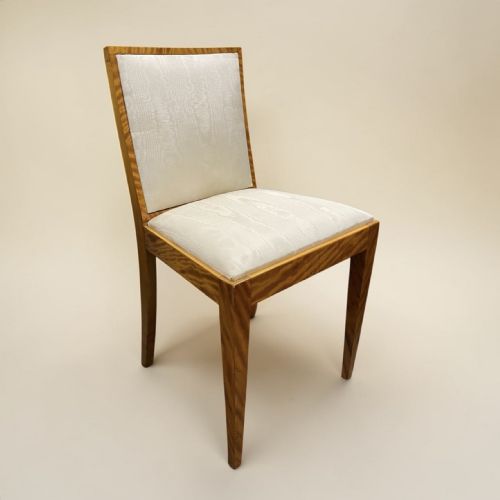
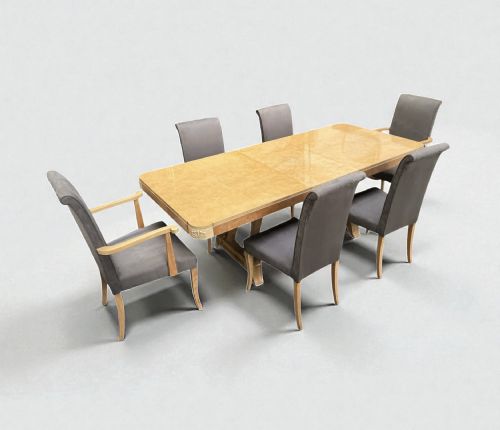


Art Deco Dining Furniture
Art deco dining furniture brings together tables, chairs and sideboards defined by bold geometry and rich veneers from the nineteen twenties, thirties and forties.
Art Deco Dining Furniture
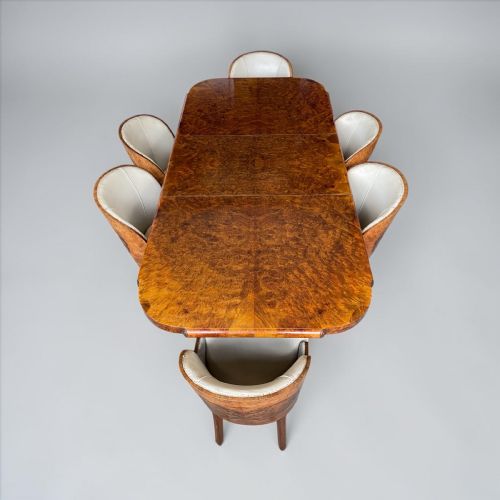
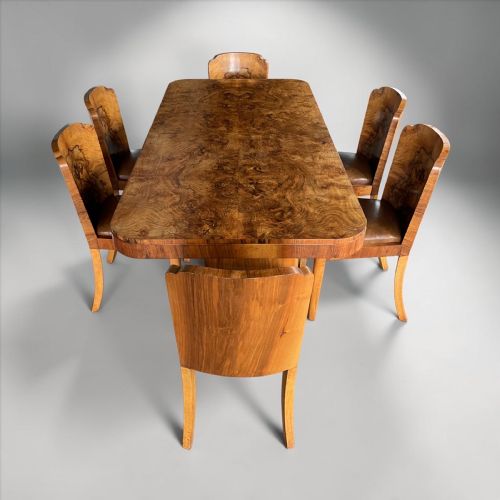
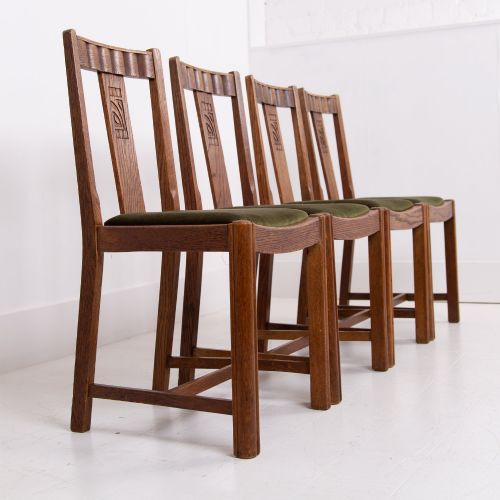
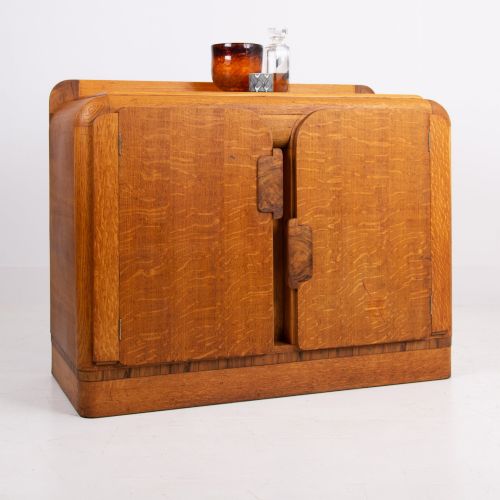
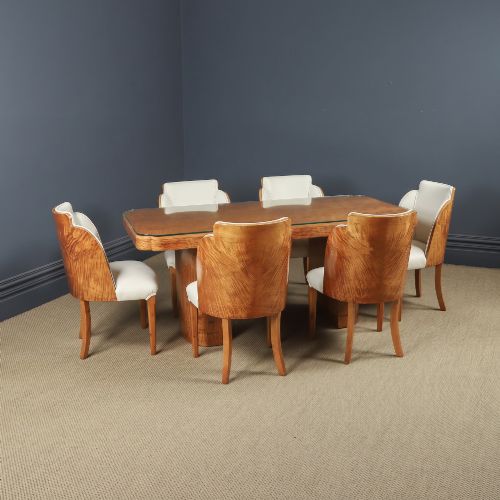
Art deco dining furniture encompasses complete dining suites, individual dining tables, sets of dining chairs and storage pieces such as sideboards, serving tables and credenzas. These groups are designed to create a unified room scheme through matching woods and complementary geometric lines.
Most examples found here date from the nineteen twenties and nineteen thirties, alongside pieces from the nineteen forties and earlier Edwardian periods. Styles range from English and French art deco to Swedish Grace and Scandinavian interpretations, offering both restrained oak designs and dramatic veneered forms.
How they were made
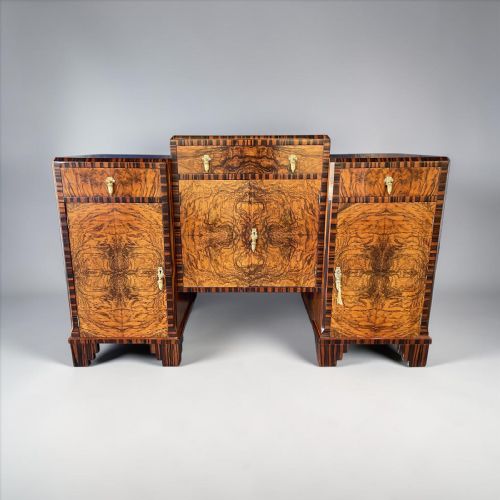
Cabinet makers utilised decorative timbers such as burr walnut, walnut veneer, oak, satinwood, maple, birch, elm, rosewood, macassar and ebony. These figured veneers were carefully arranged across large flat surfaces like sideboard doors and table tops to display natural grain patterns.
Structural elements incorporated solid timber alongside brass hardware, leather upholstery and fabric seats. Many dining chairs and sideboards were produced by notable cabinet makers and department store workshops using traditional joinery combined with modern veneering techniques.
Listings feature dining furniture across multiple decades, spanning Edwardian origins through nineteen twenties, thirties and nineteen forties production.
What varies in quality
The standard of art deco dining furniture depends largely on the choice and matching of veneers. Highly figured timbers such as burr walnut, bird's eye maple or calamander, when laid with symmetrical precision across a suite, elevate a piece above standard production items.
Makership and design pedigree also separate standard sets from exceptional ones. Pieces carrying stamps or attributions to recognised workshops and makers demonstrate superior construction detail in their dining chairs, extending tables and fitted sideboards.
Maurice Adams·Gomme·Bath Cabinet Makers·Heals of London·Harry and Lou Epstein·Hamptons of Pall Mall London·Hille
The Art Deco Dining Furniture Glossary
- Burr walnut
- A figured wood grain obtained from walnut tree growths, prized for its swirling patterns on sideboards and table tops.
- Klismos chair
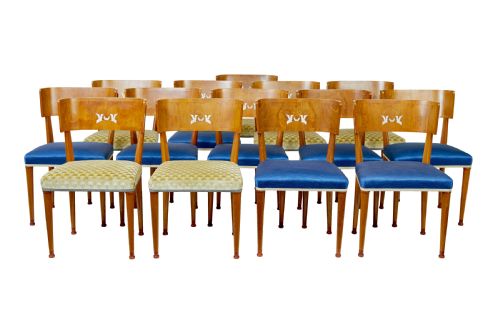
- An ancient Greek chair form reinterpreted in modern styles, featuring curved back rails and flared legs as seen in Swedish designs.
- Sideboard
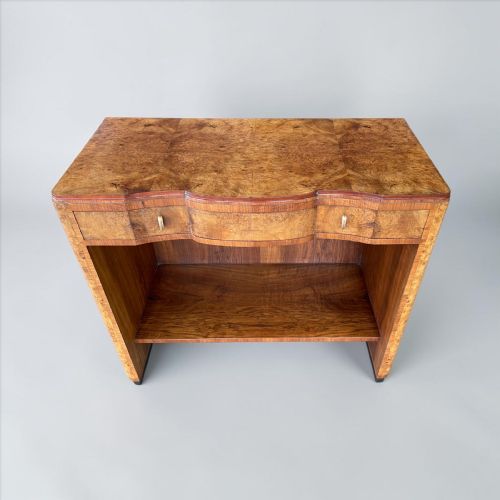
- A low storage cabinet used in dining rooms for serving food and storing tableware, often featuring bow fronts or central cupboards.
- Veneer
- A thin layer of decorative timber applied over a stable base wood to create striking patterned surfaces without excessive weight.
Art Deco Dining Furniture: Frequently Asked Questions
How do I choose the right size dining suite?
Consider the number of diners you need to seat regularly and the proportions of your room. Suites vary from compact four-chair sets to large eleven-piece dining suites that require substantial floor space.
Ensure you leave enough clearance around the table for chairs to pull out comfortably and for sideboards or serving tables to open fully against the walls.
What is the difference between English and French styles?
English pieces often focus on figured walnut, oak and maple with practical, clean lines intended for domestic dining rooms. French designs frequently incorporate exotic timbers like calamander, macassar and ebony within larger, more dramatic eleven-piece suites.
Both traditions share the core geometry of the period but express luxury through different palettes of wood and metal accents.
How should I care for veneered wood surfaces?
Veneered furniture benefits from stable indoor humidity and protection from direct sunlight to prevent the timber and finish from drying out. Dust regularly with a soft, dry cloth rather than using silicone sprays.
Use mats beneath hot dishes and drinks to protect the French polish or varnish surfaces on dining tables and serving cabinets.
Can I mix sideboards with a different dining table?
Mixing pieces is common, though matching the primary timber, such as walnut or oak, helps maintain visual harmony in the room. Many suites were assembled from separate table, chair and sideboard purchases rather than bought as a single factory batch.
Pay attention to the period style and leg forms to ensure the woods and geometric details complement one another.