




Scroll Back Dining Chairs
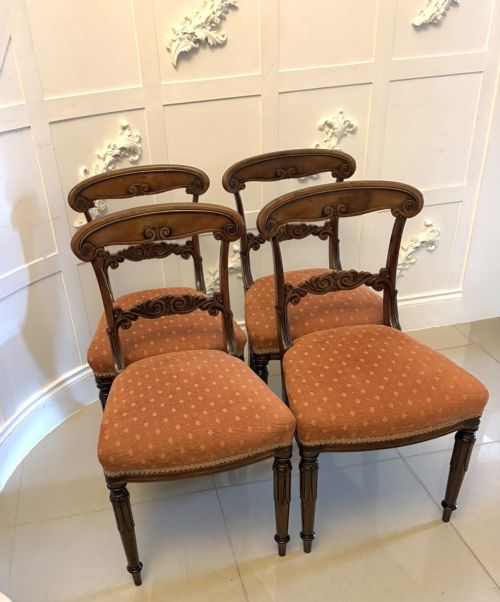
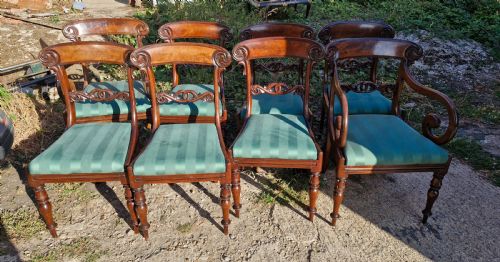
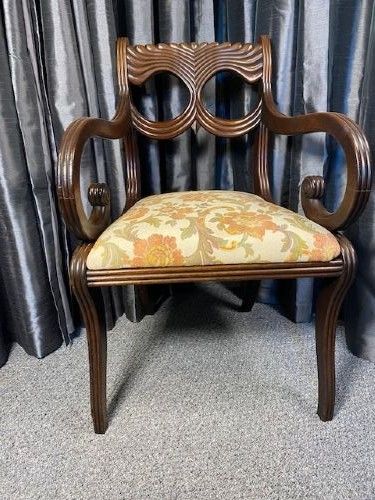
Scroll back dining chairs bring enduring elegance to the table, combining supportive curved top rails with robust timber frames.
Scroll Back Dining Chairs
Scroll back dining chairs encompass an array of formal seating options designed for the dining room, most frequently appearing in mahogany, rosewood, and oak timber constructions. When you search for scroll back dining chairs, you encounter pieces originating from the seventeenth century through to the art deco period and the twentieth century, with Regency examples strongly represented.
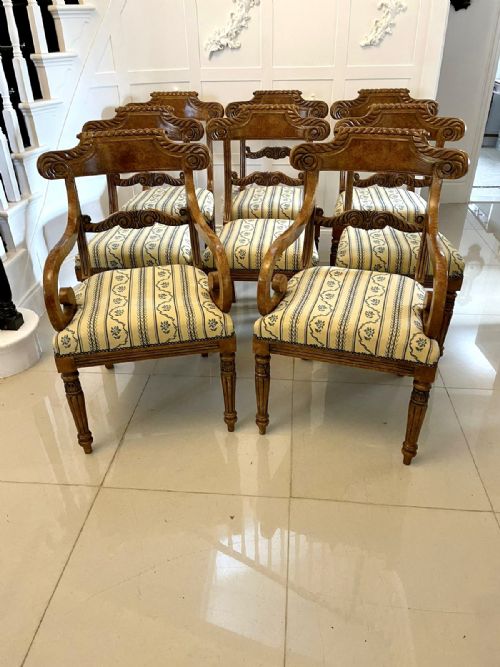
The inventory ranges from single carver chairs and pairs of armchairs up to substantial matched dining sets numbering six, eight, or ten pieces. Side chairs and armchairs share the characteristic curved upper rail, sometimes accompanied by drop in seats, cane weaving, or overstuffed upholstery.
Regional variations span British styles including Carolean and Jacobean revivals alongside continental European works in walnut and birch. These forms serve as both practical dining furniture and distinct historical examples of cabinet making.
Materials and Construction Techniques
Makers constructed these chairs primarily using dense hardwoods such as mahogany, walnut, rosewood, and oak, occasionally incorporating exotic veneers like faux birds eye maple or birch. Timber selection dictated the structural integrity and grain pattern visible across the crest rail and cabriole legs.
Joinery methods relied on traditional mortise and tenon joints to secure the frame, while decorative details involved intricate hand carving on the scroll back bar and shaped rails. Upholstered variants utilised fabric, velvet, or cane seating supported by drop in frames or overstuffed foundations.
Listings feature mahogany, rosewood, oak, walnut, and birch timbers spanning from the seventeenth century through the art deco era.
Assessing Quality and Craftsmanship
Quality rests in the precision of the timber carving and the architectural proportion of the scroll back, where crisp execution distinguishes master workshops from provincial production. The choice of primary wood, whether highly figured rosewood or dense early mahogany, sets the baseline for the piece's stature.
Structural longevity depends upon the integrity of the joinery and the original retention of matching components within larger dining sets. Subtle refinements in the sweep of the arm carvers and the balance of the cabriole forelegs separate standard utilitarian seating from exceptional examples.
Harry and Lou Epstein·Munro
The Scroll Back Dining Chairs Glossary
- Carver
- An armchair designed with armrests, typically placed at the head of a dining table to match the surrounding side chairs.
- Cabriole leg
- A furniture leg that curves outward and then tapers inward, frequently terminating in a pad or carved foot.
- Drop in seat
- A removable wooden frame upholstered in fabric or leather that drops into a recess within the chair seat rail.
- Backstool
- An early form of seating without arms, essentially an upholstered stool provided with a tall vertical back.
- Overstuffed
- Upholstery padding that completely covers the wooden seat rail so that only the legs remain visible.
Scroll Back Dining Chairs: Frequently Asked Questions
How do I spot a true set?
Examine the timber grain, turning details, and joinery methods across every chair in the group to ensure uniform construction. Consistent wear patterns and matching dimensions confirm the chairs originated together from the same workshop.
Discrepancies in wood colour or subtle variations in the scroll carving often indicate a married set assembled from different sources at a later date.
Are these chairs comfortable for daily use?
Most antique examples provide sturdy support, particularly versions featuring upholstered overstuffed seats or contoured wooden back rails. The ergonomic sweep of a scroll back design naturally supports the spine during long meals.
Consider the seat height and depth relative to your dining table, as older chairs can occasionally sit lower than modern standard measurements.
How should I care for rosewood frames?
Maintain the timber by keeping chairs away from direct sunlight and heat sources that can dry out and split dense woods. Regular dusting with a soft, dry cloth preserves the natural lustre of the finish.
Apply a quality beeswax sparingly only when the wood appears dry, avoiding modern silicone polishes that damage antique surfaces.
Can I mix carvers with side chairs?
Pairing arm carvers at the table ends with matching side chairs along the flanks is a traditional arrangement used for centuries. Ensure the wood types, period styles, and scroll back heights align harmoniously to maintain visual balance in the room.
Using complementary rather than identical periods works well if the timber tones and proportions share similar characteristics.