
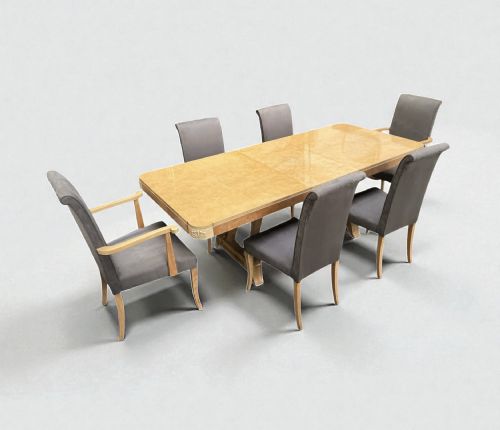


Art Deco Table and Chairs
These art deco table and chairs sets bring striking geometry and rich veneers directly into modern dining spaces.
Art Deco Table and Chairs
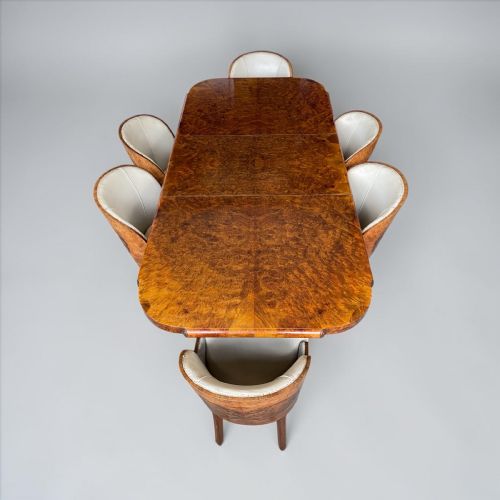
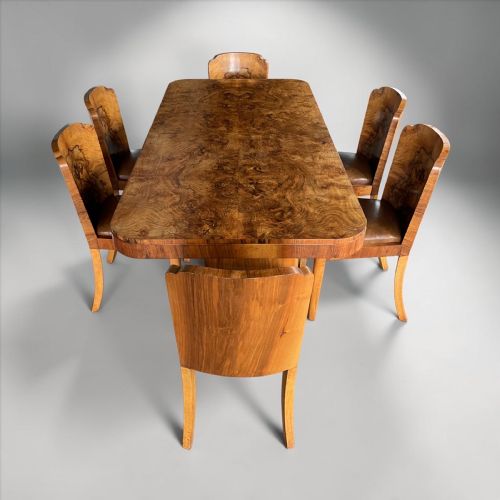
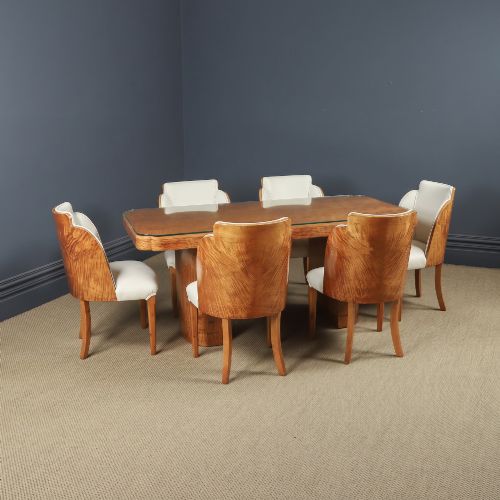
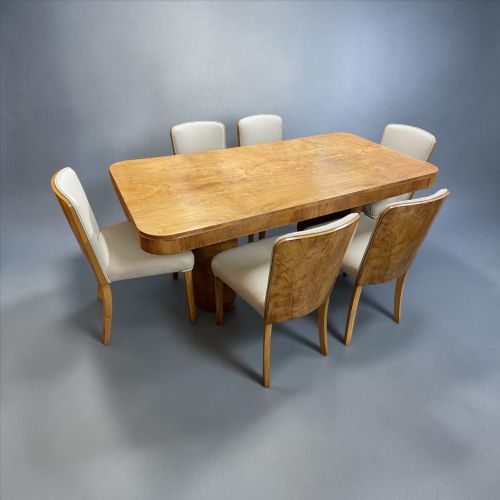
When searching for art deco table and chairs, buyers encounter substantial dining suites designed to seat six or eight people. These groupings typically comprise a central dining table accompanied by matching side chairs.
The majority of these pieces originate from the nineteen thirties, drawing on twentieth century craftsmanship. Alongside full dining suites, smaller seating arrangements and occasional stool forms appear within the selection.
English and French workshops generated much of this output, utilising distinct regional aesthetics. Walnut, maple and satinwood feature prominently among the timber choices across these dining sets.
How they were made
Cabinetmakers constructed these frames using solid timber foundations overlaid with decorative wood veneers such as burr walnut, bird's eye maple and macassar ebony. These figured surfaces create dramatic grain patterns across table tops and chair backs.
Listings feature walnut, burr walnut, maple, and bird's eye maple alongside leather and fabric upholstery across nineteen twenties and thirties pieces.
What varies in quality
The choice of veneer grain matching defines the visual standard of an art deco dining suite. Superior examples display symmetrical veneer patterns across expansive table surfaces and matching chair backs.
Structural integrity depends on the precision of the joinery and the original maker's execution. Suites bearing documented attribution to prominent workshops generally command greater regard among collectors.
Maurice Adams·Harry and Lou Epstein·Hille
The Art Deco Table and Chairs Glossary
- Veneer
- A thin slice of figured wood applied over a stable timber core to create decorative surfaces. This technique allowed makers to utilise expensive timbers efficiently.
- Cloud back
- A rounded, upholstered chair back contour reminiscent of a stylized cloud. This silhouette defines many seating designs from the period.
- Suite
- A matched set of furniture designed for a specific room function. Dining suites include tables and chairs sharing identical materials and styling.
- Figured wood
- Timber possessing distinctive natural grain patterns such as burr or mottle. These irregularities add visual depth to polished furniture surfaces.
Art Deco Table and Chairs: Frequently Asked Questions
How do I care for walnut surfaces?
Clean polished wood surfaces regularly using a soft, dry cloth to remove dust. Avoid placing furniture in direct sunlight or near heat sources to prevent timber splitting.
Apply high quality beeswax periodically to nourish the grain and maintain the lustre of the finish. Keep liquids away from the timber and use mats under hot dishes.
Were these sets made for six people?
Many surviving dining sets comprise a table and six matching chairs, reflecting standard domestic requirements of the era. Larger configurations seating eight or more guests also appear.
Smaller groupings with four chairs or occasional stools cater to compact interiors. Buyers should check seating counts carefully within each individual listing.
What is burr walnut?
Burr walnut derives from a tree growth deformity that produces intricate, swirling grain patterns. Cabinetmakers sliced this prized wood into veneers for decorative table tops.
This material typifies luxury furniture production from the period. Its complex figuring ensures no two pieces share an identical appearance.
How do I identify the period?
Pieces from this era typically feature clean geometric lines, streamlined silhouettes and exotic wood veneers. Construction methods and distinct hardware styles also point to the timeframe.
Many items date from the nineteen twenties and thirties. Maker stamps or labels underneath chairs and tables provide definitive chronological markers.