
Art Deco Upholstered Chairs
Art deco upholstered chairs bring distinctive geometric lines and comfortable seating into a room, combining period character with practical daily use.
Art Deco Upholstered Chairs
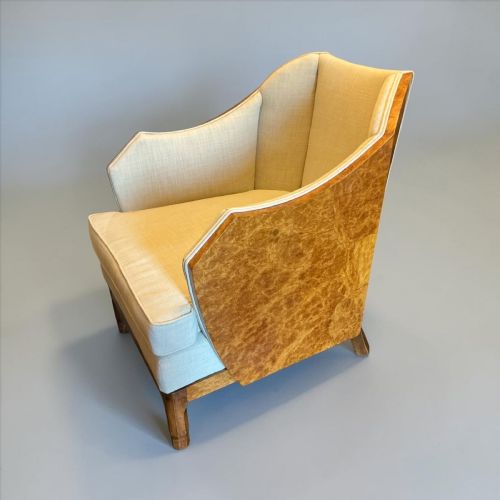
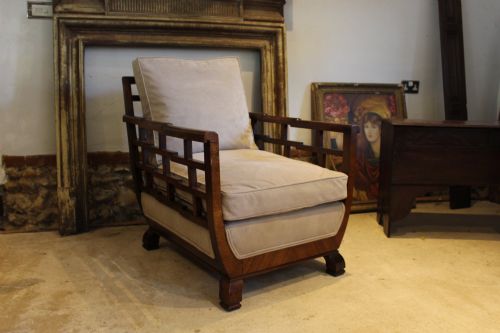
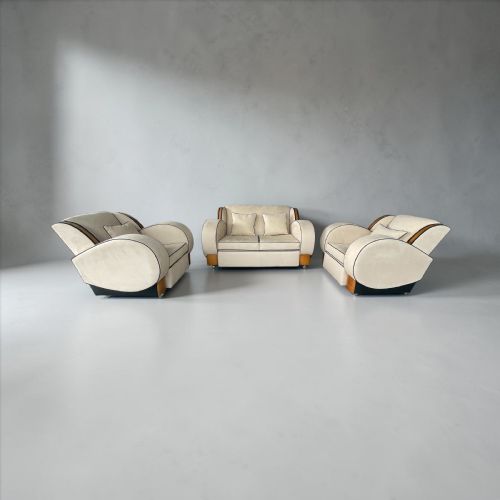
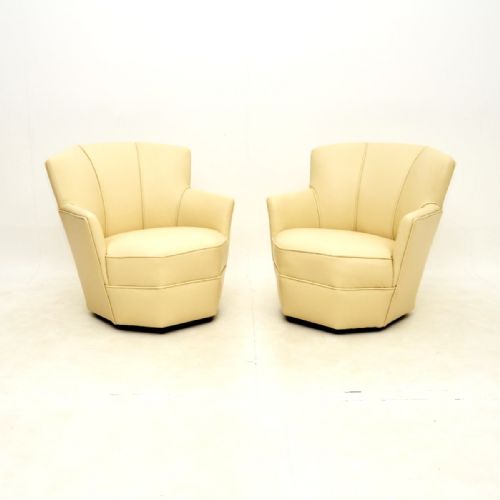
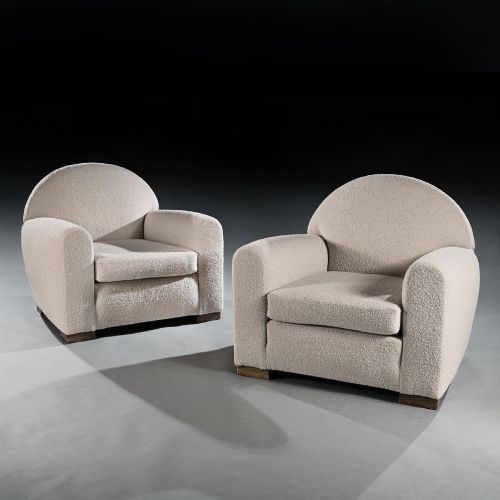
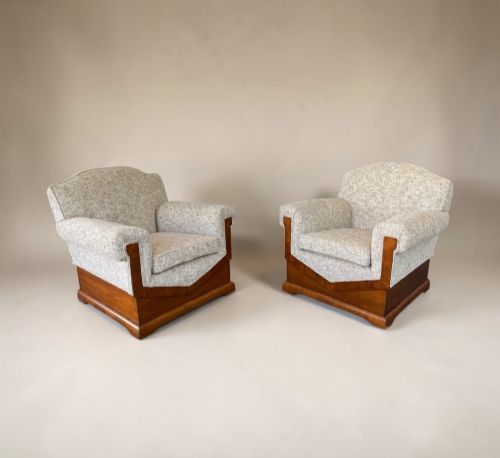
Art deco upholstered chairs encompass a variety of seating forms designed primarily around the 1930s, ranging from robust lounge armchairs to dining sets and small bedroom stools. The designs reflect the sleek, streamlined aesthetic popular during the period, often incorporating curved backs and supportive cushioning.
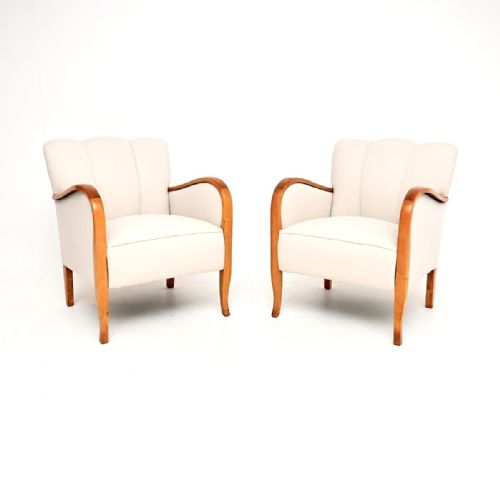
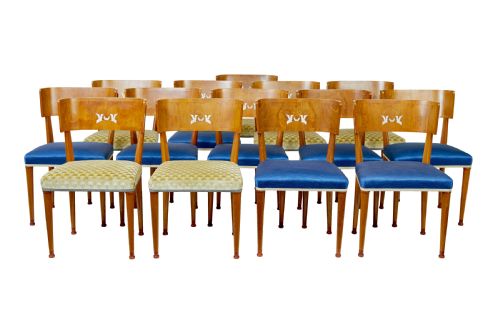
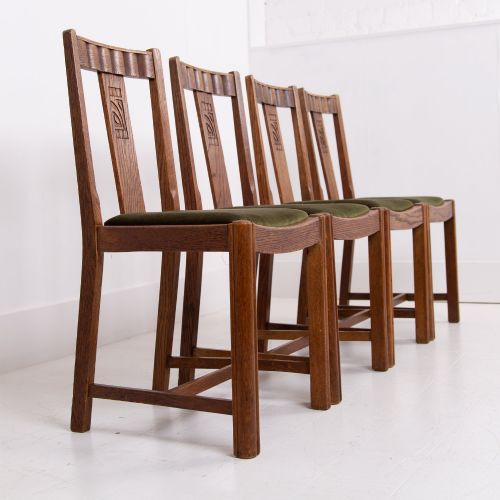
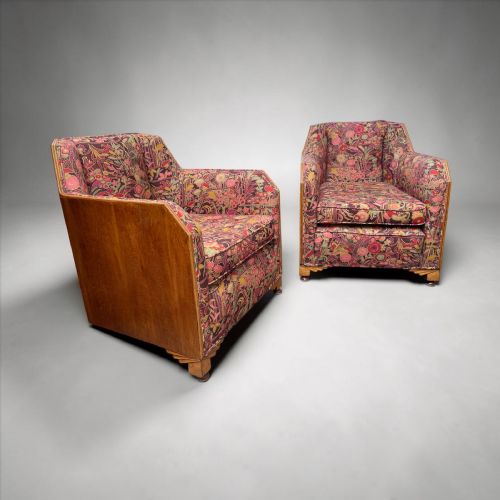
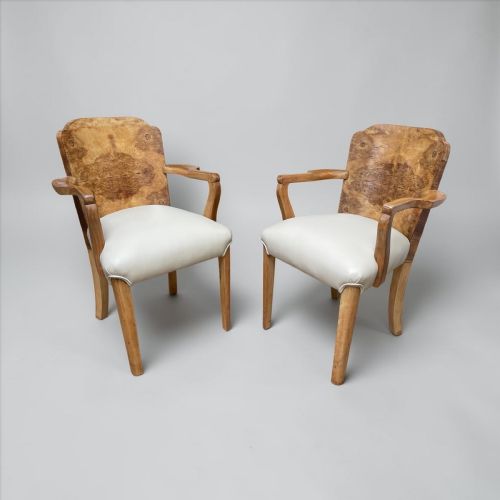
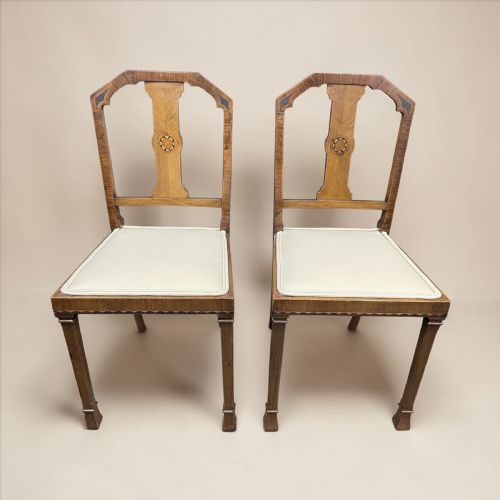
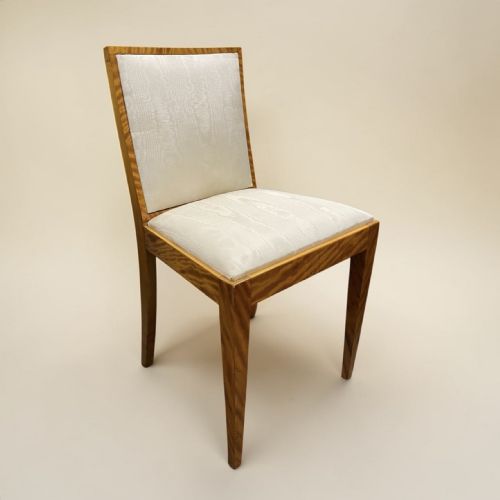
Armchairs and club chairs dominate the selection, frequently found in pairs alongside matching dining sets and occasional chairs. Examples span from English oak frames to Swedish satin birch and elm creations, demonstrating international interpretations of the style.
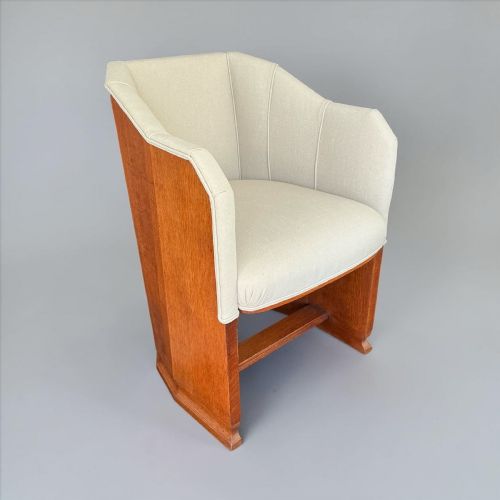
Buyers will also encounter specialised pieces like piano stools with storage, dressing table seats, and barrel-back tub chairs. These smaller items share the characteristic bold woodwork and tailored upholstery typical of the era.
How they were made
Makers built the frames of art deco upholstered chairs using solid hardwoods and decorative veneers, notably walnut, oak, satin birch, and elm. These timbers were often polished to highlight natural grain patterns, forming a smooth structural contrast to the fabric or leather coverings.
Upholstery techniques combined traditional sprung interiors with tight tailoring, utilising velvet, wool, leather, calf suede, and modern replacement fabrics. Many surviving frames feature cane panels or bentwood elements shaped to achieve the signature sweeping curves of the period.
Some lounge chairs have been spotted wearing seats upholstered in authentic London underground fabric.
What varies in quality
The standard of an art deco upholstered chair rests upon the integrity of its wooden frame and the precision of its original joinery. Pieces utilising figured timbers like burr walnut or satin birch often indicate higher workshop ambition than standard oak or plain timber frames.
Bath Cabinet Makers·Heals·Epstein
The Art Deco Upholstered Chairs Glossary
- Club chair
- A deep, heavily upholstered armchair designed for relaxed seating. These pieces often feature thick leather or fabric coverings over a low, wide frame.
- Klismos
- An ancient chair design revived during the twentieth century featuring curved, sweeping legs and a flared backrest. This form appears frequently in Swedish dining chair designs.
- Bergere
- A traditional enclosed upholstered armchair with wooden framing exposed around the sides and back. Examples from this period often incorporate cane work alongside padded cushions.
- Sycamore
- A light-coloured hardwood utilised for smooth cabinetry and decorative furniture elements. It provides a pale, even surface for modern finishes.
- Bentwood
- Wood softened through steaming and bent into curved structural forms. This technique allowed makers to create flowing framework lines without traditional joints.
Art Deco Upholstered Chairs: Frequently Asked Questions
How do I identify a chair from this period?
Look for characteristic geometric lines, stepped woodwork, and curved silhouettes typical of the 1930s. Materials like walnut, satin birch, and distinctive leather or fabric upholstery often point to the era.
Construction methods and framing styles also provide clues, as many pieces feature streamlined forms and polished wood accents that distinguish them from earlier Victorian or Edwardian designs.
Were these chairs originally made in sets?
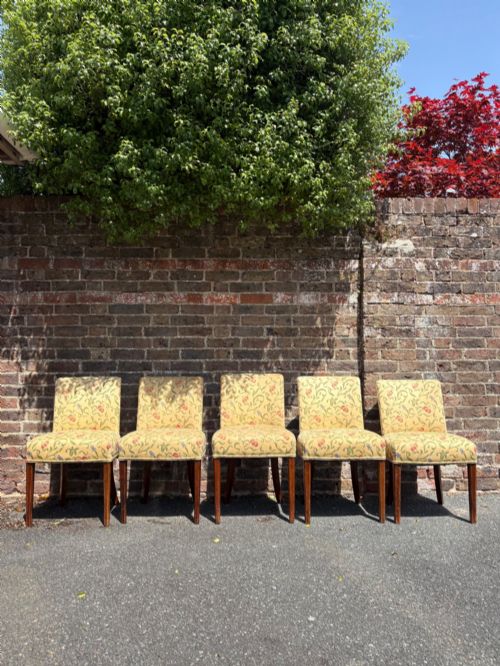
Many dining chairs and occasional seating options were produced as matched dining sets or pairs for drawing rooms and lounges. Dining suites frequently accommodated six to eight seats around a matching table.
Armchairs and club chairs were commonly retailed in pairs to balance a room's interior layout, a practice reflected in the many surviving matched pairs available today.
Are replacement fabrics acceptable on vintage pieces?
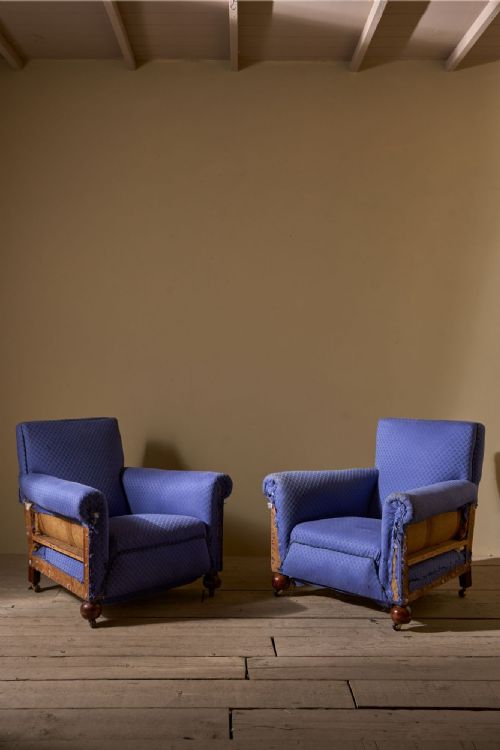
Reupholstery is very common for seating of this age, as original fabrics frequently wear out over decades of use. Many pieces are offered with new upholstery, wool coverings, or replacement leather.
Updating the fabric allows the structural frame to continue functioning in modern homes while maintaining the authentic silhouette and comfort of the design.
What rooms suit these seating designs best?
These pieces fit naturally into living rooms, studies, and bedrooms, where armchairs, club chairs, and dressing stools provide both functional seating and strong decorative presence. Compact side chairs also adapt well to desk spaces and smaller corners.
Dining sets integrate easily into contemporary or traditional dining spaces, bringing distinct period woodwork and tailored upholstery to the table.