



Antique Veneer Dining Table
An antique veneer dining table brings figured timber and structural joinery together, offering a historic centrepiece for the dining room.
Antique Veneer Dining Table
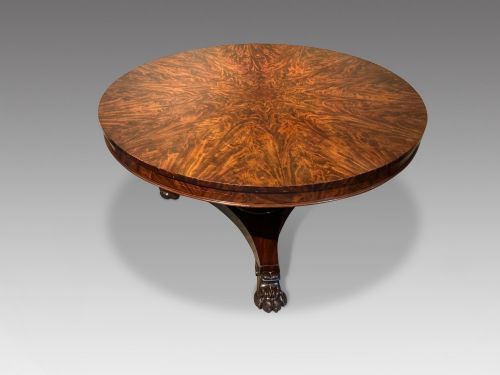
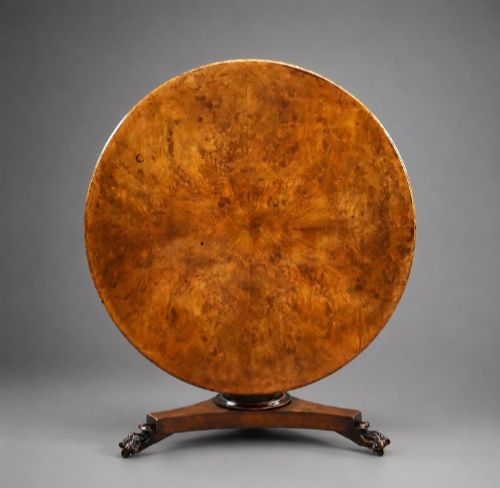
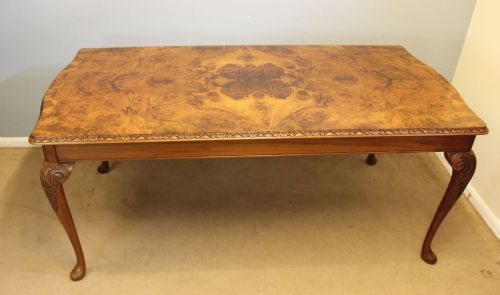
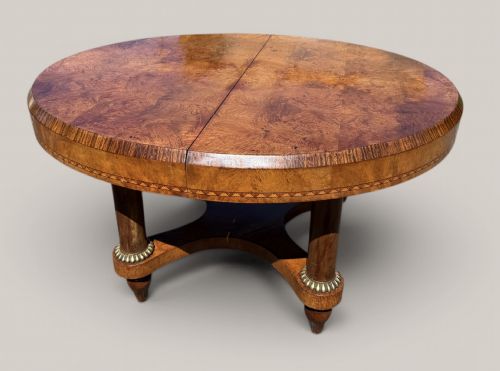
An antique veneer dining table is a dining surface formed by applying thin slices of decorative timber over a secondary wood foundation. When you search this phrase, you encounter forms ranging from 19th-century circular breakfast tables to 1930s Art Deco extending dining sets.
The pieces appearing on this page span the Victorian era, the 19th century, and the early 20th century up to the 1930s. You will frequently meet circular centre tables with segmented or radially veneered tops, alongside larger extending dining tables accompanied by chairs.
How they were made
Cabinet makers utilised hand-cut timber veneers applied over solid foundations of mahogany, oak, or walnut. Grain patterns such as burr walnut, burr oak, flame mahogany, and birch were carefully selected and arranged symmetrically across the surface.
Inlaid details and contrasting timbers like satinwood and maple added geometric or botanical borders. Joinery techniques allowed large tabletops to expand safely using extending mechanisms or tilt-top pedestals supported by brass fittings.
Some Victorian breakfast tables tilt upright simply to stand out of the way when the porridge bowls are cleared.
What varies in quality
The distinction between tiers of quality rests upon the selection and matching of the timber figure. Symmetrical book-matching and radial veneering demand exceptional skill from the cabinet maker, creating intricate patterns that elevate the visual depth of the surface.
Construction methods and the integrity of the underlying secondary wood dictate longevity. Tables featuring substantial pedestals, robust extending mechanisms, and well-preserved original surfaces demonstrate superior craftsmanship compared to simpler utilitarian builds.
The Antique Veneer Dining Table Glossary
- Veneer
- A thin layer of finely figured wood applied to a stable secondary timber base. This technique allows cabinet makers to display expensive decorative grains efficiently.
- Burr Walnut
- A wood harvested from the warted growths on walnut trees, yielding turbulent and swirling grain patterns. It is prized for its ornamental richness on table tops.
- Tilt Top
- A pivoting tabletop mechanism that allows the surface to be folded vertically when not in use. This design saved space in grand historic interiors.
- Radially Veneered
- A pattern where veneer slices are arranged in a circle radiating outwards from a central point. The grain meets at the core to form a sunburst effect.
- Art Deco
- A design style spanning the 1920s and 1930s characterised by sleek geometric lines and streamlined forms. Tables from this period often showcase exotic veneers.
Antique Veneer Dining Table: Frequently Asked Questions
How do I care for a veneered table?
Keep the timber away from direct heat sources and strong sunlight to prevent the veneer from drying or lifting. Use coasters and placemats, and dust regularly with a soft, dry cloth rather than harsh chemical polishes.
Apply a microcrystalline wax occasionally to nourish the historic polish and protect the timber surface from moisture. Gentle maintenance preserves the depth of the grain for decades.
Are these tables suitable for daily use?
Historic dining tables were built for robust daily gatherings using solid framing beneath the decorative veneers. Many include extending mechanisms or leaves designed to accommodate regular family meals.
Exercise care with hot dishes and liquids by using protective mats to avoid marking the historic finish. With sensible precautions, an antique table handles modern dining comfortably.
How do I identify the period of a table?
Examine the overall silhouette, edge moulding, and leg style to determine the era of manufacture. Victorian and 19th-century pieces often feature pedestal bases or turned legs, while 1920s and 1930s Art Deco examples display geometric simplicity.
Look closely at the construction methods underneath the tabletop and the type of veneer used. Oak and mahogany foundations point towards the 19th century, whereas exotic birch and streamlined walnut often indicate the interwar period.