
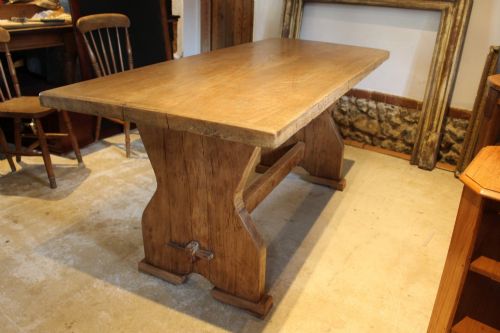
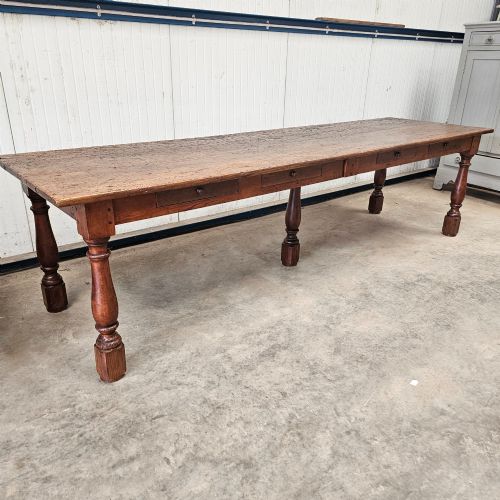
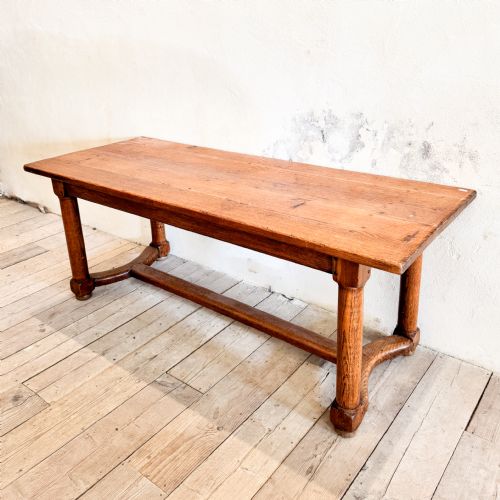


Vintage Six Seater Table
A vintage six seater table anchors the room with character and space, offering sturdy timber surfaces built to gather family and friends for decades.
Vintage Six Seater Table
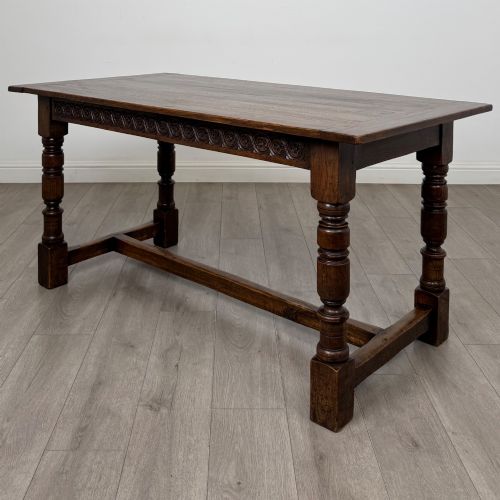
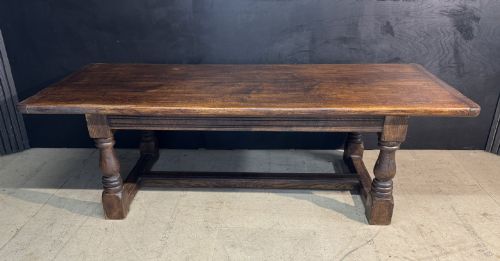
A vintage six seater table brings practical dining space into the home through robust forms spanning the Victorian era, the Edwardian period, and the nineteen-thirties. Buyers seeking a vintage six seater table will encounter sturdy refectory designs, country house styles, and extending formats built for everyday use.
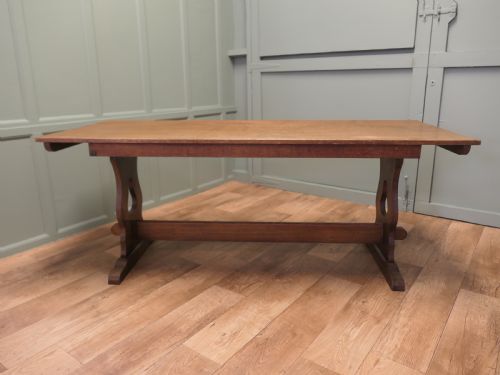
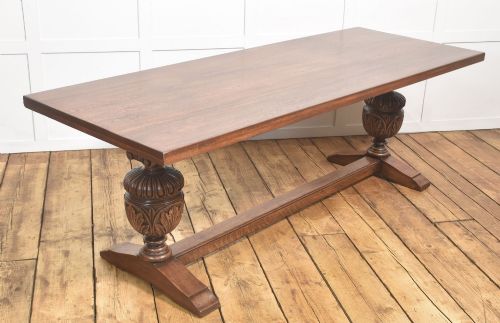
The pieces on this page draw from diverse stylistic traditions including rustic farmhouse, Jacobean revival, Arts and Crafts, and Art Deco. Oak and pine predominate, alongside walnut and chestnut, providing solid foundations designed to handle daily meals and gatherings.
Materials and construction
Makers relied heavily on solid hardwoods like oak, pine, and chestnut to construct durable frames capable of withstanding heavy daily use. Joinery techniques from the nineteenth and early twentieth centuries prioritise stability, often featuring thick tabletops supported by robust legs or refectory bases.
Selected pieces incorporate decorative elements such as rich walnut veneers, painted finishes, and fine carvings that reflect periods from Gothic Revival to Art Deco. Each timber was chosen for grain pattern and structural resilience, ensuring the furniture endured across generations.
Factors that separate examples
Quality in these tables depends on the integrity of the timber selection and the precision of the underlying joinery. Superior examples display carefully matched grain, stable structural framing, and well-preserved original surfaces that reflect the standards of their period.
Distinction also arises from the harmony of the design and the preservation of period details, whether through restrained Arts and Crafts lines or elaborate Jacobean carvings. Tables that retain their original proportions and sturdy stance command greater regard among collectors.
The Vintage Six Seater Table Glossary
- Refectory table
- A long narrow dining table historically used for communal meals. These pieces feature stretcher rails running low between the legs for added stability.
- Jacobean Revival
- A nineteenth and early twentieth-century style emulating seventeenth-century English furniture. It is characterised by dark oak, heavy turnings, and geometric panel carving.
- Arts and Crafts
- A design movement valuing honest construction and visible handcraftsmanship. Pieces in this style typically highlight the natural grain of golden oak.
- Walnut veneer
- A thin layer of decorative walnut applied over a secondary wood base. This technique creates striking grain patterns on tabletops while conserving costly materials.
- Extending table
- A dining table equipped with mechanisms or leaves to expand surface area. This practical format adjusts easily to accommodate extra guests when needed.
Vintage Six Seater Table: Frequently Asked Questions
How do I measure for a six seater table?
Allow at least sixty centimetres of linear space per person for comfortable dining. Ensure adequate clearance around the table edges for chairs to pull out smoothly without hitting walls.
Measure your room dimensions carefully, keeping doorways and traffic pathways in mind. A rectangular table requires proportional clearance to maintain a balanced layout in the dining space.
Are these tables suitable for daily kitchen use?
Many of these pieces originate from farmhouse and country house settings built for robust everyday practicality. Hardwood surfaces in oak and pine handle regular family meals and activities.
Protect timber surfaces with appropriate mats and wipe spills promptly to maintain the finish. Regular care preserves the character of vintage wood during daily household routines.
How do I identify the period of a table?
Examine the hardware, construction marks, and stylistic motifs visible across the frame. Victorian and Edwardian pieces often exhibit distinct revival carvings or simpler turned legs.
Compare the timber preparation and joinery methods against documented historical examples. Subtle details in the edge moulding and stretcher placement frequently point to specific decades of manufacture.
How do I care for a vintage wood finish?
Dust surfaces regularly with a soft dry cloth to prevent grit accumulation. Apply appropriate beeswax or natural polish periodically to nourish the timber grain.
Avoid placing vintage tables near direct heat sources or strong sunlight to prevent warping and fading. Gentle maintenance preserves the natural patina developed over decades of use.