

Jacobean Revival Oak Chairs
Jacobean revival oak chairs bring solid seventeenth-century weight and deep carved detail into modern dining rooms and halls.
Jacobean Revival Oak Chairs
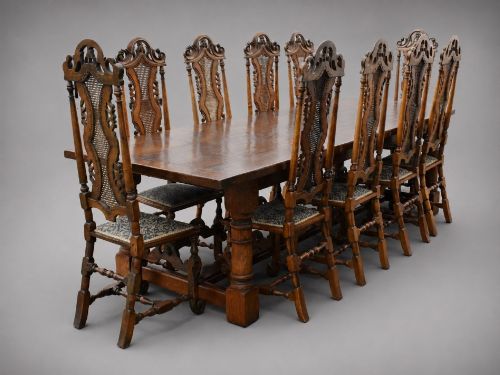
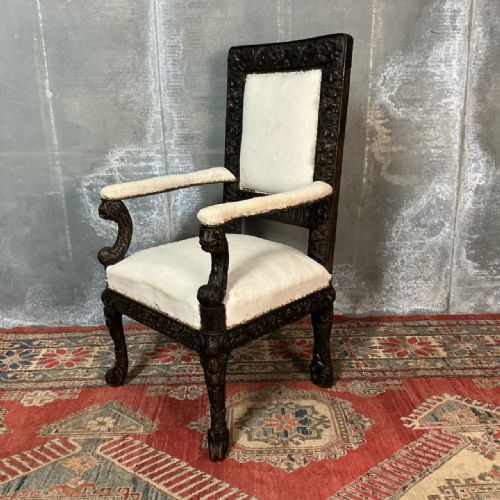
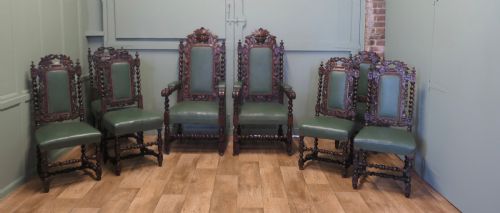
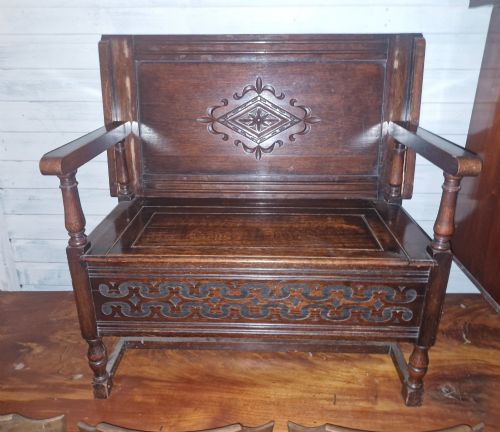
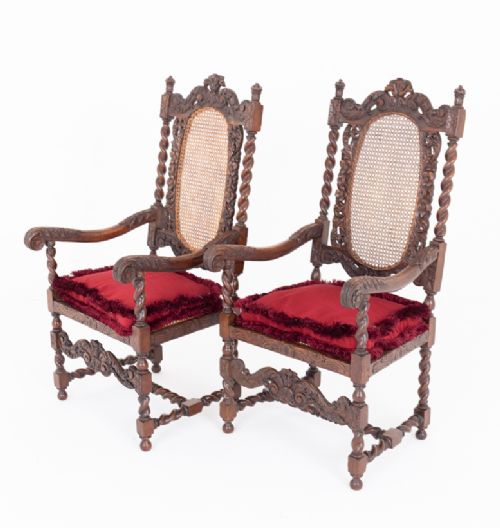
Jacobean revival oak chairs encompass robust seating built across the nineteenth and early twentieth centuries, drawing heavily on earlier seventeenth-century motifs. Buyers exploring this phrase encounter dining chairs, armchairs, hall seats, and grand high-back thrones produced during the Victorian and Edwardian periods.
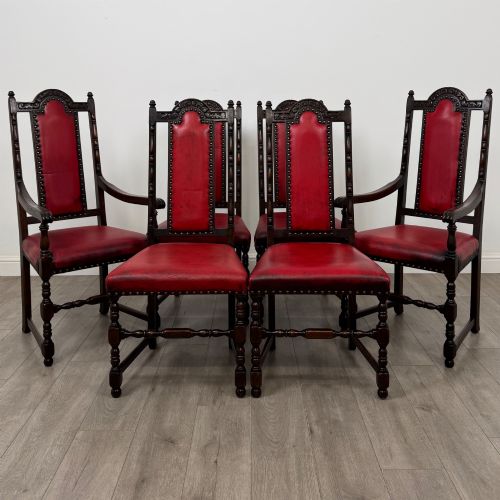
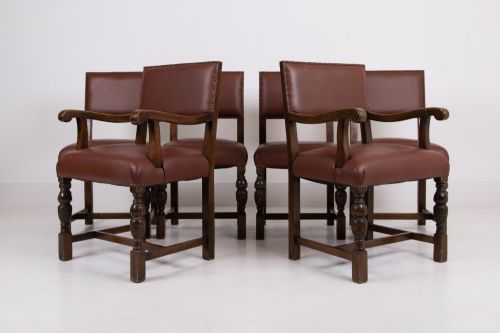
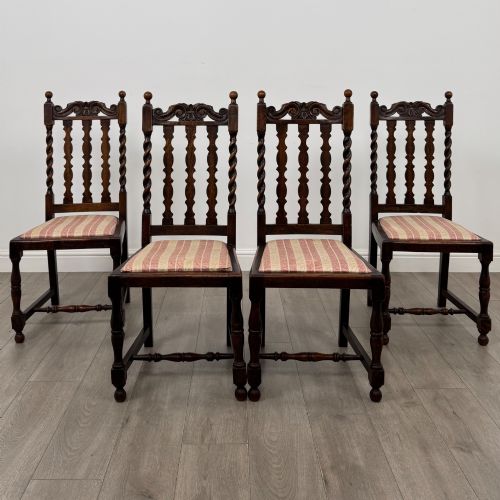
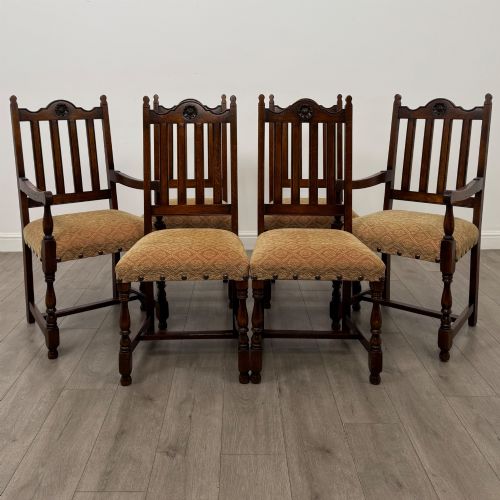
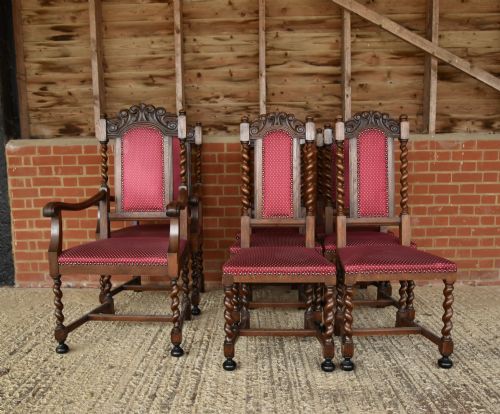
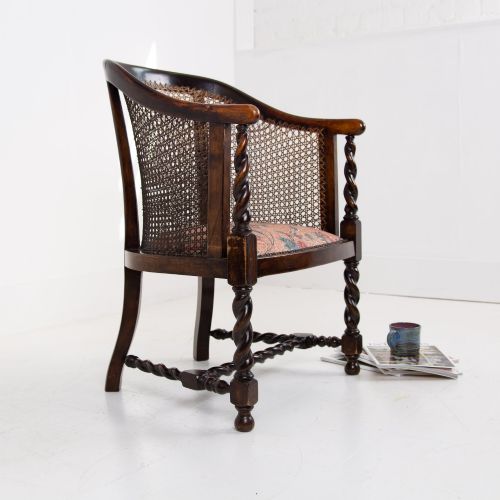
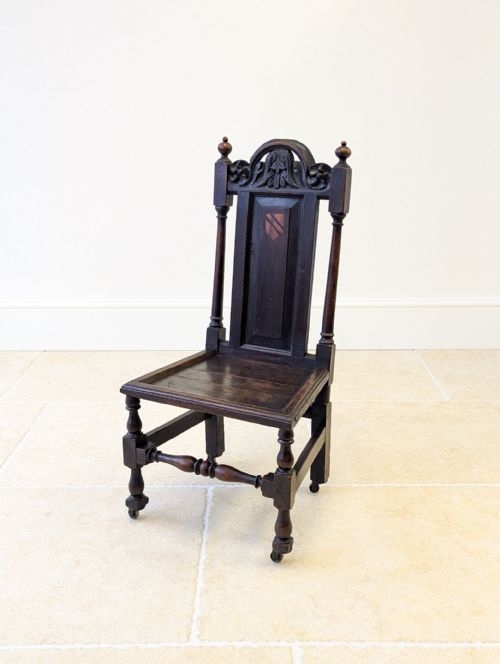
The most common versions on this page are dining sets of six or eight, often accompanied by matching carvers with padded leather, fabric, or cane seats. These pieces range from simple panelled wainscot forms to heavily carved high-backs featuring barley twist or bobbin turned legs.
Materials and Construction
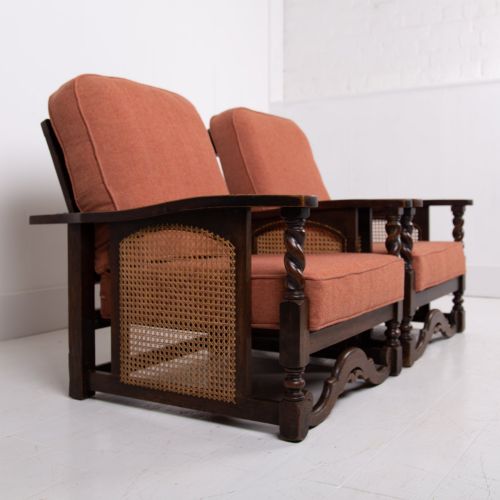
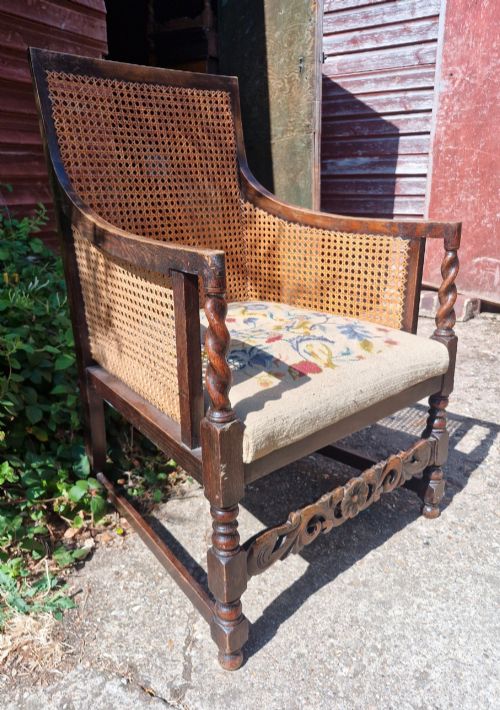
Makers built these chairs primarily from solid oak, frequently applying deep hand-carving to crest rails, splats, and stretcher bases. Upholstery materials recorded in the evidence include leather, velvet, tapestry fabric, and woven cane inserts for seats and back panels.
Structural support often relied on turned woodwork, utilising barley twist and bobbin turning alongside brass fittings and modern replacement cushions where original upholstery degraded over time.
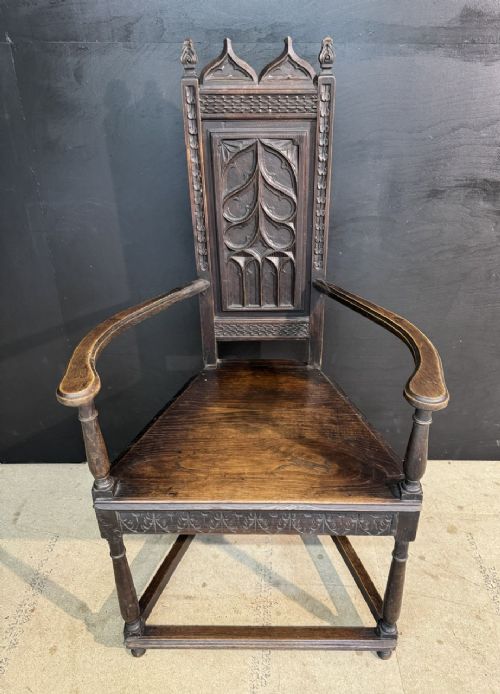
Listings feature oak chairs spanning the Victorian and Edwardian periods, including styles like Jacobean, Gothic, and Carolean revival.
Distinctions in Standard
Quality separates through the crispness and depth of the carved ornament on the crest rails and back panels, where shallow mechanical cutting yields to sharp, hand-executed relief. The choice of timber grain and the integrity of joint construction also define the upper tier of these chairs.
Complete sets maintain higher cohesion than assembled groups, and original upholstery materials or period-appropriate leather elevate the standing of a suite compared to later commercial re-coverings.
Denby and Spinks Leeds
The Jacobean Revival Oak Chairs Glossary
- Jacobean revival
- A nineteenth and twentieth century style mimicking the heavy, rectilinear furniture of the early seventeenth century. It utilises dark oak and prominent carved strapwork.
- Barley twist
- A type of turning shaped like a spiral helix, frequently used on the legs and stretchers of revival chairs. This decorative lathe work gained immense popularity during the Edwardian era.
- Wainscot chair
- A heavy wooden armchair with a panelled back, solid wooden seat, and armrests. The form originates from sixteenth and seventeenth century domestic interiors.
- Bobbin turning
- A form of woodwork featuring spherical or spool-shaped turnings along the length of a stretcher or leg. It appears on numerous late Victorian and Edwardian seating examples.
- Carver
- A term for an armchair, typically designed to sit at the head of a dining table alongside matching side chairs. These pieces incorporate supportive armrests for extended sitting.
Jacobean Revival Oak Chairs: Frequently Asked Questions
How do I care for antique oak chairs?
Feed the timber periodically with traditional beeswax to maintain the grain and prevent the wood from drying out in centrally heated rooms. Avoid placing them near direct heat sources or strong sunlight.
Inspect the joints and stretchers occasionally to ensure the frame remains rigid, tightening screws or dowels gently if movement occurs over years of use.
Were these chairs made in the seventeenth century?
Most pieces found here date from the Victorian and Edwardian eras, specifically between eighteen eighty and nineteen thirty. Craftsmen during these decades reproduced earlier seventeenth-century styles for modern homes.
Detailed stylistic indicators and fastener types usually reveal the later nineteenth or twentieth century origin of the timber framework.
Can I use these chairs for daily dining?
Solid oak construction provides exceptional structural strength, making these chairs entirely suitable for regular daily seating around a dining table. Their sturdy frames withstand routine household use comfortably.
Ensure that leather or fabric upholstery is maintained or updated with supportive modern padding if you plan on long dinner parties.
What is a carver chair?
A carver is an armchair designed specifically to match a set of dining chairs, traditionally placed at the head and foot of the table. They feature supportive wooden armrests for the host.
Sets often include two carvers and six side chairs, sharing identical turned legs, crest rails, and upholstery fabrics.