
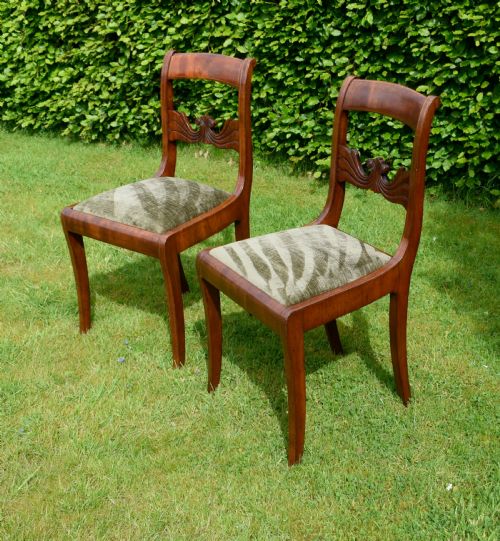
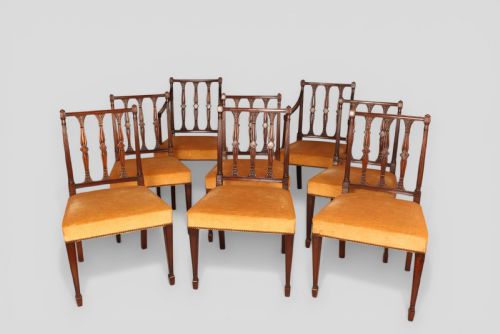
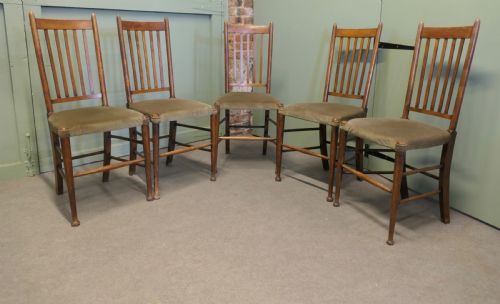


Brown Velvet Side Chairs
Brown velvet side chairs bring tactile warmth and period form to a room, offering practical seating shaped by centuries of cabinet-making.
Brown Velvet Side Chairs
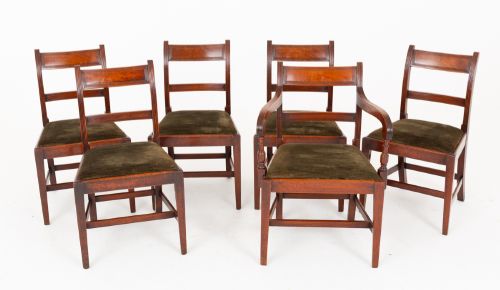
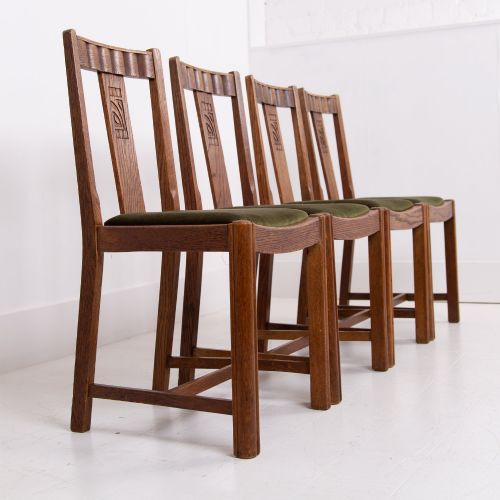
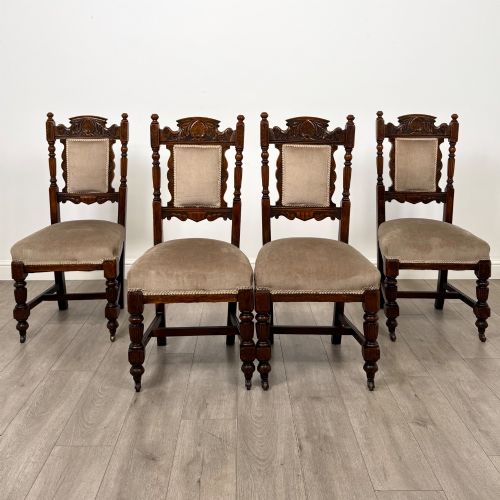
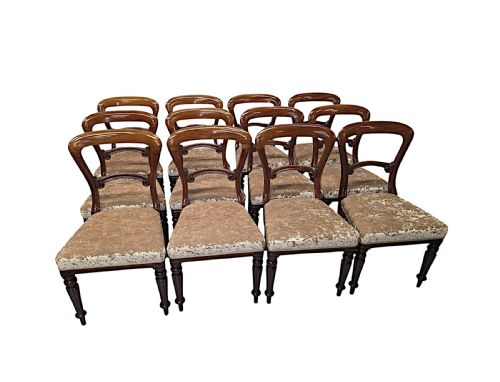
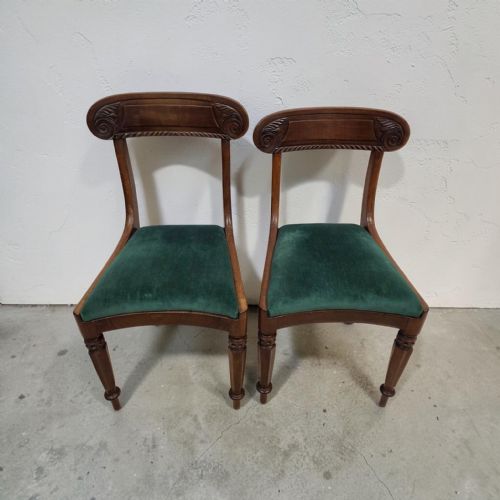
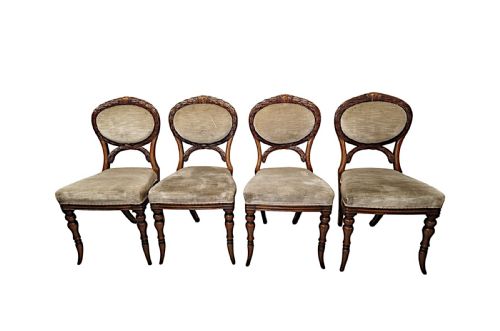
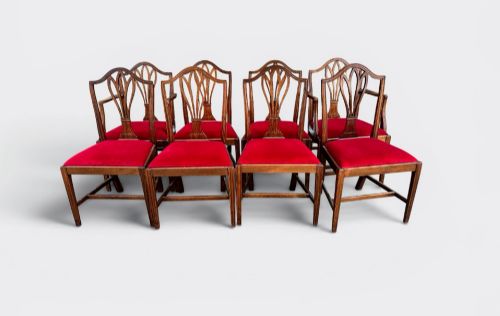
When you search for brown velvet side chairs, you enter a category defined largely by mahogany, oak and walnut frames spanning the Georgian, Victorian, Regency and later periods. The listings here consist primarily of dining chairs, side chairs and occasional seats designed for formal rooms rather than lounging.
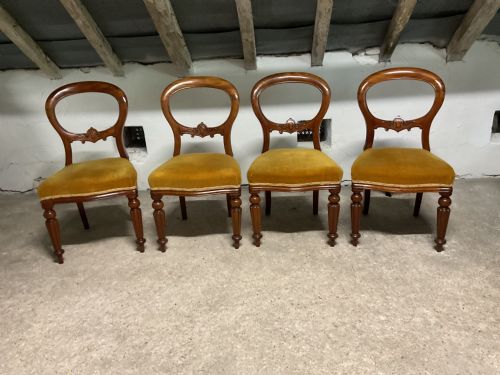
You will encounter single chairs, pairs and larger sets originating from English, Irish, French and Italian workshops. The forms range from high-backed Carolean and Art Nouveau styles to balloon-back Victorian seats and reeded-leg Regency designs.
How they were made
The timber frames rely on hardwoods such as mahogany, oak and walnut, chosen for structural strength and grain quality. Joinery involves traditional methods like mortise and tenon joints, occasionally augmented by brass fittings, inlay or carved detailing.
Upholstery historically layers textiles, fabrics and velvet over webbing and stuffing to create firm, supportive seats. Surface treatments include polish or varnish applied to timber to protect the wood while accentuating its natural colour.
Brown Velvet Side Chairs Retail Price Guide 2026
Typical asking prices for brown velvet side chairs among the pieces listed under this phrase on Sellingantiques today, from the lower quarter to the upper quarter. They describe what is for sale here now, not the wider market.
Some chairs require children, as the selection includes miniature seating designed for the smallest members of the household.
What varies in quality
Quality rests in the crispness of timber carving, the integrity of the frame construction and the fidelity of period styling. Pieces originating from notable workshops or bearing maker stamps show superior execution in proportion and finish.
The choice of primary timber and the complexity of decorative elements, such as bar backs or inlaid motifs, separate standard production items from finer workshop commissions. Preservation of original timber surfaces and structural soundness further dictate the standing of each piece.
Gillows·Strahan of Dublin
The Brown Velvet Side Chairs Glossary
- Balloon back
- A rounded, oval-shaped chair back popular during the Victorian period. This profile offers ergonomic support while displaying the grain of woods like mahogany and walnut.
- Bar back
- A horizontal wooden rail integrated into the upper section of a chair back. It often appears in Regency designs alongside reeded legs.
- Carolean style
- A revival or period design featuring ornate carving, high backs and scrollwork inspired by the late seventeenth century. These chairs make heavy use of walnut and oak.
- Reeded legs
- Cylindrical furniture legs carved with parallel convex mouldings that resemble clustered reeds. This decorative turning is typical of Regency seating.
- Chippendale style
- Furniture designs influenced by the eighteenth-century cabinet-maker Thomas Chippendale, characterised by elaborate splats and cabriole legs. These pieces are predominantly rendered in mahogany.
Brown Velvet Side Chairs: Frequently Asked Questions
How do I date a wooden side chair?
Dating relies on observing construction methods, timber choices and stylistic cues such as leg turning or back shape. Eighteenth-century forms differ markedly from Victorian balloon-back or Art Deco examples.
Examining the underside and joinery reveals tool marks and ageing patterns that help place the chair within its specific period.
Can these chairs be used daily?
Most antique wooden chairs are structurally robust enough for regular use, provided the joints remain tight and secure. Solid hardwoods like mahogany and oak stand up well to routine sitting.
For older or more delicate frames, occasional use or careful placement helps preserve the original timber and antique upholstery.
How do I match chairs with a modern table?
Mixing period side chairs with a contemporary table creates a deliberate contrast in textures and eras. Timber tones like mahogany or oak often complement modern wood or metal surfaces.
Focusing on complementary heights and silhouette proportions ensures the seating integrates comfortably with the table.
What is the difference between a side chair and a dining chair?
A side chair is a general term for an armless chair designed to sit against a wall or around a table. A dining chair is specifically proportioned for use at a dining table.
In historical listings, the two terms frequently overlap depending on the room the seating was intended to furnish.