
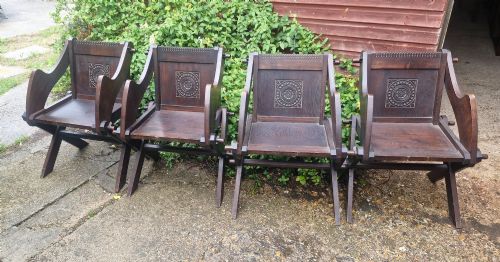
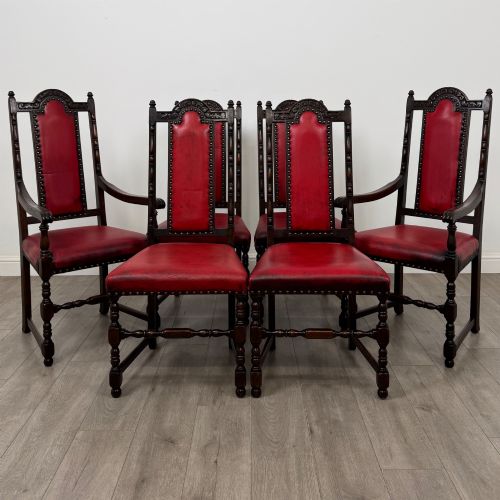
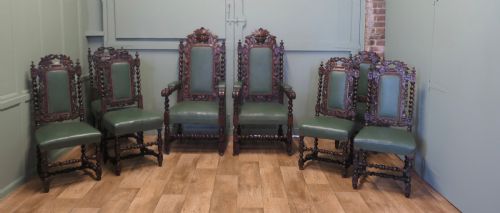
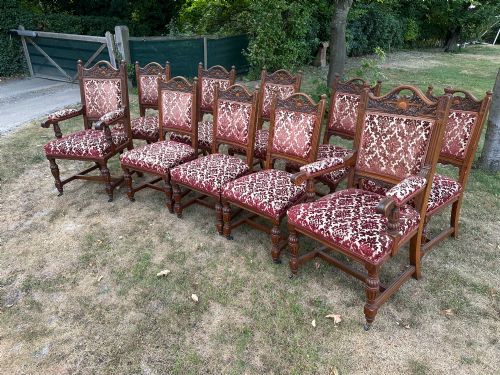
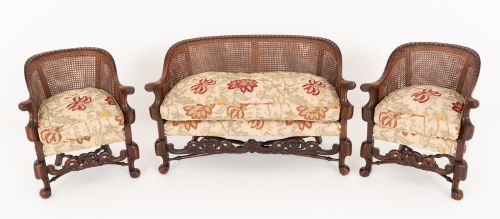
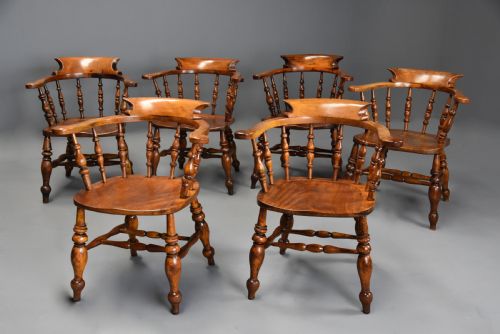
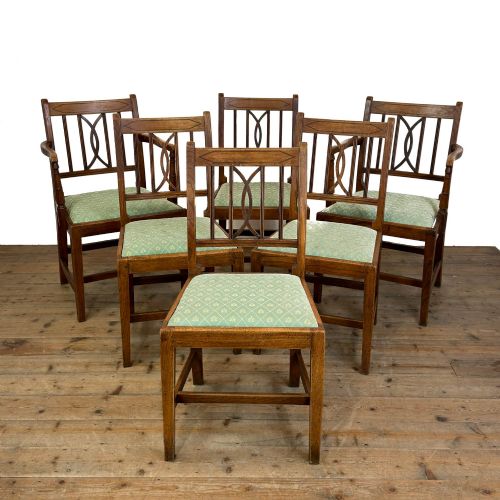
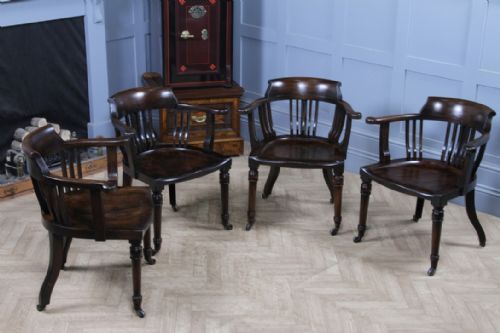
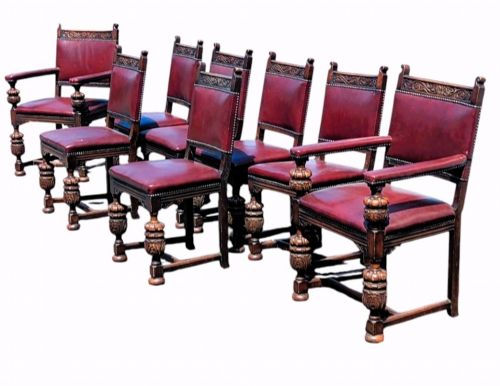


Set of Oak Armchairs
A set of oak armchairs brings solid timber presence and enduring seating utility to a dining room or library.
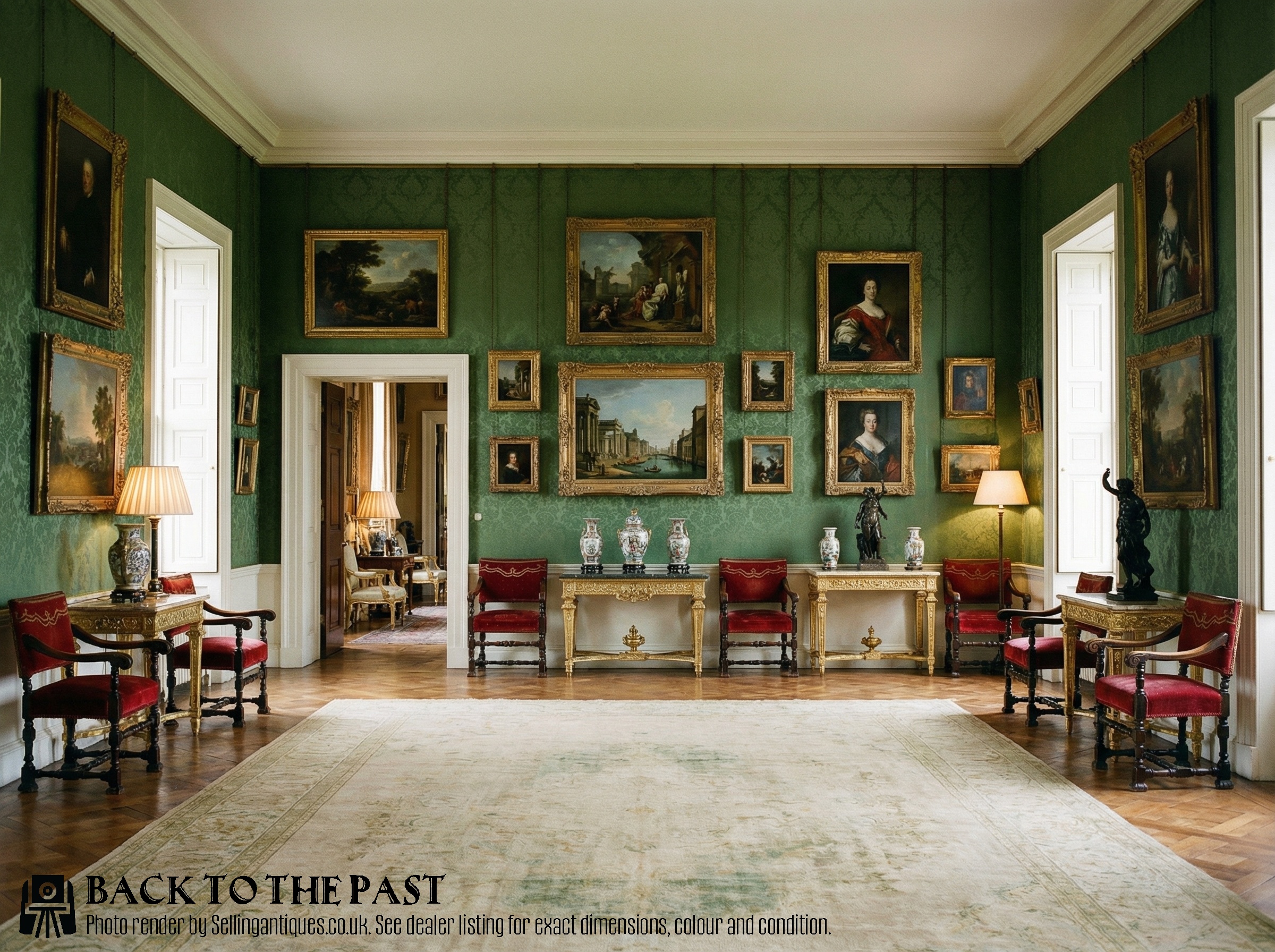
Set of Oak Armchairs
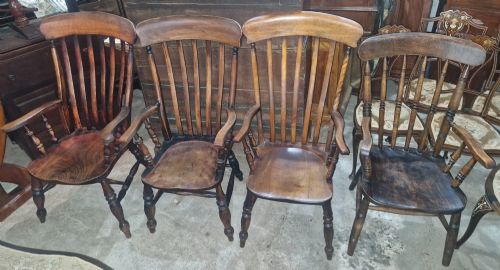
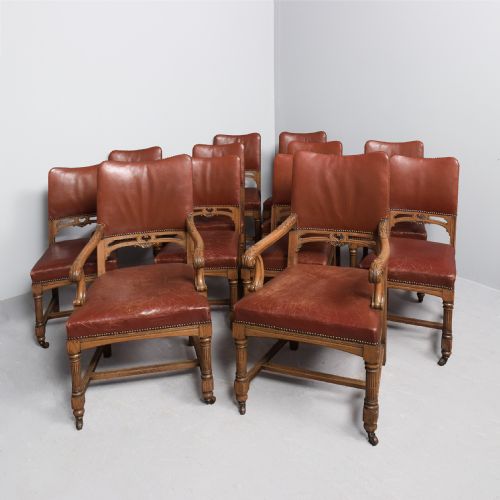
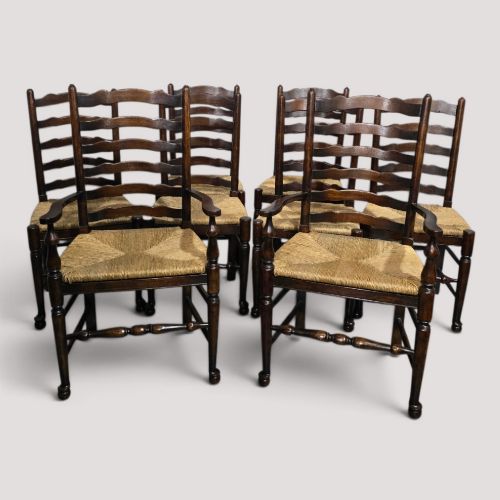
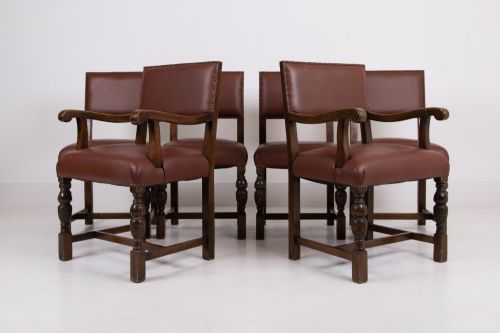
A set of oak armchairs comprises matched groupings of timber seating designed for dining rooms, offices, and country houses, often featuring robust frames and open arms. When you search for a set of oak armchairs, you encounter configurations ranging from compact four-piece groups of Windsor chairs to substantial twelve-piece dining suites.
The selections span multiple eras, including Victorian, Edwardian, and early twentieth-century examples, alongside revivals drawing on Jacobean and Carolean styles. Many pieces originate from farmhouse, country, and library contexts, integrating functional forms like captain's chairs, smokers bows, and ladderbacks.
Makers and regional workshops contribute distinct variations, from Yorkshire and Lancashire spindlebacks to lighter modernist interpretations. Buyers find both unified suites with matching carvers and side chairs, and harlequin assemblies gathered together over time.
How They Were Made
Makers utilised solid oak for primary frames, often combining it with supporting timbers such as elm, beech, and ash for structural integrity in turned spindles and bentwood arms. Joinery relied on traditional mortise and tenon methods, supplemented by steam-bending techniques for curved crest rails and armbows.
Surface detailing incorporated carved strapwork, barley twist turnings, and panelled backs, reflecting regional cabinetmaking traditions and period stylistic revivals. Seating surfaces varied widely, employing woven rush, cane, solid sculpted timber, leather upholstery, and padded fabric inserts.
The inventory records regional forms including Yorkshire, Lancashire, and farmhouse Windsor armchairs.
What Varies in Quality
The integrity of the frame construction and the depth of hand-carved detailing distinguish standard utility seating from exceptional cabinetmaker commissions. Uniformity across larger groupings determines coherence, particularly in harlequin sets versus factory-matched suites produced together.
The retention of original surface patination and uncompromised joint stability elevate certain examples, whereas heavy timber shrinkage or replacement stretchers alter the balance of an antique suite.
Lamb Of Manchester·Harry Warren House·Waring·Heals
The Set of Oak Armchairs Glossary
- Carver chair
- An armchair designed with open sides to accommodate voluminous period clothing, typically utilised at the head of a dining table.
- Smokers bow
- A sturdy, low-backed Windsor armchair featuring a continuous curved armrail supported by turned spindles, common in nineteenth-century smoking rooms and offices.
- Ladderback
- A chair back constructed from horizontal slats arranged between two vertical uprights, frequently paired with rush seating in country environments.
- Jacobean Revival
- A nineteenth-century decorative style emulating seventeenth-century English furniture through heavy proportions, geometric paneling, and deep turning.
- Rush seat
- A traditional bottom woven from dried marsh rushes twisted into cords, providing a resilient and flexible platform for seated occupants.
Set of Oak Armchairs: Frequently Asked Questions
How do I care for antique oak?
Maintain oak furniture by applying occasional beeswax to nourish the timber and preserve its natural grain. Avoid placing antique seating near direct heat sources to prevent timber splitting.
Dust regularly with a soft, dry cloth rather than modern chemical sprays. This protects the historic surface patination accumulated over decades of use.
What is a harlequin set?
A harlequin set consists of chairs sharing similar period characteristics, styles, or timber tones rather than originating from a single workshop batch. Such groupings formed naturally as owners collected matching pieces over time.
These sets offer visual variety while maintaining a cohesive historical aesthetic around a dining table. Collectors appreciate them for their organic assembly rather than strict factory uniformity.
Are these chairs suitable for daily use?
Solid oak construction provides remarkable durability, making these chairs well-suited for everyday dining and study environments. Robust joinery ensures structural stability under regular seating loads.
Ensure that rush or upholstered pads receive appropriate maintenance depending on the seating material. Period frames often outlast modern alternatives when kept in stable indoor conditions.
How can I identify the period?
Period identification relies on observing construction marks, turning styles, and specific design revival indicators present in the woodwork. Victorian and Edwardian examples often display machine-assisted turning alongside hand-finished joinery.
Comparing back splats, arm profiles, and hardware fixings against documented design styles clarifies the approximate decade of manufacture. Regional variations also provide clues to the geographic origin of country pieces.