
Dining Room Chairs
These dining room chairs bring heritage timber and period proportion to the table, offering a solid seat for daily meals and formal gatherings alike.
Dining Room Chairs
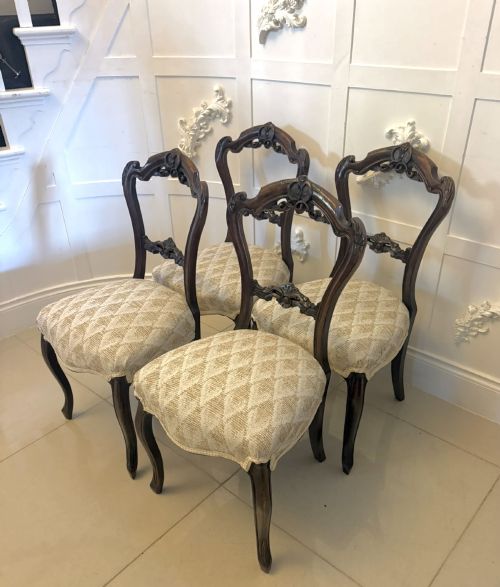
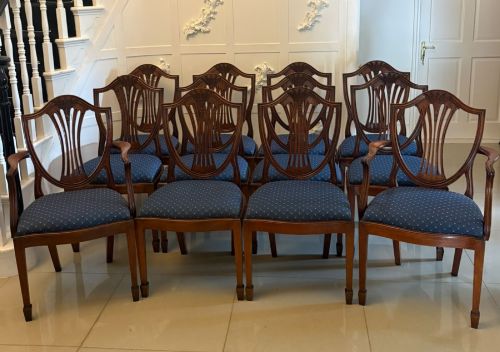
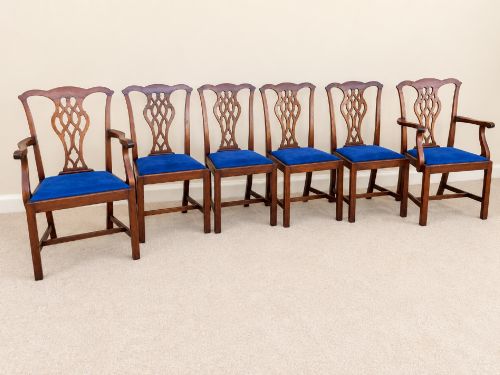
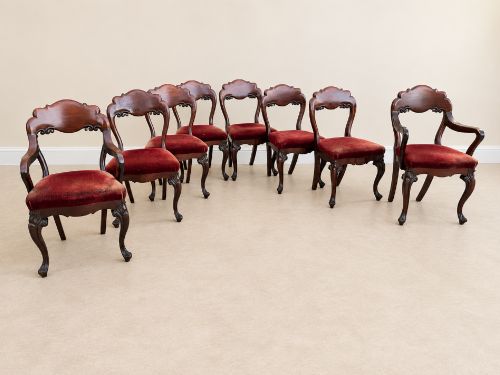
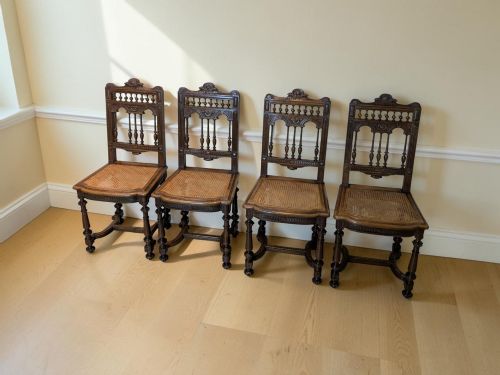
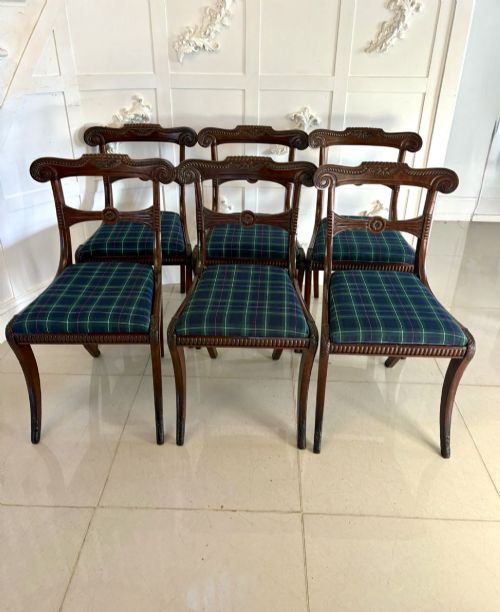
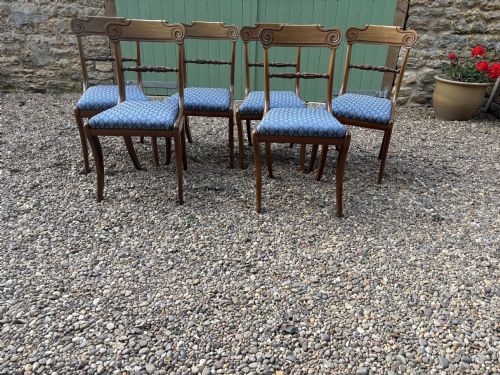
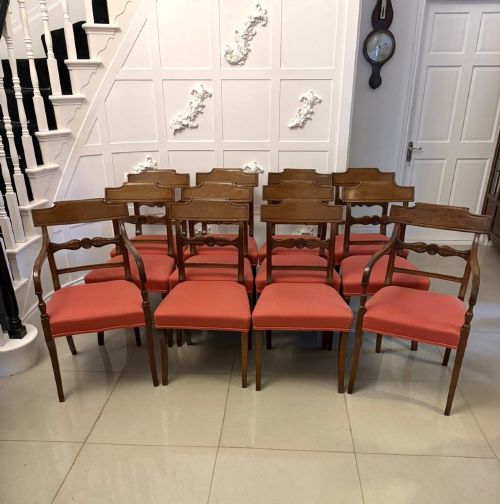
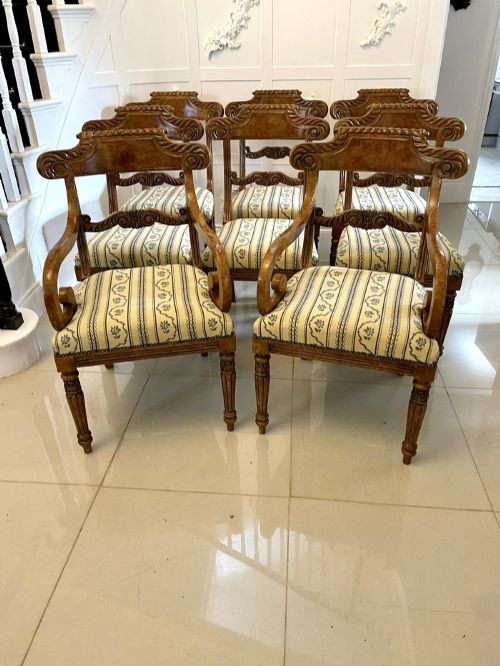
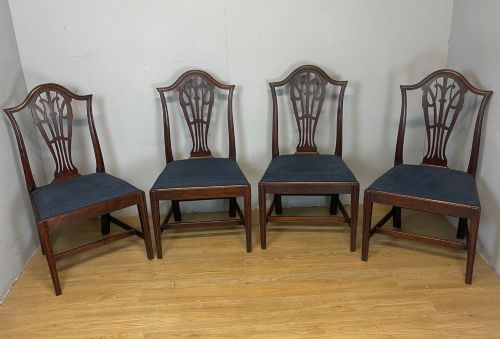
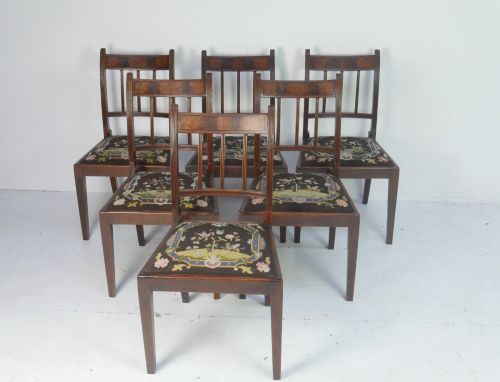
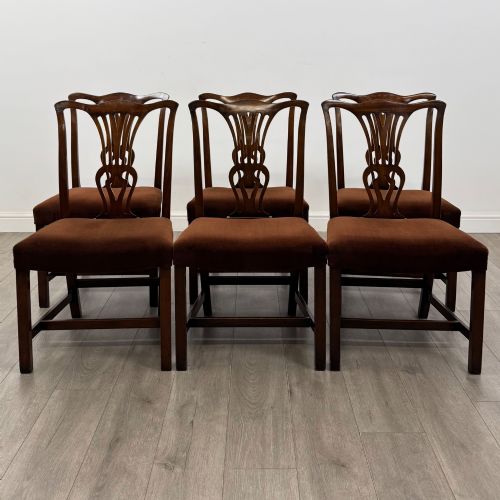
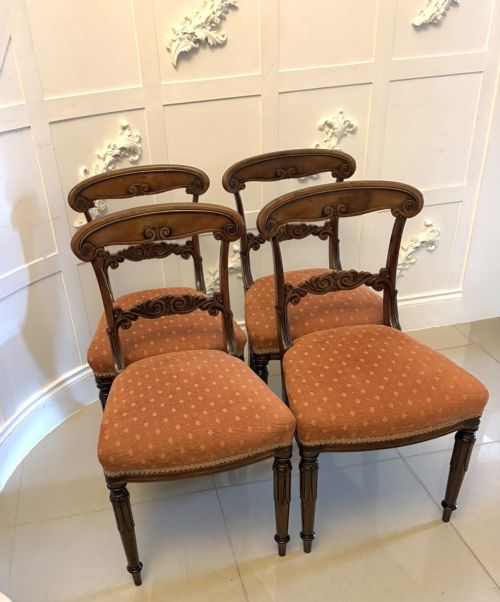
When you search for dining room chairs, you encounter sets spanning the Georgian, Regency, Victorian, and Edwardian eras, alongside later revival pieces. Mahogany forms the backbone of these selections, often appearing in substantial sets that include armchairs and side chairs.
Sets range from intimate groups of four up to extensive assemblies numbering ten, twelve, or twenty pieces. Alongside timber frames, you find diverse seating options upholstered in leather, velvet, and various fabric surfaces.
How They Were Made
Cabinetmakers constructed these frames primarily in mahogany, walnut, oak, and elm, relying on traditional joinery to ensure structural rigidity. Turning, carving, and piercing shaped the splats, legs, and rails.
Makers integrated decorative elements such as brass inlay, maple veneers, and hand-carved motifs into the timber. Upholstered pads utilised traditional stuffing and coverings of leather, velvet, and textile fabrics.
The inventory records expansive dining sets accommodating up to twenty people, pairing side chairs with matching carvers.
What Varies in Quality
The degree of hand-carving and the crispness of pierced splats separate standard examples from finer commissions. Timber selection dictates visual depth, with dense grains and matched veneer panels elevating the presence of the suite.
The integrity of the frame construction and the uniformity across a large set determine the overall standing of the furniture. Retaining original timber surfaces without excessive alteration preserves the integrity of the piece.
Maple and Co
The Dining Room Chairs Glossary
- Carver
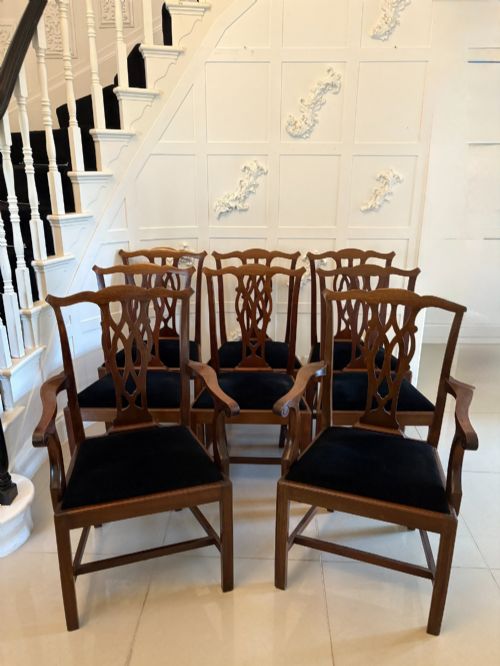
- An armchair designed to sit at the head of a dining table, often matching a set of side chairs. These typically feature open arms to accommodate formal dress.
- Shield back
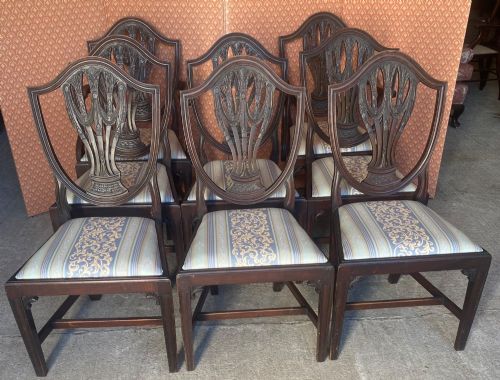
- A chair back shaped like a heraldic shield, popularised in the eighteenth century and revived in later decades. This design often incorporates carved splats or drapery motifs.
- Balloon back
- A rounded, oval-shaped chair back that curves outward, prevalent during the Victorian era. This form provides ergonomic support through its continuous wooden loop.
- Splat
- The central vertical strip of wood in a chair back connecting the seat to the top rail. Makers pierced, carved, or shaped this element to define the stylistic period.
- Klismos
- An ancient Greek chair form with curved legs and a concave backrest, reinterpreted in later neoclassical and art deco periods. This silhouette offers an elegant, sweeping profile.
Dining Room Chairs: Frequently Asked Questions
How do I match chairs to a table?
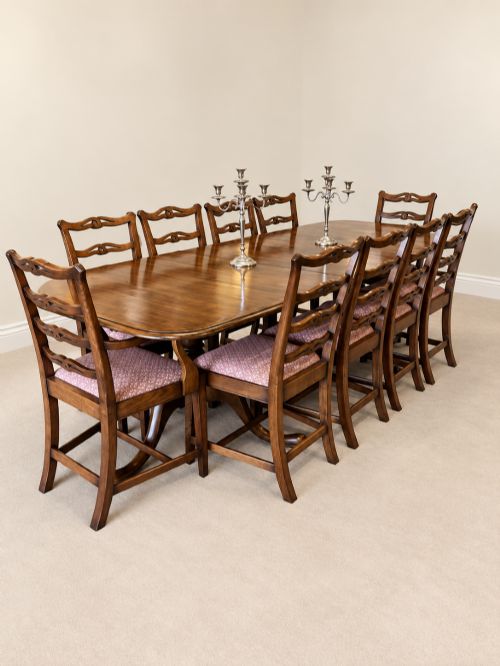
Consider the timber species, primary hue, and period style of your dining table when selecting seats. Mahogany frames pair naturally with similar dark woods, while contrasting oak introduces textural variety.
Pay attention to the height of the apron and the width of the armchairs to ensure they slide comfortably beneath the table edge.
What is the difference between carvers and side chairs?
Carvers feature armrests and traditionally sat at the head and foot of the table for the host and hostess. Side chairs lack arms and allowed guests wearing voluminous period garments to sit closer.
Most large antique dining sets include a combination of both types to maintain a balanced arrangement.
How do I care for antique timber seats?
Keep wooden frames away from direct heat sources and strong sunlight to prevent the timber from drying out or splitting. Dust regularly with a soft cloth and apply appropriate wax sparingly to nourish the finish.
Protect upholstered pads by avoiding moisture and treating leather or fabric according to its specific textile requirements.
Can I mix different chair styles together?
Combining different styles works well when united by a common material, such as mahogany or oak, or a shared era like the nineteenth century. Consistency in scale and wood tone helps disparate pieces look intentional around a single table.
Anchor the grouping with matching carvers at either end while utilising varied side chairs between them.