


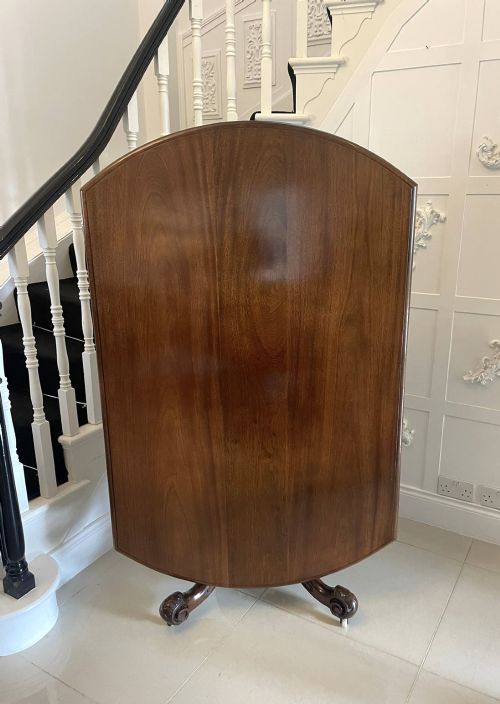
Pedestal Base Table
When you search for a pedestal base table, you are looking at single-column supports carrying dining, breakfast, card, and occasional furniture.
Pedestal Base Table
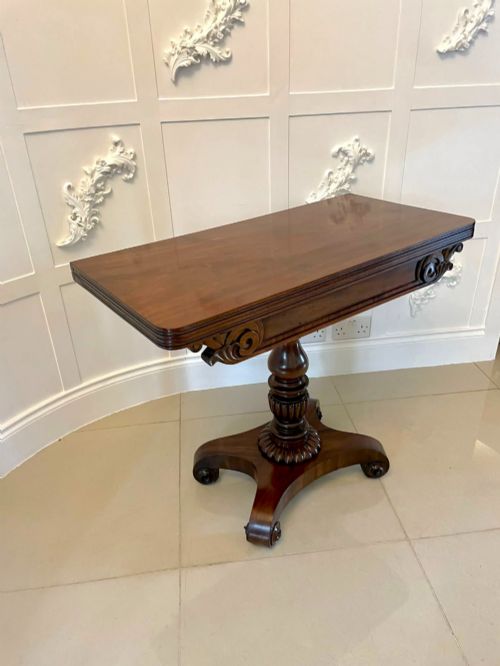
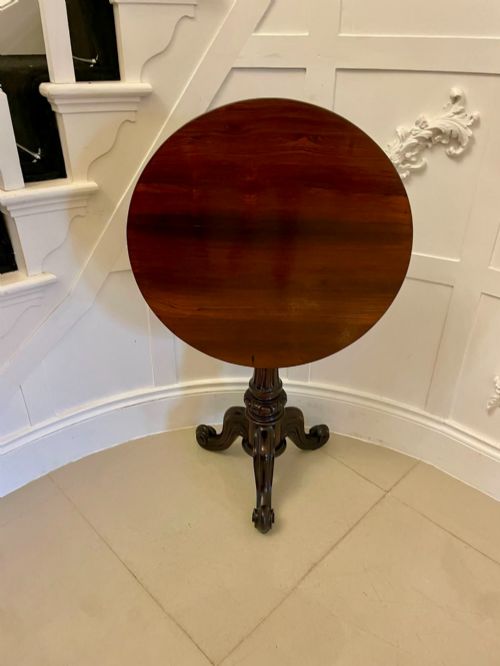
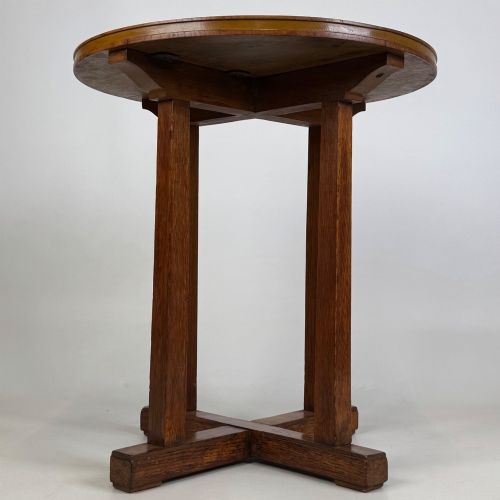
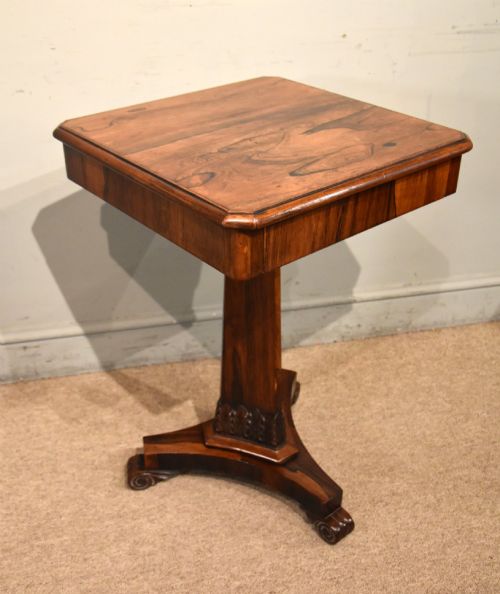
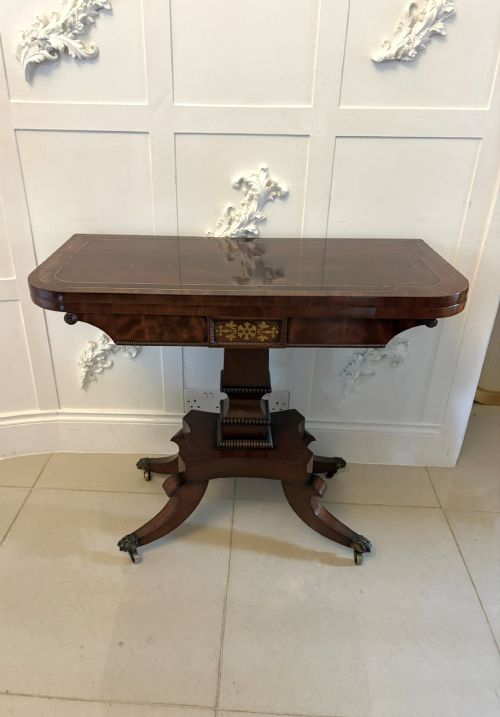
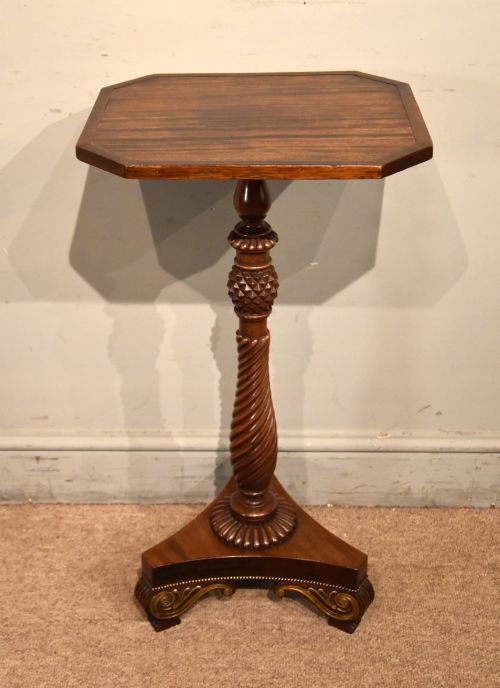
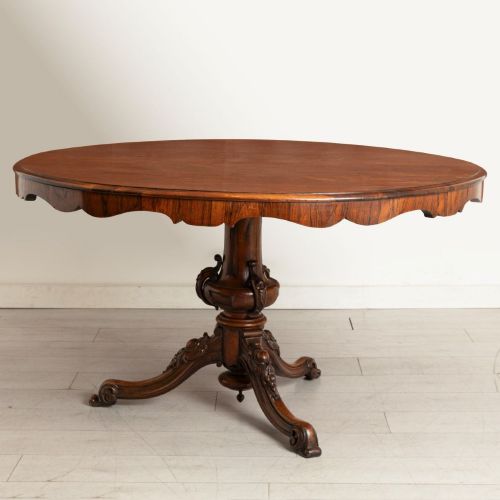
A pedestal base table rests its entire top upon a central column or pillar rather than four corner legs, freeing the floor space beneath. These pieces appear across dining, centre, card, and occasional formats spanning the Georgian, Regency, William IV, and Victorian eras.
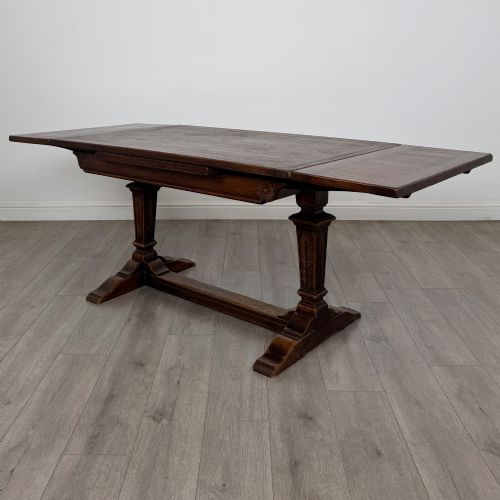
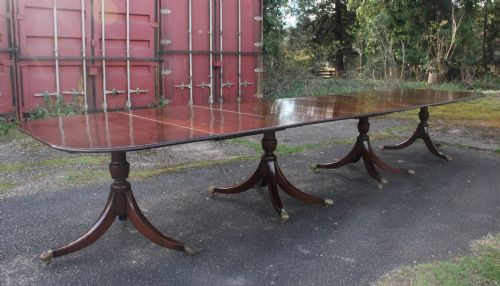
The single column often expands downward into a tripod, triform, or quadrupod base, sometimes terminating in brass casters. Round breakfast tables and rectangular card tables dominate the historic selection, alongside occasional wine tables and large extending dining formats.
Materials and construction
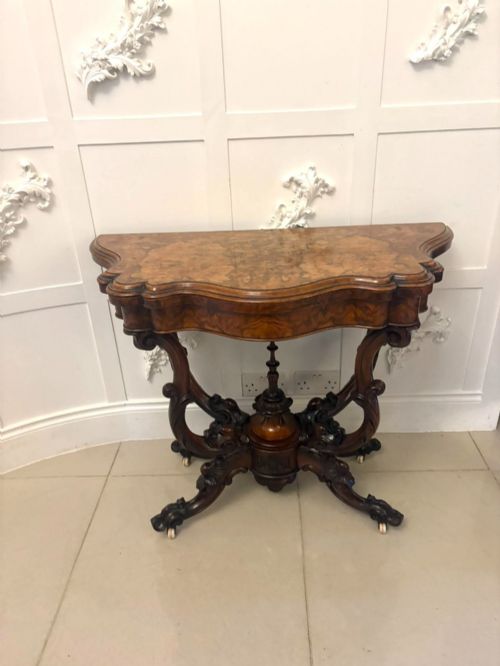
Makers utilised rich timbers such as mahogany, rosewood, burr walnut, and oak, frequently selecting flame mahogany or burr veneers for the primary top surfaces. Solid hardwoods formed the turned pillars and carved support bases, while inlay work incorporated lighter woods and brass stringing.
Joinery methods combined central metal bolts or wooden tenons to secure the heavy top to the vertical pedestal. The base timbers were joined with strong structural blocking to bear the outward weight of the top without twisting.
Some nineteenth-century card tables hide secret rotating wells beneath their folding tops for storing ivory gaming counters.
What separates the grades
Quality rests in the selection of the timber grain, such as heavily figured flame mahogany or symmetric burr walnut veneers across the top. Plain, straight-grained secondary woods indicate simpler commercial output.
Carving depth and sharpness on the central pillar and foot mounts separate standard workshop pieces from finer cabinet work. Heavy, clumsy proportions on the pedestal legs contrast with balanced, tapering curves.
The Pedestal Base Table Glossary
- Pedestal base
- A single central support column carrying a table top. This design allows chairs to tuck underneath without striking corner legs.
- Tilt-top
- A hinged table top that folds vertically when not in use. This mechanism permitted easy storage against chamber walls.
- Triform base
- A three-sided or three-legged support platform at the foot of the column. It provides stability for circular breakfast and centre tables.
- Gueridon
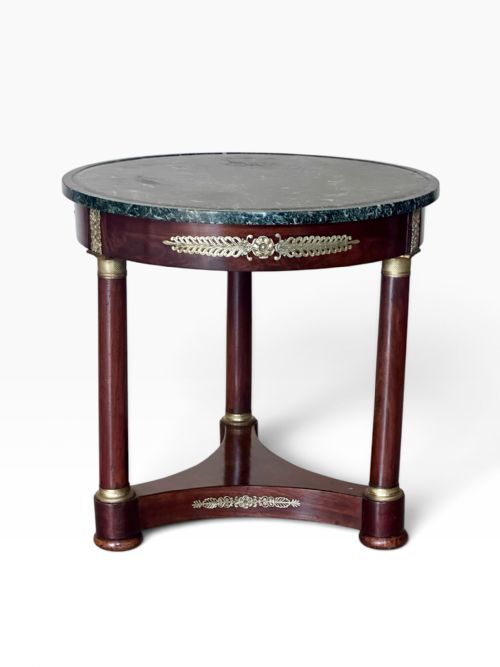
- A small French occasional table supported on a central pillar. These pieces often feature marble tops or delicate marquetry.
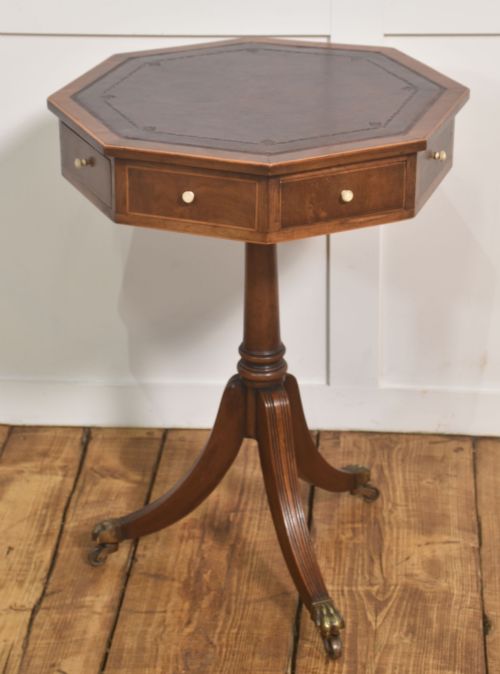
- Drum table
- A circular library or occasional table with a deep rim containing drawers. It typically revolves upon a sturdy central pedestal.
Pedestal Base Table: Frequently Asked Questions
How do I identify a William IV table?
William IV examples typically display heavy rosewood or mahogany timbers with bold, robust proportions. Pillars frequently feature chunky acanthus leaf carvings and rest on platform or triform bases.
Cabinet makers during this era favoured dark, dense hardwoods combined with heavy concealed iron weightings. The overall aesthetic leans toward monumental strength rather than slender grace.
Can I use a tilt-top table daily?
Tilt-top tables handle daily use well provided the brass catch and rule joints remain secure. The tipping mechanism was originally designed to clear floor space in smaller historic rooms.
When placing items upon the surface, ensure the catch is fully locked into the horizontal position. Avoid leaning heavy body weight on the outer edge while the table is tilted.
What is a breakfast table?
A breakfast table is a large circular or oval pedestal table originating from the Georgian and Regency periods. They were traditionally built at a comfortable height for morning meals or light gatherings.
The tilt-top function allowed servants to clear the floor quickly after the meal concluded. Today, they function effectively as central hallway or dining surfaces.