

Antique Dining Table Set
When you search for an antique dining table set, you enter a world of matched timber and seating created to gather people together.
Antique Dining Table Set
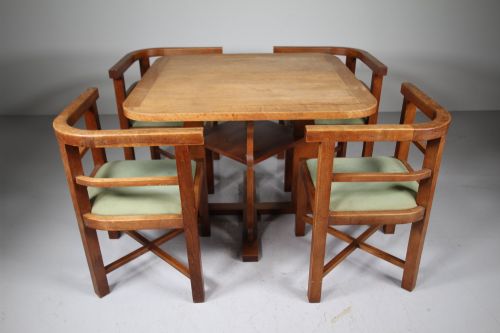
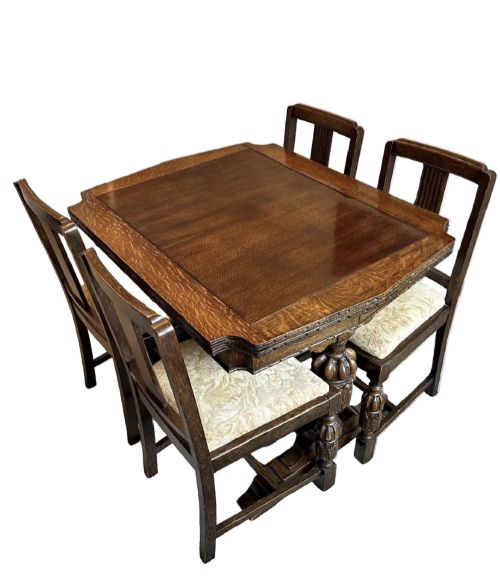
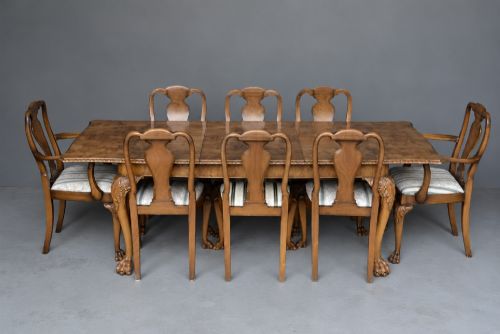
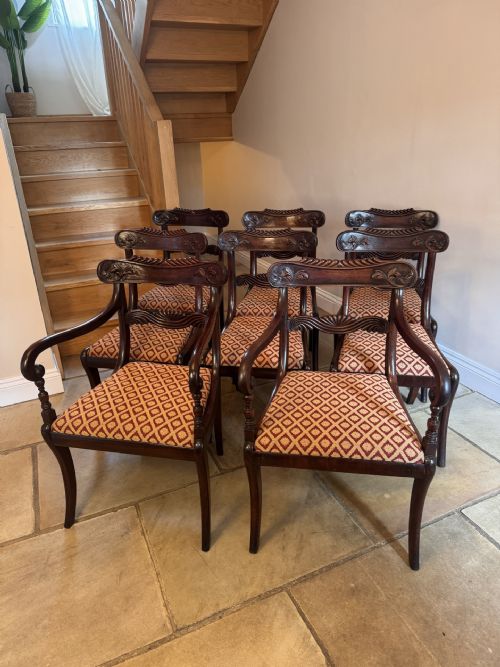
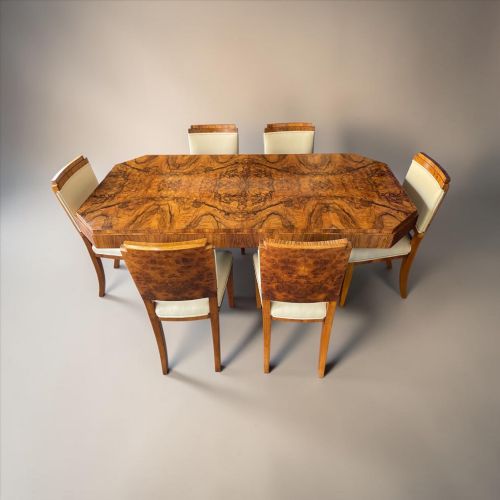
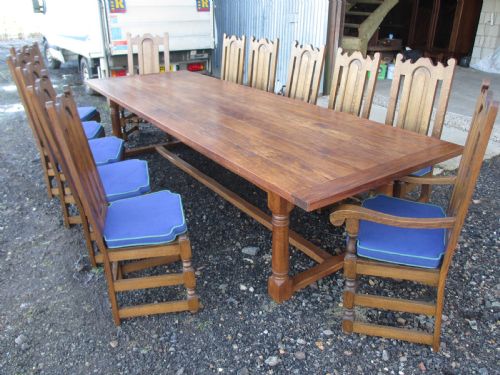
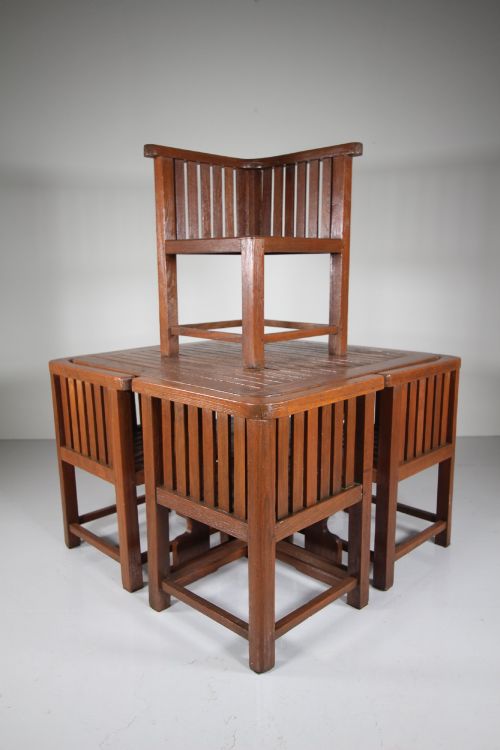
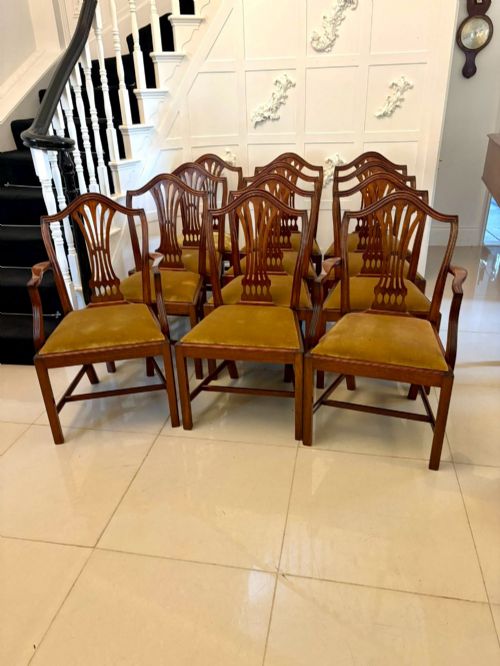
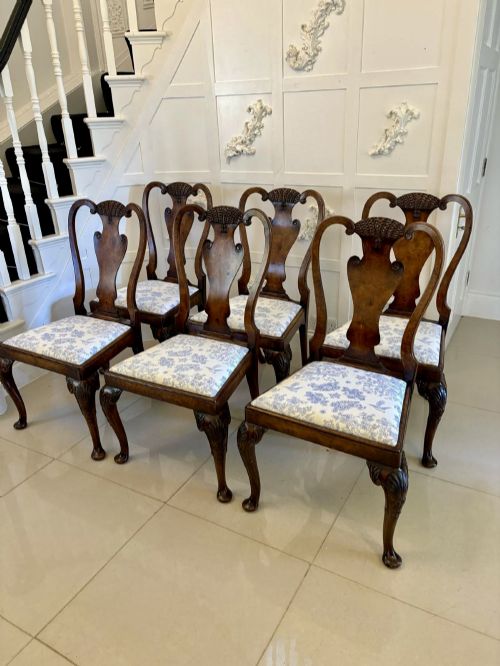
An antique dining table set brings together a principal dining table accompanied by a coordinated series of dining chairs, and occasionally matching benches or suites. These ensembles range from substantial oak refectory and draw leaf formats to extending mahogany tables paired with large numbers of carvers and side chairs.
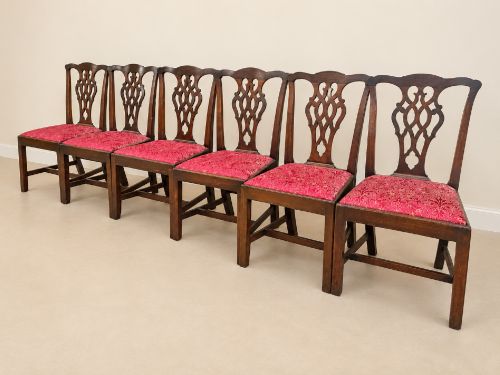
The versions you meet most frequently on this page span the Victorian and Edwardian eras, alongside substantial groupings from the nineteen-thirties. Makers utilised robust timbers like oak and mahogany, often pairing heavy tables with sets of six, eight, ten, or twelve matching chairs.
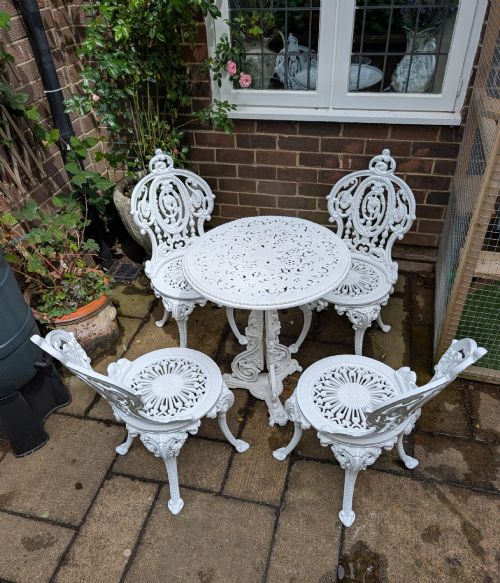
Beyond domestic timber suites, the wider category accommodates heavy cast-iron garden dining sets and related dining groupings from the nineteenth and twentieth centuries. Buyers find everything from compact kitchen variants to expansive boardroom and dining room suites designed for formal hospitality.
Materials and construction methods
Cabinet makers constructed the tables using durable hardwoods such as mahogany, oak, walnut, and satinwood, frequently incorporating clever mechanisms like draw leaves or extending centre screws to accommodate extra leaves. Chairs were built to match, utilising solid timbers, carved details, and upholstered seats in leather, fabric, or velvet.
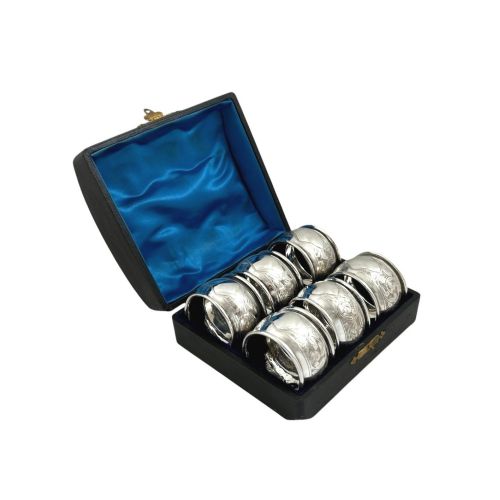
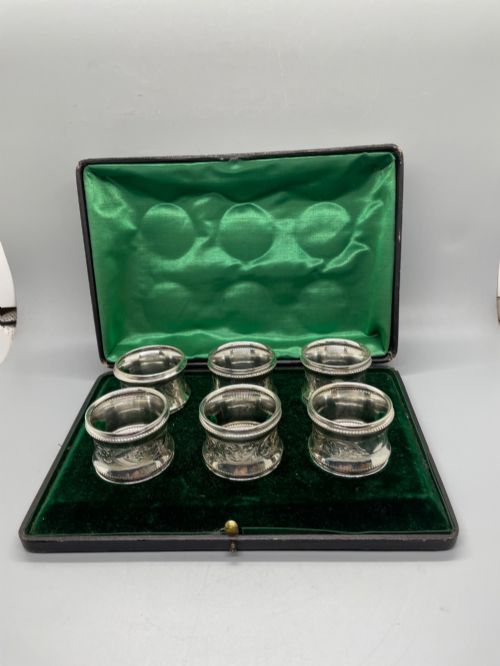
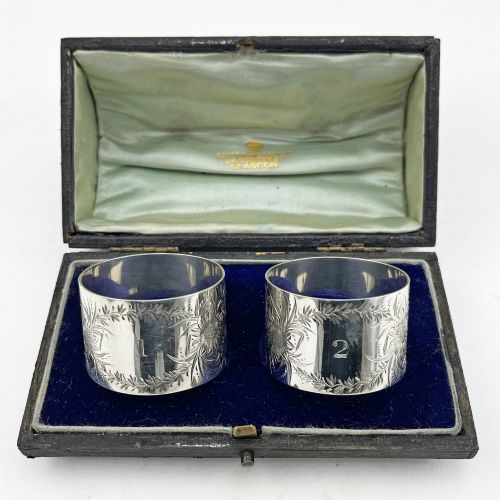
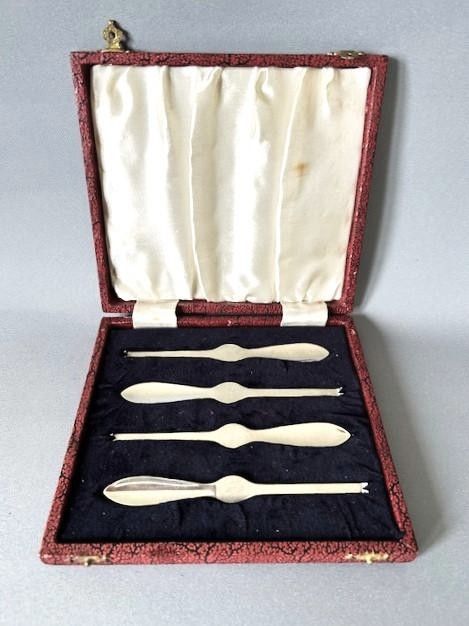
Metal and garden sets relied on heavy cast-iron for durability outdoors, shaped into ornate frames for tables and chairs alike. Silver, silver plate, and German silver appeared in related dining accessories like candelabra, cruet sets, and cutlery canteens, demonstrating meticulous casting, chasing, and hallmarking.
Antique Dining Table Set Retail Price Guide 2026
Typical asking prices for dining table set among the pieces listed under this phrase on Sellingantiques today, from the lower quarter to the upper quarter. They describe what is for sale here now, not the wider market.
The listings feature dining table sets spanning the seventeenth century through to Art Deco, Edwardian, and Victorian periods, constructed from oak, mahogany, walnut, and cast-iron.
Distinctions in quality and execution
The upper tier of dining sets displays unity between the table and its accompanying chairs, where timber grain, leg style, and carving motifs match purposefully rather than through later assembly. Master workshops employed superior timber selections, such as burr walnut or figured mahogany, and applied precise joinery that ensures smooth mechanical operation in extending tables.
Simpler or more utilitarian sets reveal less uniform timber selection, simpler structural framing, and replacement seating that lacks the original cohesion of the suite. The distinction lies in the integrity of the design, the depth of hand-carved detailing on chair backs and table edges, and how well the materials have endured years of domestic use.
Maurice Adams·Conrad Eduard Mappe·Christopher Dresser·Harry and Lou Epstein·Hille·Tiffany
The Antique Dining Table Set Glossary
- Refectory table
- A long, narrow dining table traditionally supported by trestle ends or heavy legs with low stretchers. These sturdy forms originated in monastic dining halls and grew into domestic oak dining staples.
- Draw leaf table
- A table equipped with concealed leaves stored beneath the main top that pull out to extend the surface length. This mechanism allows the table to expand quickly for guests.
- Carver
- An armchair designed with armrests, traditionally placed at the head and foot of a dining table. These matched the side chairs in a dining set.
- Fiddle pattern
- A traditional cutlery handle shape widening at the base with a slight ridge, resembling a violin. It appeared frequently on nineteenth-century silver canteens.
- Cruet set
- A matched collection of glass bottles or cruets held in a silver or silver-plated stand for condiments and sauces. These were placed at the centre of the dining table.
Antique Dining Table Set: Frequently Asked Questions
How do I measure for an extending dining table?
Assess the unextended length against your room dimensions while leaving adequate clearance for chairs to pull out comfortably. Account for extra leaves when fully extended to ensure guests can circulate easily around the furniture.
Check the mechanical action of the runners or central screw mechanism to confirm smooth operation. Understanding how many leaves are present helps determine maximum seating capacity for large gatherings.
Are chairs in a set always original to the table?
Many larger dining sets were assembled over time or matched by dealers to provide a complete suite of seating. Examining timber tone, secondary woods, and carving styles helps determine whether chairs share the exact origin of the table.
Matching chairs should exhibit consistent wear patterns and proportional scaling relative to the table height. Even when assembled later, a cohesive set maintains unified period character.
What is the difference between an oak refectory table and a draw leaf table?
Refectory tables rely on fixed rectangular tops supported by heavy trestles or rigid legs connected by stretchers. They provide a permanent, sturdy surface designed for heavy everyday dining.
Draw leaf tables incorporate pull-out extension panels hidden directly beneath the main surface. This clever design adapts a compact everyday table into a long dining surface without storing loose leaves elsewhere.
How should I care for antique mahogany and oak surfaces?
Maintain timber surfaces by dusting regularly with a soft, dry cloth and avoiding harsh chemical polishes. Natural waxes applied sparingly nourish the grain and preserve the historic sheen of the wood.
Keep wooden dining sets away from direct heat sources and strong sunlight to prevent timber shrinkage or fading. Using coasters and mats protects antique finishes from moisture and heat damage during meals.