




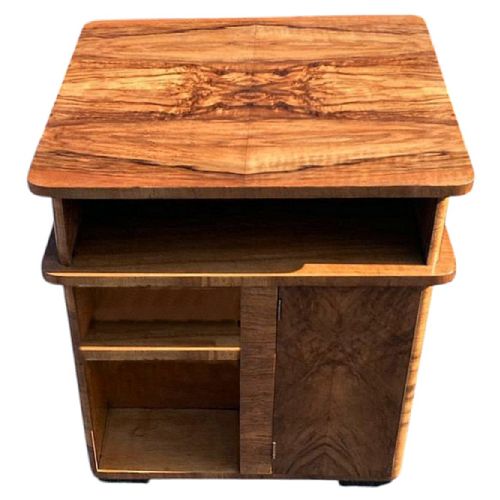


Art Deco Drinks Table
An art deco drinks table brings functional elegance to hosting, combining clever engineering with striking geometric silhouettes from the interwar period.
Art Deco Drinks Table
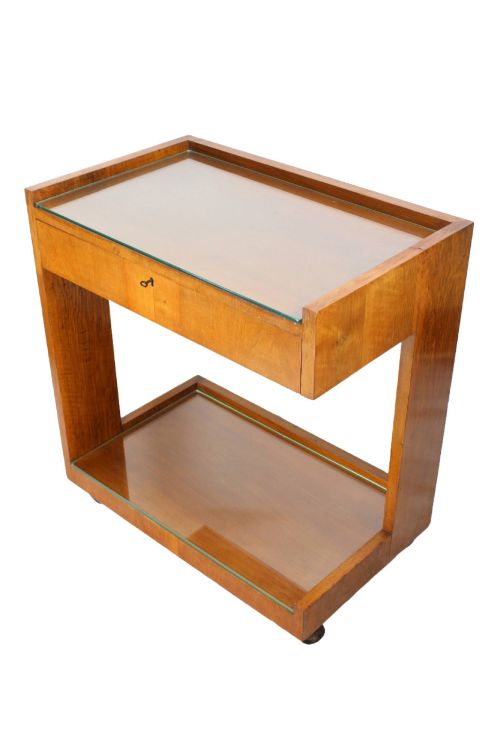
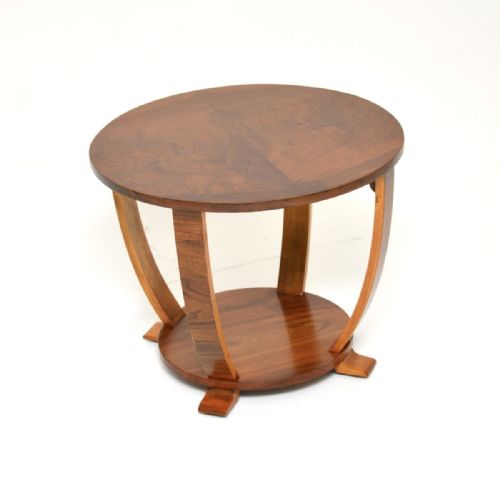
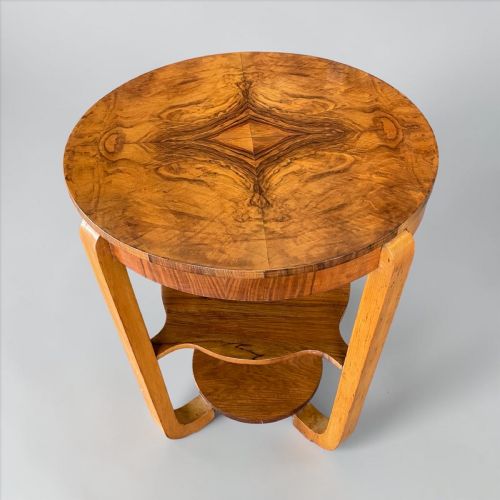
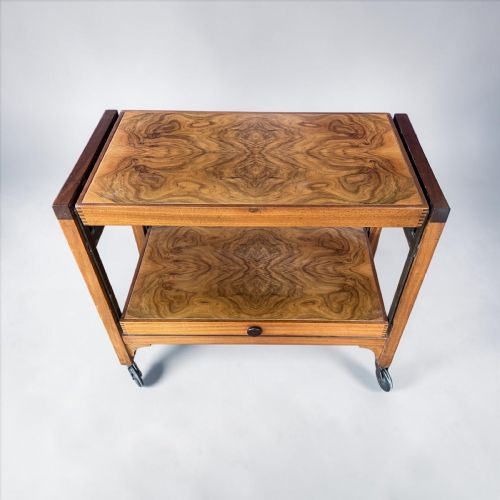
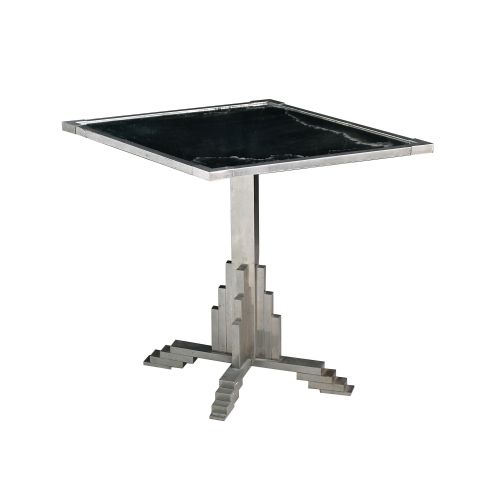
An art deco drinks table serves as a functional centrepiece for entertaining, encompassing cocktail trolleys, metamorphic dry bars, and tiered occasional stands. When searching this phrase, you encounter pieces designed to hold glassware, bottles, and serving accessories with sophisticated spatial economy.
The selections span standard side tables to complex serving trolleys equipped with casters and drop leaves. Most examples originate from the 1930s, displaying the characteristic streamlined forms and geometric layouts of the era.
Materials and construction methods
Cabinetmakers relied heavily on walnut and walnut veneer, often selecting figured grains or exotic woods like bird's eye maple, rosewood, and macassar ebony to create striking visual patterns on tabletops. These wooden surfaces are frequently paired with contrasting materials such as polished chrome, brass, and mirrored glass.
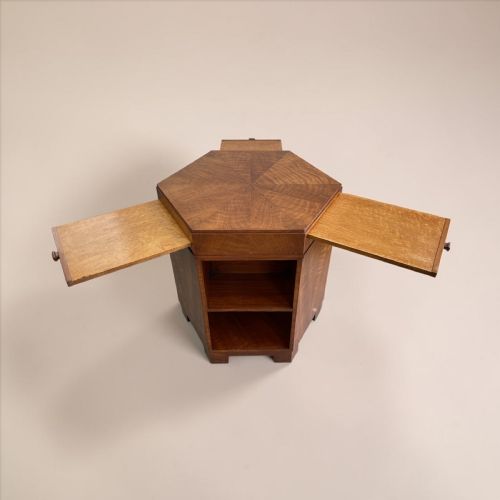
Structural complexity defines the making of these items, particularly in metamorphic and pop-up designs that conceal internal storage compartments or expand via clever mechanical hinges. Trolleys often incorporate metal casters for mobility, while stationary side tables utilise solid wood frames or marble inserts.
Art Deco Drinks Table Retail Price Guide 2026
Typical asking prices for art deco drinks table among the pieces listed under this phrase on Sellingantiques today, from the lower quarter to the upper quarter. They describe what is for sale here now, not the wider market.
Some tables hide their drinking habits entirely, masquerading as unassuming side stands until a hidden mechanism pops up the cocktail stash.
Distinctions in manufacture and preservation
Superior examples distinguish themselves through the choice of veneer work and the precision of mechanical actions found in metamorphic or pop-up dry bars. Master craftsmanship shows in the seamless alignment of grain patterns across expanding leaves and the robust integration of metal frames with wooden bodies.
Harry and Lou Epstein·Incorporall
The Art Deco Drinks Table Glossary
- Metamorphic
- A piece of furniture designed to transform its shape or function through folding, sliding, or rising mechanisms. These clever designs conceal bar storage or expand surface area.
- Veneer
- A thin layer of choice wood applied over a secondary timber base to create decorative grain patterns. Figured walnut and exotic woods utilise this technique.
- Casters
- Small swivel wheels attached to the base of furniture for mobility. They allow drinks trolleys to move smoothly across floors during service.
- Occasional table
- A small, movable table intended for specific, intermittent use rather than continuous dining or desk work. Side and lamp tables fall into this category.
- Dry bar
- A specialised cabinet or table designed to store glassware and bottles without refrigeration or plumbing. Pop-up versions reveal compartments upon opening.
Art Deco Drinks Table: Frequently Asked Questions
How do metamorphic drinks tables work?
These tables utilise hidden hinges, sliding panels, or pop-up mechanisms to transform from a standard side table into an accessible bar surface.
Opening the structure often reveals internal compartments specifically dimensioned for bottles and glassware without requiring external cabinet space.
Were these tables used in formal dining rooms?
Most designs were intended for drawing rooms, libraries, and cocktail lounges to facilitate home entertaining during the interwar period.
Trolleys and small side stands allowed hosts to serve guests directly without relying entirely on permanent sideboards.
How do I care for walnut veneer surfaces?
Protect the polished wood from excessive moisture and direct sunlight to prevent fading and veneer lifting over time.
Use coasters for all glassware and dust gently with a soft cloth rather than applying heavy chemical polishes.
How can I tell a 1930s piece from a revival?
Original pieces from the 1930s display period-appropriate construction methods, ageing patinas on wood and metal, and authentic hardware.
Revival pieces often feature modern fixings or machine-made standardisation that lacks the specific hand-finished grain matching of the era.