


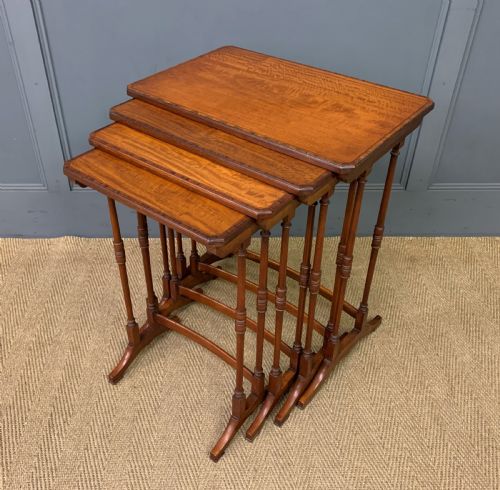
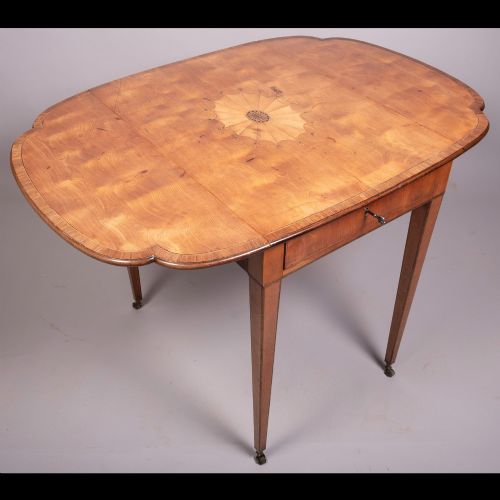
Georgian Satinwood Side Table
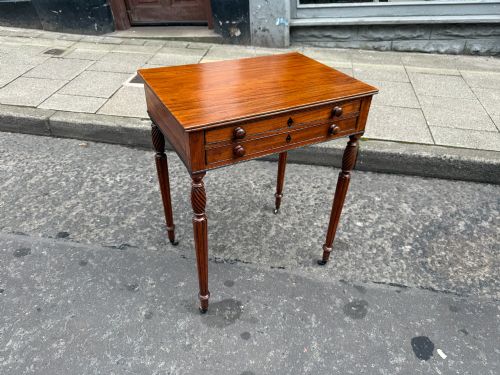
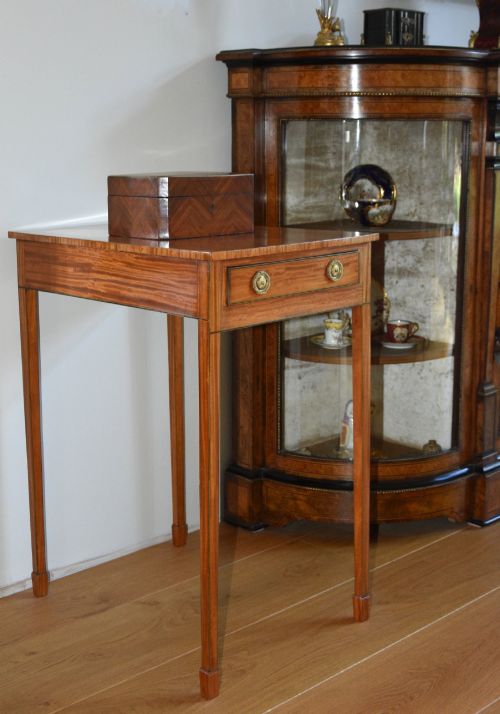
A georgian satinwood side table brings luminous timber and neoclassical balance into a room.
Georgian Satinwood Side Table
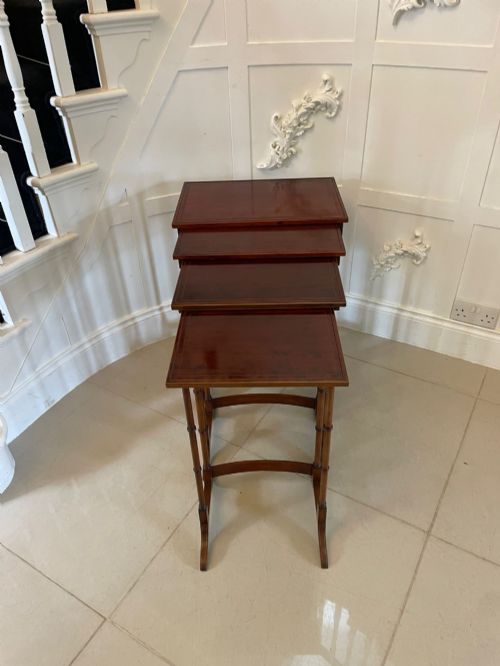
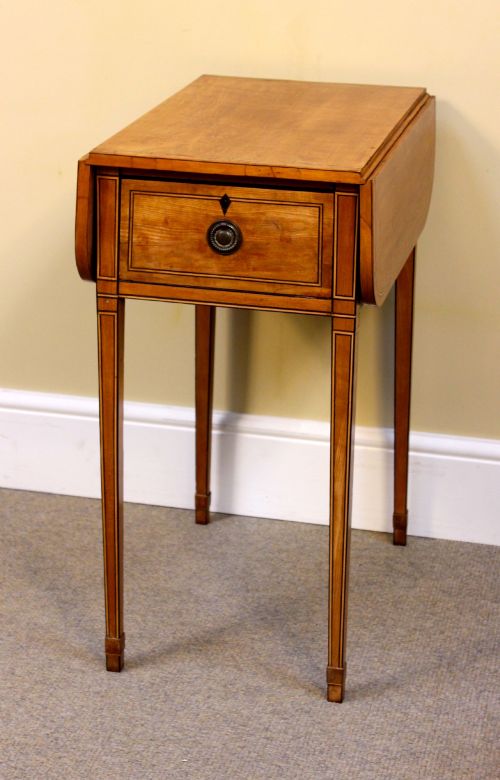
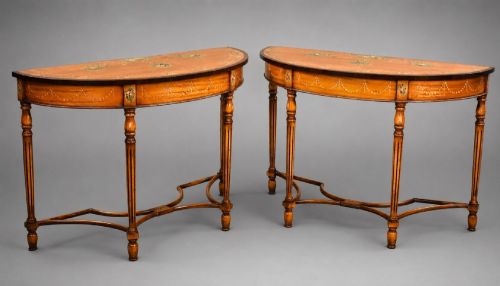
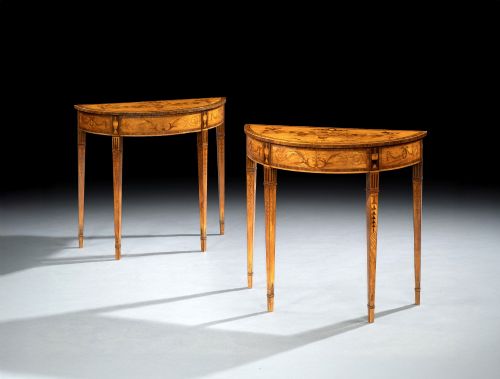
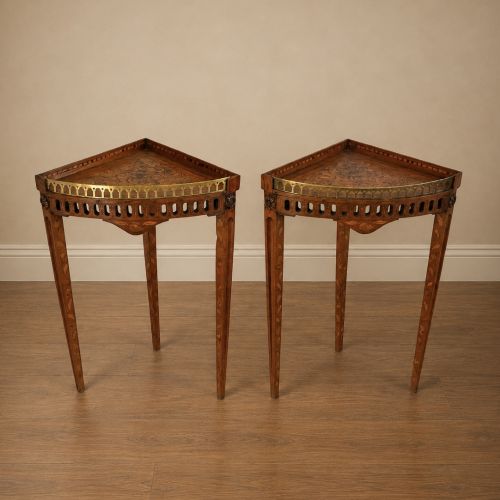
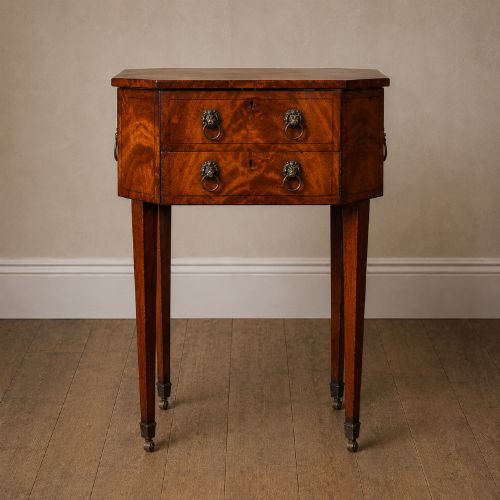
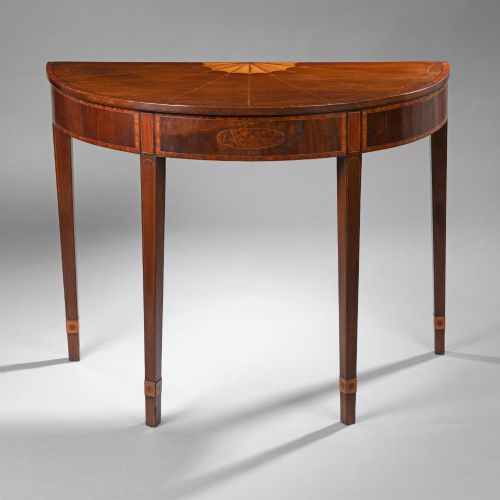
A georgian satinwood side table encompasses a range of lighter occasional furniture from the eighteenth and early nineteenth centuries, designed for display and convenience. These forms include demilune consoles, Pembroke tables with drop leaves, lamp tables with drawers, and folding card tables.
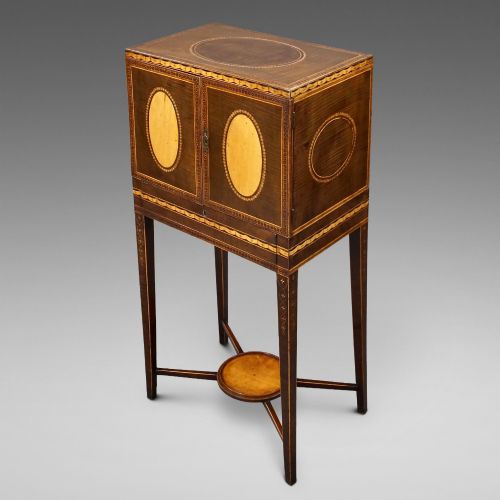
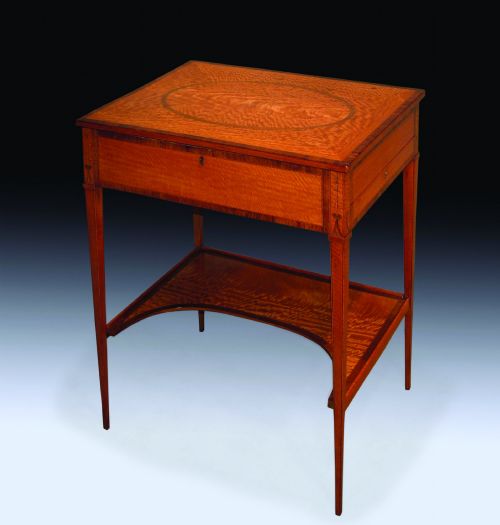
The version most commonly met on this page is the compact table dating from the George III or Sheraton periods, often featuring marquetry or crossbanding. Makers utilised the pale, light-reflecting qualities of satinwood veneers to brighten interiors, sometimes combining the timber with mahogany, rosewood or harewood.
How they were made
Cabinet makers constructed these tables using native and exotic timbers, laying fine veneers of satinwood over stable secondary woods like pine or mahogany. Crossbanding in rosewood or tulipwood framed the grain, while delicate stringing in boxwood defined the edges of drawers and tabletops.
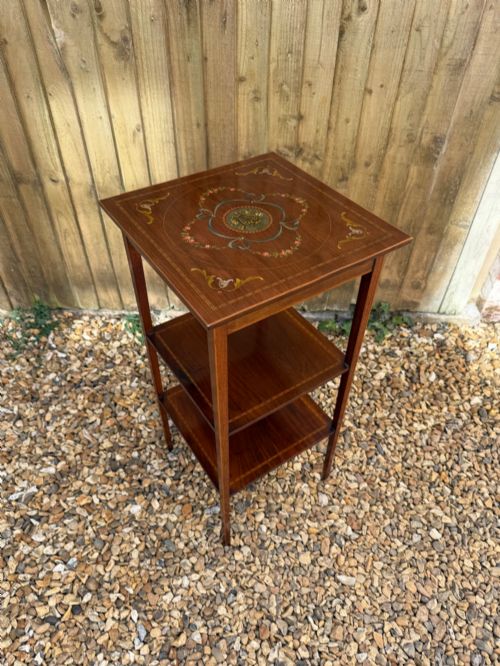
Decoration relied on marquetry in floral or neoclassical motifs, hand-painted details, and brass fitments such as drop handles and galleries. Tables from the later Sheraton Revival period adopted similar techniques with machine-cut veneers and painted decoration.
Some sewing tables retain small compartments designed to hold spools of silk and ivory pins.
What varies in quality
The distinction between standard pieces and the finest examples rests on the choice of timber and the precision of the cabinetwork. Superior tables display carefully selected satinwood with deep figure and chatoyancy, matched symmetrically across the top.
Hand-cut inlay, finely cast brass hardware, and the structural integrity of timber shrinkage over centuries separate utilitarian items from pieces made by premier workshops.
Donald Ross·Gillows
The Georgian Satinwood Side Table Glossary
- Satinwood
- A lustrous, hard timber native to the West Indies and Ceylon, prized for its golden colour and light-reflecting grain. It was sliced into thin veneers for eighteenth-century cabinetwork.
- Crossbanding
- A border of veneer laid around the perimeter of a tabletop so that the grain runs perpendicular to the central panel. This technique creates a neat framing effect.
- Marquetry
- The art of forming decorative patterns by fitting together thin pieces of coloured woods, shell, and ivory. It differs from inlay by being assembled as a sheet before application.
- Demi-lune
- A half-moon shape used for console and side tables designed to stand flat against a wall. The form gained popularity during the neoclassical period.
- Pembroke table
- A small table with hinged drop leaves on two opposing sides, supported by folding brackets or gates. It originated in the eighteenth century for breakfast or light writing.
Georgian Satinwood Side Table: Frequently Asked Questions
How do I identify satinwood?
Satinwood is recognisable by its pale golden-yellow colour and natural sheen that catches the light like watered silk. The grain is often mottled or speckled, differing from the darker reddish tones of mahogany.
Cabinet makers used it primarily as a veneer rather than solid timber due to its scarcity and cost during the Georgian era.
What is a pembroke table?
A Pembroke table is a small occasional table featuring two hinged flaps on opposite sides that can be raised to extend the surface. They usually include a single drawer at one end and slender tapered legs.
Introduced in the eighteenth century, these versatile pieces served variously for breakfast, writing, or needlework.
Where were these tables placed?
Side tables occupied perimeter spaces in reception rooms, halls, and parlours, holding lamps, decorative porcelain, or writing materials. Demilune console tables stood flat against walls beneath mirrors or paintings.
Smaller drop-leaf and lamp tables moved around rooms as required for tea service or needlework.
How do I care for antique satinwood?
Antique satinwood requires protection from direct sunlight and heat sources to prevent the pale veneers from darkening or lifting. Regular dusting with a soft, dry cloth maintains the surface.
Application of traditional beeswax preserves the polish without building up modern synthetic residues.