







Golden Wood Console Table
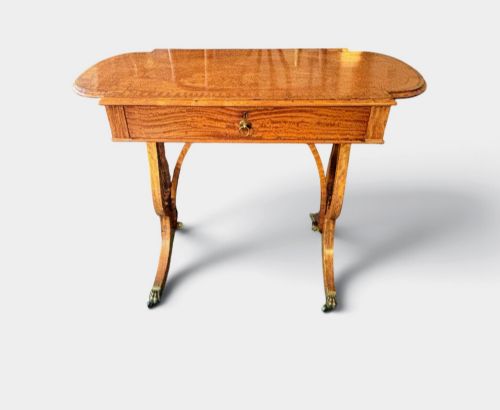
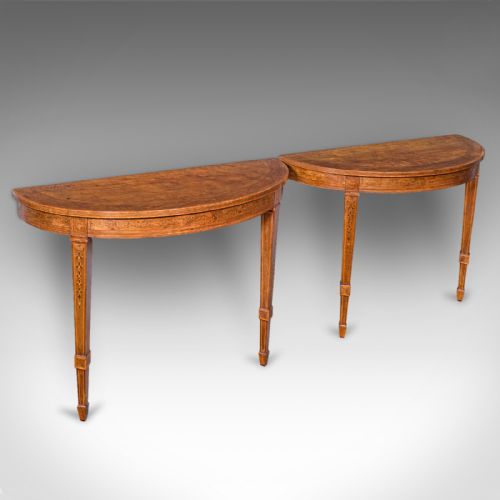
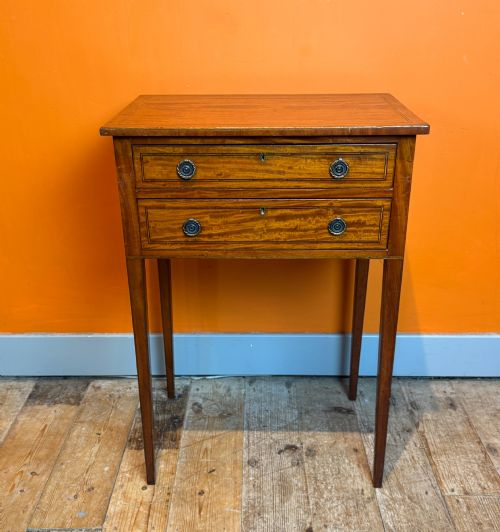
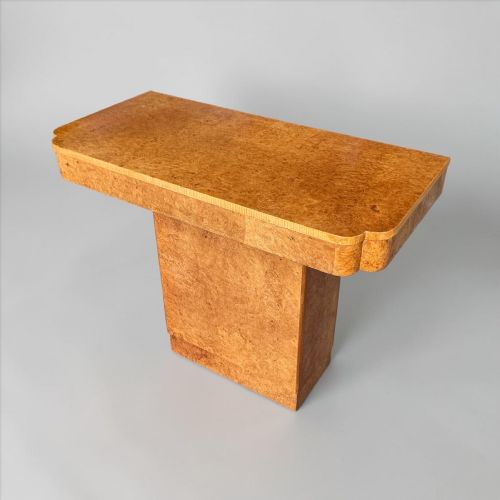
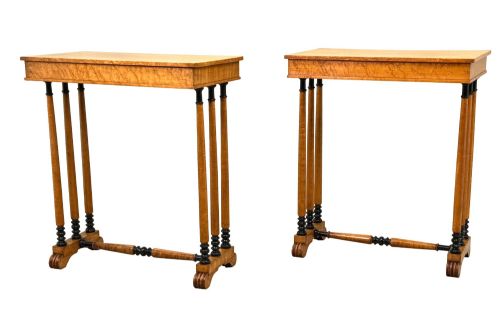
A golden wood console table brings warmth and striking figure to an interior through rich satinwood, burr birch, and maple.
Golden Wood Console Table
The selections span several periods, with Georgian, Regency, and Edwardian examples appearing alongside 19th-century Empire Revival and Biedermeier pieces. Most examples favour the polished yellow-gold tones of satinwood and birch, often detailed with contrasting cross-banding or inlay.
Buyers will encounter wall-fixed console tables, freestanding side tables, and convertible tables designed for games or card play. These objects served formal reception rooms and parlours where reflective surfaces and decorative timbers displayed social standing.
Materials and construction methods
Cabinetmakers utilised fine veneers of satinwood, burr birch, and padoukwood laid over sturdy secondary structural timbers. These decorative veneers were carefully cut to reveal natural figures such as bird's-eye patterns and intricate burr formations.
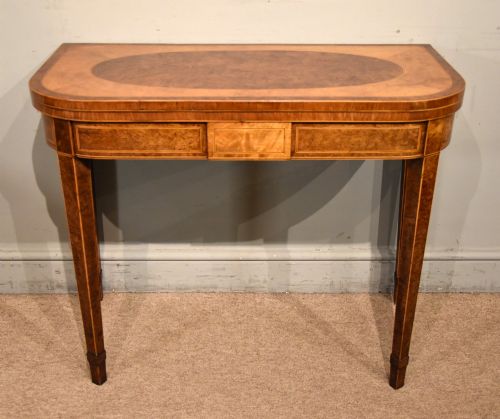
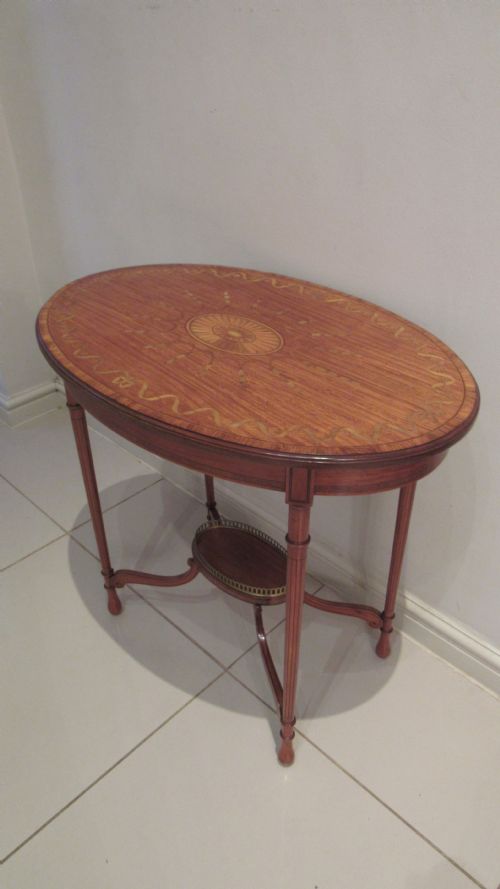
Inlay and cross-banding formed key decorative elements, contrasting darker rosewood or ebonised wood against the pale golden primary ground. Traditional joinery methods united these delicate surfaces with solid timber frames, edge-bandings, and turned or tapered legs.
Golden Wood Console Table Retail Price Guide 2026
Typical asking prices for golden wood console table among the pieces listed under this phrase on Sellingantiques today, from the lower quarter to the upper quarter. They describe what is for sale here now, not the wider market.
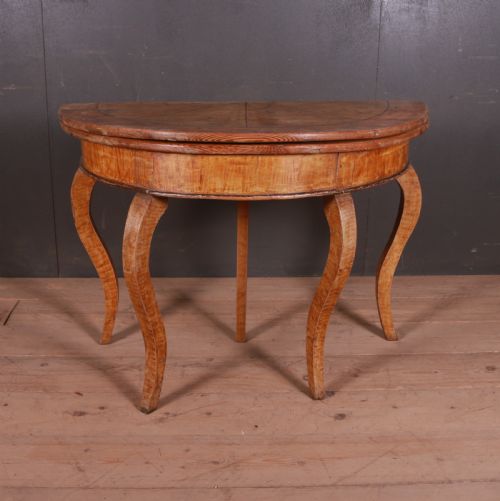
Tables were sometimes designed to fold in half for card games, hiding their playful purpose inside formal golden timber.
Factors determining quality
Quality rests principally in the selection and book-matching of the timber veneers across the top and frieze. Superior examples display vibrant, unbroken grain patterns and precise geometric inlay rather than plain or uniform surfaces.
Construction finesse separates standard production from finer cabinetmaking, visible in the crispness of carved details, the tightness of mitred joints, and the integrity of the secondary woods used in the carcase.
The Golden Wood Console Table Glossary
- Satinwood
- A dense tropical timber producing a lustrous, golden-yellow finish that takes a high polish. It became a favourite material for elite furniture makers during the late eighteenth and nineteenth centuries.
- Demi-lune
- A half-moon shape used for console and pier tables designed to stand flat against a wall. This profile saved floor space while offering a decorative surface.
- Cross-banding
- A decorative border technique where veneer strips are laid perpendicular to the main grain of the tabletop. It creates a framed visual effect around the central panel.
- Biedermeier
- A Central European style popular during the early nineteenth century focusing on clean lines and rich, figured veneers. This aesthetic allowed the natural beauty of birch and maple to speak without excessive ornamentation.
- Pier table
- A table designed specifically to stand against the wall between two windows, frequently positioned beneath a mirror. These pieces formed an integral part of neoclassical interior schemes.
Golden Wood Console Table: Frequently Asked Questions
What is a golden wood console table used for?
These tables provide a decorative surface in hallways, drawing rooms, and living spaces for lamps, ceramics, and ornaments. Historically, they stood against walls or between windows to enhance the light and symmetry of a formal room.
Today, they function as elegant statement pieces that add warmth and historic character to modern or traditional interiors alike.
How do I care for a satinwood table?
Satinwood benefits from regular dusting with a soft, dry cloth and occasional treatment with appropriate quality furniture wax to nourish the grain. Keep the timber away from direct sunlight and heat sources to prevent the veneer from drying or fading.
Avoid placing damp items or unsealed containers directly onto the polished surface to protect the historic finish from water marks.
How do I distinguish Regency from Edwardian pieces?
Regency pieces date from the early nineteenth century and often feature bold architectural forms, classical brass mounts, and rich rosewood or mahogany contrasts. Edwardian revivals from the early twentieth century typically display lighter framing, refined satinwood veneers, and delicate painted details.
Examining the construction methods, secondary timbers, and wear patterns helps clarify the true age of the object.
What distinguishes a console table from a side table?
Console tables were traditionally designed to be fixed to a wall or supported at the front by legs, relying on wall fixings for total stability. Side tables are fully freestanding pieces built with four independent legs.
Both forms share similar decorative treatments and golden wood timbers, though console tables often feature flattened backs tailored for wall placement.